Trump says he will raise tariffs on EU autos to 25% - Reuters
AI bias-comparison
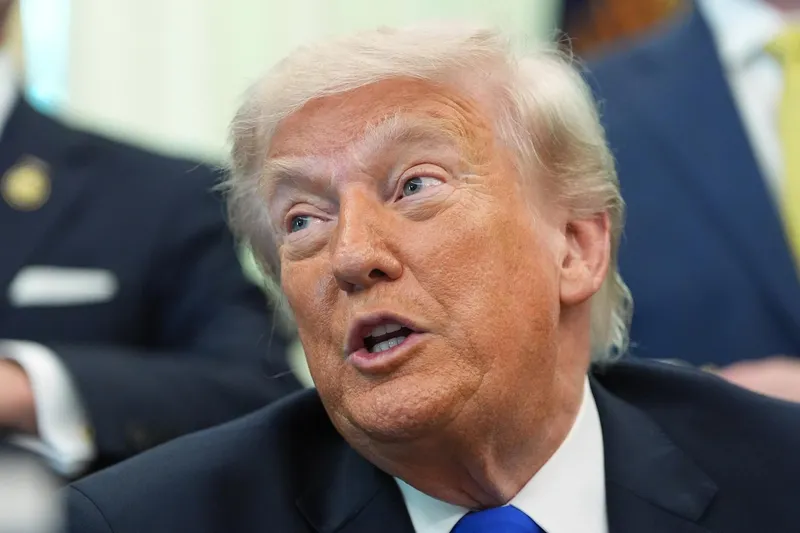
What happened: U.S. President Donald Trump announced plans to raise tariffs on imported cars and trucks from the European Union to 25%, citing noncompliance with an existing trade agreement. The announcement was made Friday in Washington and is set to take effect the following week. The move escalates ongoing trade tensions between the U.S. and the EU.
Where coverage diverges: All four sources report the announcement factually, with nearly identical language, reflecting reliance on wire services like Reuters. The Korea Times slightly emphasizes the justification ("citing noncompliance"), framing the action as a response to EU inaction. The Straits Times versions offer no additional context or editorial slant, mirroring the wire report. No left- or right-leaning outlets are present, so there is no visible spectrum of interpretation—only center, wire-service-driven accounts.
What's missing: None of the stories include reaction from EU officials, analysis of potential economic impacts, or historical context on prior U.S.-EU trade disputes. This absence leaves readers without understanding of retaliation risks or broader trade policy patterns, a blind spot common in wire-based center reporting that prioritizes announcement over consequence.
Headline framing
Multiple center and wire outlets report Trump's announcement of increased EU auto tariffs at 25%. Only Korea Times includes a reason, citing 'noncompliance,' introducing slight framing; others remain neutral.
Coverage by perspective
Center · 3 sources
Wire (factual) · 1 source
Bias ratings: AllSides Media Bias Chart + Ad Fontes + MBFC consensus. AI comparison: Cerebras Llama 3.3-70B with light editorial prompt. No paywall, no tracking, reader-funded — support →