Best places to see partial solar eclipse across England
2 distinct publishers across 6 articles (some outlets filed more than once).
Ownership mix: Other: 6
2 publishers · 6 articles · switch to 1-minute for disagreement and framing.
What happened
The eclipse will begin just after 6pm on 12 August, reaching its maximum just over an hour later
Why the coverage differs
AI-assisted comparison · labeled · generated Aug 10, 2026, 1:49 AM · not a verdict
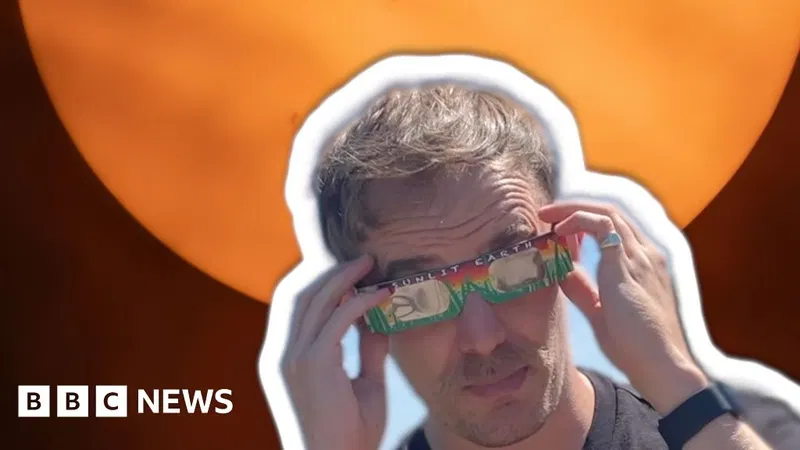
A solar eclipse was visible in the British Isles. According to BBC News, footage showed people in Alderney catching a view of the eclipse. The event was also observed in London.
Coverage of the eclipse diverges in terms of focus. BBC News provided information on viewing spots in London, while The Guardian emphasized the timing of the eclipse and its relation to the Perseids. BBC News also covered the eclipse from a historical perspective, referencing a 1999 eclipse.
Comparison summary
AI-assisted · Cerebras / Llama · Aug 10, 2026, 1:49 AM · inspect sources below rather than trusting this alone
A solar eclipse was visible in the British Isles. According to BBC News, footage showed people in Alderney catching a view of the eclipse. The event was also observed in London.
Coverage of the eclipse diverges in terms of focus. BBC News provided information on viewing spots in London, while The Guardian emphasized the timing of the eclipse and its relation to the Perseids. BBC News also covered the eclipse from a historical perspective, referencing a 1999 eclipse.
Only center and left-leaning sources have covered this event so far. Context on the scientific significance of the eclipse is missing from the current coverage.
Report timeline
Oldest → newest among clustered members. Gaps may mean delayed pickup, not silence.
-
Aug 8, 2026, 11:30 PMBBC News — Science · Center1999: Solar eclipse experienced from Alderney
-
Aug 9, 2026, 9:57 PMBBC News — Science · CenterWhen and where to see the solar eclipse in London
-
Aug 9, 2026, 10:00 PMThe Guardian — Science · Lean LeftStarwatch: Deep partial solar eclipse in UK to precede the Perseids
-
Aug 10, 2026, 4:16 AMBBC News — Science · CenterHow to view the solar eclipse from Guernsey
-
Aug 10, 2026, 6:41 AMBBC News — Science · CenterSolar eclipse: Where and when you can see it across North West England
-
Aug 10, 2026, 8:21 AMBBC News — Science · CenterBest places to see partial solar eclipse across England
Coverage by perspective
Perspective labels are external consensus ratings (AllSides / Ad Fontes / MBFC-style), not WeSearch truth scores. Center is not automatically more accurate.
Lean Left · 1

Center · 5



Headline framing
Vocabulary fingerprints · not a political endorsement
All three outlets report the 1999 UK solar eclipse, with BBC providing neutral factual details and The Guardian presenting it as a notable astronomical spectacle.
Bias/ownership: published methodology on source profiles · AI text always labeled · no reader paywall · no engagement ranking of news · transparency · contribute Ws · home