Google’s new Gemini Omni AI can turn almost anything into video
2 distinct publishers, one article each in this sample.
Ownership mix: Other: 2
2 publishers · 2 articles · switch to 1-minute for disagreement and framing.
What happened
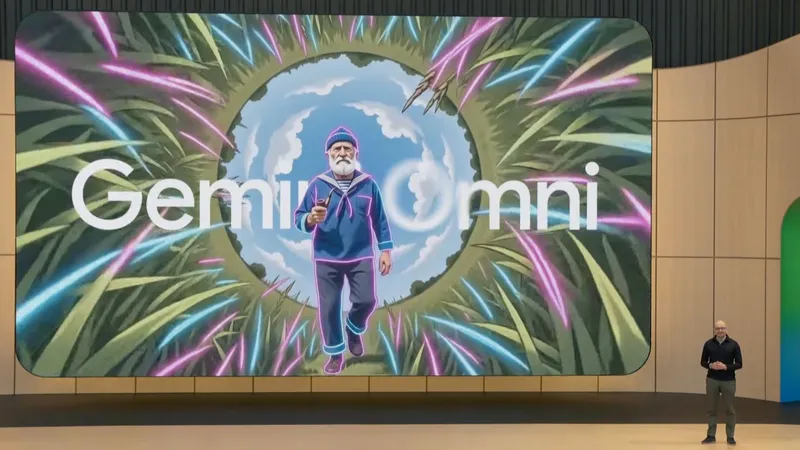
Google's Gemini Omni is a new multimodal model that reasons across text, images, audio, and video to generate and edit videos through simple conversation — starting with Omni Flash.
Why the coverage differs
AI-assisted comparison · labeled · generated just generated or not yet stored · not a verdict
Google announced Gemini Omni Flash, a multimodal AI model capable of generating and editing video by processing text, images, and audio inputs. The system allows users to create visual content through conversational prompts, marking an expansion of Google’s generative AI capabilities beyond static media.
Coverage remains consistent across the cluster, with both TechCrunch and TechRadar framing the release as a significant step in multimodal integration. TechCrunch emphasizes the model’s reasoning across multiple data types, while TechRadar focuses on the practical utility of converting diverse inputs into video. Neither outlet highlights specific performance benchmarks or latency metrics, instead prioritizing the novelty of the conversational interface.
Comparison summary
AI-assisted · Cerebras / Llama · just generated or not yet stored · inspect sources below rather than trusting this alone
Google announced Gemini Omni Flash, a multimodal AI model capable of generating and editing video by processing text, images, and audio inputs. The system allows users to create visual content through conversational prompts, marking an expansion of Google’s generative AI capabilities beyond static media.
Coverage remains consistent across the cluster, with both TechCrunch and TechRadar framing the release as a significant step in multimodal integration. TechCrunch emphasizes the model’s reasoning across multiple data types, while TechRadar focuses on the practical utility of converting diverse inputs into video. Neither outlet highlights specific performance benchmarks or latency metrics, instead prioritizing the novelty of the conversational interface.
Both sources omit details regarding the model’s training data provenance and potential copyright implications. This shared blindspot leaves unresolved questions about the legal and ethical boundaries of the new video generation capabilities.
Report timeline
Oldest → newest among clustered members. Gaps may mean delayed pickup, not silence.
-
May 19, 2026, 10:45 AM
-
May 19, 2026, 8:30 PMLatest from TechRadar · CenterGoogle’s new Gemini Omni AI can turn almost anything into video
Coverage by perspective
Perspective labels are external consensus ratings (AllSides / Ad Fontes / MBFC-style), not WeSearch truth scores. Center is not automatically more accurate.
Center · 2

Headline framing
Vocabulary fingerprints · not a political endorsement
AI framing analysis temporarily offline. Configure Cerebras in admin to enable framing comparison.
Bias/ownership: published methodology on source profiles · AI text always labeled · no reader paywall · no engagement ranking of news · transparency · contribute Ws · home