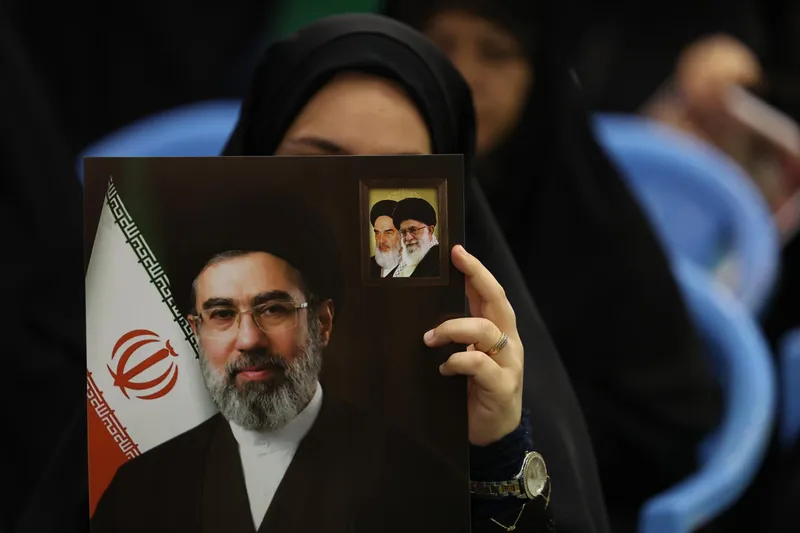
Iranian supreme leader says regional countries will no longer serve as shields for US bases
3 distinct publishers, one article each in this sample.
Ownership mix: Other: 3
3 publishers · 3 articles · switch to 1-minute for disagreement and framing.
What happened
DUBAI — Iranian Supreme Leader Ayatollah Mojtaba Khamenei said on his Telegram channel on Tuesday that Gulf powers will no longer be a shield for U...
Why the coverage differs
AI-assisted comparison · labeled · generated May 26, 2026, 11:38 AM · not a verdict
Iranian Supreme Leader Ayatollah Mojtaba Khamenei stated that Gulf powers will no longer act as a protective barrier for U.S. military bases in the region. He made these comments via his Telegram channel, asserting that the United States is losing its influence in the Middle East. This development has implications for U.S. foreign policy and regional security dynamics.
Coverage of Khamenei's statements varies across outlets. The Korea Times and Straits Times focus on the broader implications of U.S. influence in the region, emphasizing the shift in regional dynamics without delving deeply into specific threats. In contrast, the Jerusalem Post highlights Khamenei's more aggressive rhetoric, including threats to U.S. bases and comments on Israel's future, framing the story with a stronger emphasis on security concerns and regional tensions.
Comparison summary
AI-assisted · Cerebras / Llama · May 26, 2026, 11:38 AM · inspect sources below rather than trusting this alone
Iranian Supreme Leader Ayatollah Mojtaba Khamenei stated that Gulf powers will no longer act as a protective barrier for U.S. military bases in the region. He made these comments via his Telegram channel, asserting that the United States is losing its influence in the Middle East. This development has implications for U.S. foreign policy and regional security dynamics.
Coverage of Khamenei's statements varies across outlets. The Korea Times and Straits Times focus on the broader implications of U.S. influence in the region, emphasizing the shift in regional dynamics without delving deeply into specific threats. In contrast, the Jerusalem Post highlights Khamenei's more aggressive rhetoric, including threats to U.S. bases and comments on Israel's future, framing the story with a stronger emphasis on security concerns and regional tensions.
No outlet provided context regarding the historical relationship between Gulf states and U.S. military presence, which could offer insight into the significance of Khamenei's statements. This omission may reflect a blind spot in understanding the geopolitical landscape from both the center and lean-right perspectives.
Report timeline
Oldest → newest among clustered members. Gaps may mean delayed pickup, not silence.
-
May 26, 2026, 12:32 AMKorea Times · CenterUS will no longer have safe haven in the region, Iran's supreme leader says
-
May 26, 2026, 1:26 AMStraits Times — World · CenterIran supreme leader says region will ‘no longer serve as shields’ for US bases
-
May 26, 2026, 5:00 AMThe Jerusalem Post | JPost.com · Lean RightIranian supreme leader says regional countries will no longer serve as shields for US bases
Coverage by perspective
Perspective labels are external consensus ratings (AllSides / Ad Fontes / MBFC-style), not WeSearch truth scores. Center is not automatically more accurate.
Center · 2
Lean Right · 1
Headline framing
Vocabulary fingerprints · not a political endorsement
The headlines report on statements made by Iran's supreme leader regarding the future of US military presence in the region, with varying emphasis on the implications.
Bias/ownership: published methodology on source profiles · AI text always labeled · no reader paywall · no engagement ranking of news · transparency · contribute Ws · home