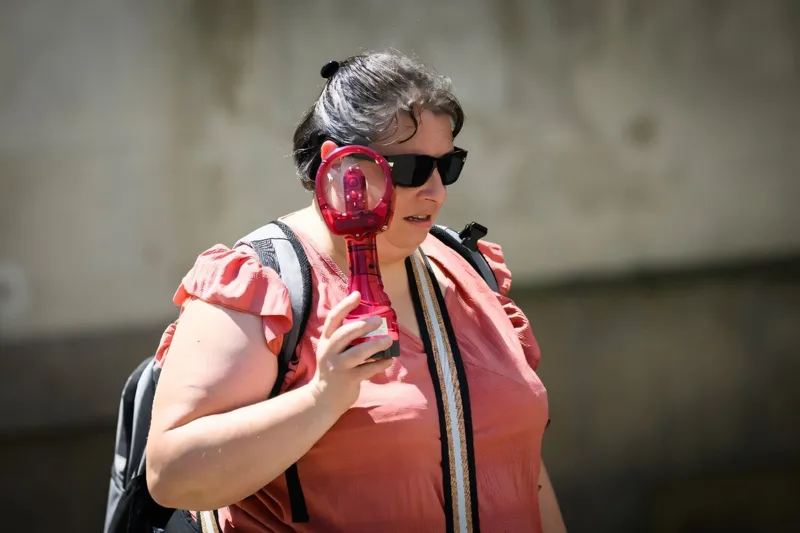
Record temps as spring heat wave bakes Europe
3 distinct publishers, one article each in this sample.
Ownership mix: Other: 3
3 publishers · 3 articles · switch to 1-minute for disagreement and framing.
What happened
Authorities in Britain and France warned that “unprecedented” temperatures — at a time when few expected them — could persist. Climate change has made heat waves more frequent and more intense.
Why the coverage differs
AI-assisted comparison · labeled · generated May 27, 2026, 10:03 AM · not a verdict
A spring heat wave has led to record temperatures in the U.K., Spain, and France, with the U.K. experiencing its hottest May day on record at 35.1 degrees Celsius. Authorities have warned that these unprecedented temperatures could persist, attributing the phenomenon to a high-pressure system trapping warm air over western Europe. Climate change is noted as a contributing factor to the increased frequency and intensity of heat waves.
Coverage diverges in the emphasis placed on climate change. The New York Times highlights the role of climate change in making heat waves more frequent and intense, framing the event within a broader environmental context. In contrast, both Japan Times and Phys.org focus more on the specific meteorological conditions leading to the heat wave, omitting the climate change angle that the NYT emphasizes.
Comparison summary
AI-assisted · Cerebras / Llama · May 27, 2026, 10:03 AM · inspect sources below rather than trusting this alone
A spring heat wave has led to record temperatures in the U.K., Spain, and France, with the U.K. experiencing its hottest May day on record at 35.1 degrees Celsius. Authorities have warned that these unprecedented temperatures could persist, attributing the phenomenon to a high-pressure system trapping warm air over western Europe. Climate change is noted as a contributing factor to the increased frequency and intensity of heat waves.
Coverage diverges in the emphasis placed on climate change. The New York Times highlights the role of climate change in making heat waves more frequent and intense, framing the event within a broader environmental context. In contrast, both Japan Times and Phys.org focus more on the specific meteorological conditions leading to the heat wave, omitting the climate change angle that the NYT emphasizes.
No outlet addressed the potential health impacts or public responses to the heat wave, which could provide important context for understanding the event's implications. This omission may reflect a blind spot in the coverage, particularly from the left-leaning perspective that typically emphasizes social consequences.
Report timeline
Oldest → newest among clustered members. Gaps may mean delayed pickup, not silence.
-
May 26, 2026, 9:33 PMNYT > Top Stories · Lean LeftA Spring Heat Wave Is Breaking Records in the U.K., Spain and France
-
May 27, 2026, 12:25 AMJapan Times · CenterRecord temps as spring heat wave bakes Europe
-
May 27, 2026, 9:00 AMPhys.org · CenterRecord temps as spring heat wave bakes Europe
Coverage by perspective
Perspective labels are external consensus ratings (AllSides / Ad Fontes / MBFC-style), not WeSearch truth scores. Center is not automatically more accurate.
Lean Left · 1

Center · 2

Headline framing
Vocabulary fingerprints · not a political endorsement
Headlines report on a spring heat wave causing record temperatures in Europe, with the New York Times emphasizing the severity of the situation.
Bias/ownership: published methodology on source profiles · AI text always labeled · no reader paywall · no engagement ranking of news · transparency · contribute Ws · home