2 meteor showers peak on the same night this week — how to get the best views, despite a near-full moon
Space Astronomy Meteoroids 2 meteor showers peak on the same night this week — how to get the best views, despite a near-full moon The Delta Aquariids peak on July 30-31, kicking off "meteor season," though bright moonlight will likely limit views. By Jamie Carter Edited by Brandon Specktor, Laura Mondragón Published 26 July 2026 In News When you purchase through links on our site, we may earn an affiliate commission. According to the American Meteor Society, the moon will still be 98% full during the peaks of those meteor showers, meaning bright moonlight will wash out many of the fainter "shooting stars."This year, the Southern Delta Aquariids are active from July 12 to Aug.
- ▪Space Astronomy Meteoroids 2 meteor showers peak on the same night this week — how to get the best views, despite a near-full moon The Delta Aquariids peak on July 30-31, kicking off "meteor season," though bright moonlight will likely li
- ▪By Jamie Carter Edited by Brandon Specktor, Laura Mondragón Published 26 July 2026 In News When you purchase through links on our site, we may earn an affiliate commission.
- ▪According to the American Meteor Society, the moon will still be 98% full during the peaks of those meteor showers, meaning bright moonlight will wash out many of the fainter "shooting stars."This year, the Southern Delta Aquariids are acti
Live Science files mainly under science. We currently carry 131 of its stories.
Opening excerpt (first ~120 words) tap to expand
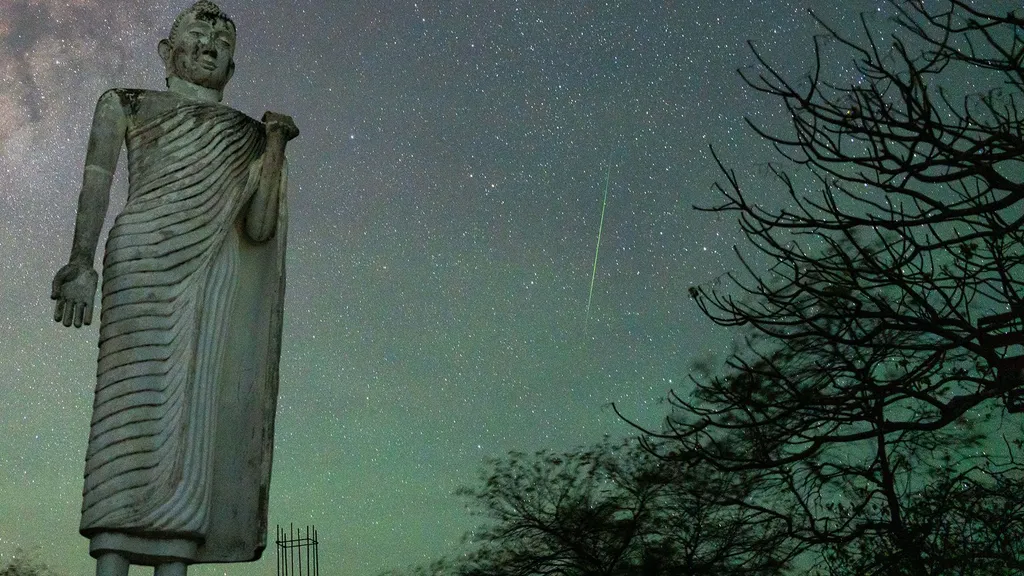
Space Astronomy Meteoroids 2 meteor showers peak on the same night this week — how to get the best views, despite a near-full moon The Delta Aquariids peak on July 30-31, kicking off "meteor season," though bright moonlight will likely limit views. By Jamie Carter Edited by Brandon Specktor, Laura Mondragón Published 26 July 2026 In News When you purchase through links on our site, we may earn an affiliate commission. Here’s how it works. A Delta Aquariid meteor appears over the Buddha statue in Kantale, Sri Lanka, on July 4, 2024.
…
Excerpt limited to ~120 words for fair-use compliance. The full article is at Live Science.
Discussion
0 commentsMore from Live Science