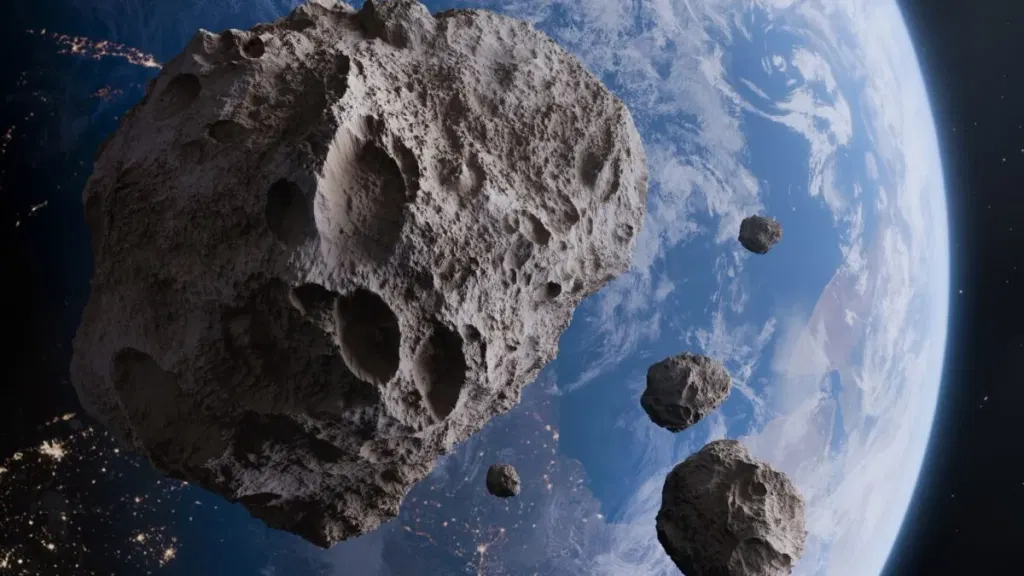
A Buried Oklahoma Crater Was Dated to the Wrong Era—and It Actually Lines Up With a Mass Extinction
In 1991, an oil company discovered a giant crater buried under Ames, Oklahoma. Subsequent investigations led researchers to propose the meteor responsible for the structure belonged to the many meteors that struck North America some 470 million years ago. New dating, however, challenges this account—while proposing an entirely different context for this enigmatic crater.
- ▪In 1991, an oil company discovered a giant crater buried under Ames, Oklahoma.
- ▪Subsequent investigations led researchers to propose the meteor responsible for the structure belonged to the many meteors that struck North America some 470 million years ago.
- ▪New dating, however, challenges this account—while proposing an entirely different context for this enigmatic crater.
Gizmodo files mainly under tech. We currently carry 1,444 of its stories.
Story provenance
Source · retrieval · rights · ranking — open for full record
inspect →
Story provenance
Attribution is not the same as permission. This drawer separates discovery metadata, excerpts, WeSearch-generated summaries, reuse status, and whether the publisher receives the visit. Nothing here claims a legal grant the publisher has not made.
Record
| Original publisher | Gizmodo |
| Canonical URL | https://gizmodo.com/a-buried-oklahoma-crater-was-dated-to-the-wrong-era-and-it-actually-lines-up-with-a-mass-extinction-2000818870 |
| Publication time | Tue, 29 Sep 2026 16:05:35 +0000 |
| Retrieval time | 2026-09-29T16:07:02.596Z |
| Last seen | 2026-09-29T16:07:02.596Z |
| Headline source | Publisher (no WeSearch rewrite) |
| Excerpt source | publisher body |
| Excerpt method | First ~120 words (~800 chars) of extracted publisher body, fair-use limited. |
| Summary | WeSearch · cerebras-chat (WeSearch summarizer) |
| Summary source text | contentText |
| Citation coverage | Summary is a WeSearch-generated derivative; primary citation is the original publisher URL. |
| Cluster | I4G-k-4zHGwa · 1 stories |
| Cluster logic | Grouped by semantic title/content similarity across sources within a rolling window. Same-publisher template collisions are excluded from coverage comparison. |
| Ranking reason | Story pages are not engagement-ranked. Hub feeds use recency, with optional source-diversified chronological ordering (cap consecutive stories per source). No personalized ranking. |
| Publisher visit | Yes — open original |
| Substitutes article? | No — link-out required for full text |
Rights status (four layers)
WeSearch handling by dimension
| Indexing | May the item be indexed (stored, ranked, made findable)? | Allowed |
| Snippet | May a short excerpt of the publisher's text be shown? | Allowed |
| AI summary | May WeSearch generate its own short summary of the article? | Limited |
| Retrieval / RAG | May the content be exposed for third-party retrieval-augmented generation? | Not asserted |
| Model training | May the content be used to train AI models? | Not asserted |
| Commercial reuse | May the content be reused commercially? | Not permitted |
Basis: Derived from the published RSS/Atom feed. Contact: [email protected]. Reviewed: 2026-07-24.
Opening excerpt (first ~120 words) tap to expand
In 1991, an oil company discovered a giant crater buried under Ames, Oklahoma. Subsequent investigations led researchers to propose the meteor responsible for the structure belonged to the many meteors that struck North America some 470 million years ago. New dating, however, challenges this account—while proposing an entirely different context for this enigmatic crater. According to a recently published study in Meteoritics & Planetary Science, researchers dated zircon crystals from the site and found that the Ames crater likely formed about 370 million years ago, during the Late Devonian. That represents a whopping 100-million-year gap with the Ordovician meteor event, when Earth saw a large increase in meteor events roughly 467 million years ago.
…
Excerpt limited to ~120 words for fair-use compliance. The full article is at Gizmodo.
Discussion
0 commentsMore from Gizmodo