
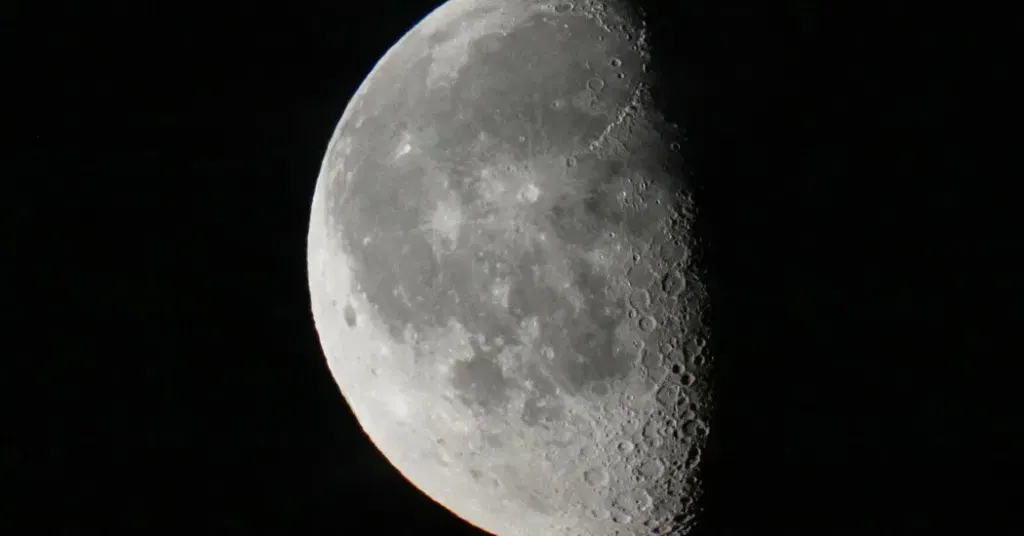
A Four-Ton SpaceX Rocket Stage Hit the Moon, but No One Saw It
A four‑ton upper stage from a SpaceX launch reportedly struck the Moon. Astronomers, both amateur and professional, directed telescopes toward the predicted impact site but have not yet observed any visible evidence of the collision. The lack of immediate visual confirmation leaves the event unverified pending further observations.
- ▪A four‑ton rocket stage from a recent SpaceX mission is believed to have impacted the Moon.
- ▪The impact location was targeted by amateur and professional astronomers using telescopes.
- ▪No obvious signs of a collision have been observed so far.
- ▪Scientists plan to continue monitoring the site for any delayed effects.
8 outlets in our directory ran this story, first to last over 34 hours. Coverage spans 2 points on the political spectrum — 1 lean left, 6 centre.
- ▪ SpaceX's wandering Falcon 9 rocket has crashed into the moon — Engadget
- ▪ Welp, Nobody Saw SpaceX’s Falcon 9 Rocket Crash Into the Moon — WIRED
- ▪ Why haven't we seen images of SpaceX Moon crash yet? — BBC News — Science
- ▪ A SpaceX rocket stage just crashed into the Moon after drifting through space for 18 months — TechSpot
- ▪ Piece of SpaceX rocket believed to have crashed into the moon — Hacker News (Front Page)
- ▪ A SpaceX rocket likely crashed on the moon — Mashable
- ▪ SpaceX rocket hours away from crashing into the moon in unintentional collision — The Guardian — Science
NYT — Science files mainly under science. We currently carry 200 of its stories.
Story provenance
Source · retrieval · rights · ranking — open for full record
inspect →
Story provenance
Attribution is not the same as permission. This drawer separates discovery metadata, excerpts, WeSearch-generated summaries, reuse status, and whether the publisher receives the visit. Nothing here claims a legal grant the publisher has not made.
Record
| Original publisher | NYT — Science |
| Canonical URL | https://www.nytimes.com/2026/08/05/science/space-x-moon-crash-confirmation.html |
| Publication time | Wed, 05 Aug 2026 16:11:50 +0000 |
| Retrieval time | 2026-08-05T16:25:47.531Z |
| Last seen | 2026-08-05T16:25:47.947Z |
| Headline source | Publisher (no WeSearch rewrite) |
| Excerpt source | publisher body |
| Excerpt method | First ~120 words (~800 chars) of extracted publisher body, fair-use limited. |
| Summary | WeSearch · cerebras-chat (WeSearch summarizer) |
| Summary source text | contentText |
| Citation coverage | Summary is a WeSearch-generated derivative; primary citation is the original publisher URL. |
| Cluster | umC7i7n3u-gP · 12 stories |
| Cluster logic | Grouped by semantic title/content similarity across sources within a rolling window. Same-publisher template collisions are excluded from coverage comparison. |
| Ranking reason | Story pages are not engagement-ranked. Hub feeds use recency, with optional source-diversified chronological ordering (cap consecutive stories per source). No personalized ranking. |
| Publisher visit | Yes — open original |
| Substitutes article? | No — link-out required for full text |
Rights status (four layers)
WeSearch handling by dimension
| Indexing | May the item be indexed (stored, ranked, made findable)? | Allowed |
| Snippet | May a short excerpt of the publisher's text be shown? | Allowed |
| AI summary | May WeSearch generate its own short summary of the article? | Limited |
| Retrieval / RAG | May the content be exposed for third-party retrieval-augmented generation? | Not asserted |
| Model training | May the content be used to train AI models? | Not asserted |
| Commercial reuse | May the content be reused commercially? | Not permitted |
Basis: Derived from the published RSS/Atom feed. Contact: [email protected]. Reviewed: 2026-07-24.
Opening excerpt (first ~120 words) tap to expand
#masthead-section-label, #masthead-bar-one { display: none }SpaceXFirst Report After I.P.O.Stock Lockup EndingStarship TestFirst TrillionaireSpaceX-Tesla Merger?AdvertisementSKIP ADVERTISEMENTSupported bySKIP ADVERTISEMENTA Four-Ton SpaceX Rocket Stage Hit the Moon, but No One Saw ItAlthough amateur and professional astronomers pointed their telescopes at the impact site, there were no obvious signs of a collision — at least not yet.Listen · 2:48 min Share full article0Credit...Sergei Grits/Associated PressBy Kenneth ChangAug. 5, 2026, 12:11 p.m.
…
Excerpt limited to ~120 words for fair-use compliance. The full article is at NYT — Science.