A Full Motion Video Codec For the Atari ST
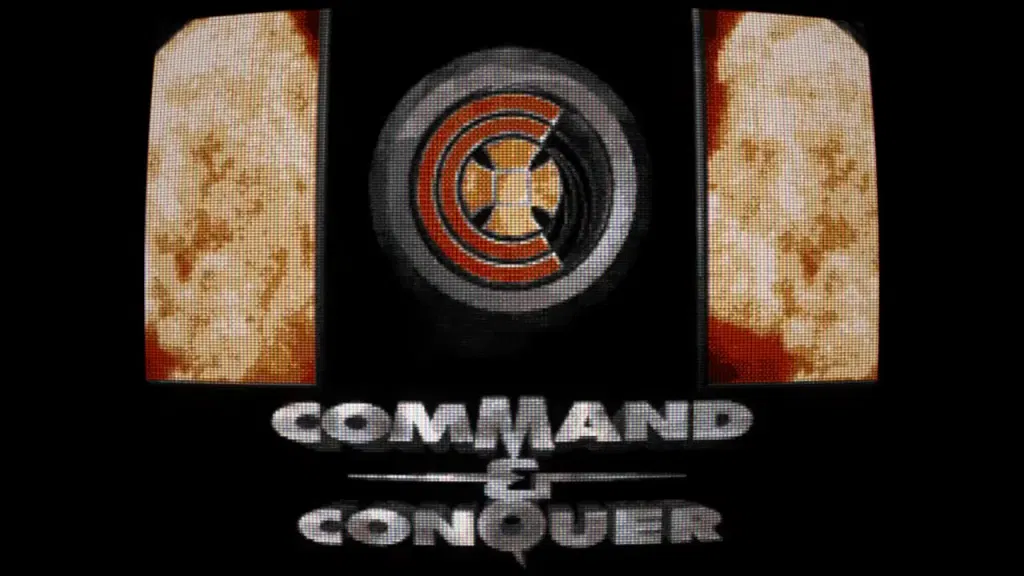
The Atari ST, a 41‑year‑old 68000‑based computer, has been used to play full‑motion video (FMV) cutscenes from later DOS games. Jonas Eschenburg developed a codebook‑based video codec that works within the system’s 16‑colour planar graphics limitations. A port of Command & Conquer with FMV support is available for download on Itch.io.
- ▪The Atari ST lacks dedicated graphics hardware and relies on an 8 MHz Motorola CPU for all rendering.
- ▪Eschenburg’s codec splits video frames into addressable blocks and continuously updates both the palette and a codebook to reduce data transfer demands.
- ▪The codec must operate within the ST’s 16‑colour planar mode, which is far less colorful than the 256‑colour VGA standard of later PCs.
- ▪A functional port of Command & Conquer, including its introductory FMV, has been released on Itch.io for the Atari ST.
Hackaday files mainly under tech. We currently carry 265 of its stories.
Story provenance
Source · retrieval · rights · ranking — open for full record
inspect →
Story provenance
Attribution is not the same as permission. This drawer separates discovery metadata, excerpts, WeSearch-generated summaries, reuse status, and whether the publisher receives the visit. Nothing here claims a legal grant the publisher has not made.
Record
| Original publisher | Hackaday |
| Canonical URL | https://hackaday.com/2026/08/04/a-full-motion-video-codec-for-the-atari-st/ |
| Publication time | Wed, 05 Aug 2026 05:00:41 +0000 |
| Retrieval time | 2026-08-05T05:05:43.560Z |
| Last seen | 2026-08-05T05:05:43.560Z |
| Headline source | Publisher (no WeSearch rewrite) |
| Excerpt source | publisher body |
| Excerpt method | First ~120 words (~800 chars) of extracted publisher body, fair-use limited. |
| Summary | WeSearch · cerebras-chat (WeSearch summarizer) |
| Summary source text | contentText |
| Citation coverage | Summary is a WeSearch-generated derivative; primary citation is the original publisher URL. |
| Cluster | IsxTGXIKHM7d · 1 stories |
| Cluster logic | Grouped by semantic title/content similarity across sources within a rolling window. Same-publisher template collisions are excluded from coverage comparison. |
| Ranking reason | Story pages are not engagement-ranked. Hub feeds use recency, with optional source-diversified chronological ordering (cap consecutive stories per source). No personalized ranking. |
| Publisher visit | Yes — open original |
| Substitutes article? | No — link-out required for full text |
Rights status (four layers)
WeSearch handling by dimension
| Indexing | May the item be indexed (stored, ranked, made findable)? | Allowed |
| Snippet | May a short excerpt of the publisher's text be shown? | Allowed |
| AI summary | May WeSearch generate its own short summary of the article? | Limited |
| Retrieval / RAG | May the content be exposed for third-party retrieval-augmented generation? | Not asserted |
| Model training | May the content be used to train AI models? | Not asserted |
| Commercial reuse | May the content be reused commercially? | Not permitted |
Basis: Derived from the published RSS/Atom feed. Contact: [email protected]. Reviewed: 2026-07-24.
Opening excerpt (first ~120 words) tap to expand
A Full Motion Video Codec For The Atari ST No comments by: Tyler August August 4, 2026 Title: Copy Short Link: Copy Who says an old dog can’t do new tricks? The Atari ST has got to qualify as an “old dog” 41 years after launch, and if playing Full Motion Video (FMV) cutscenes– from DOS games of a decade later– doesn’t count as a new trick, we’re not sure what does. In this case, [Jonas Eschenburg] is the trainer and his fascinating write-up lets you know exactly how he did it. Unlike the contemporary and pricier Amiga, Atari’s 68000-based home computer didn’t have any fancy graphics chips; everything has to go through the Motorolla CPU at a blistering 8MHz.
…
Excerpt limited to ~120 words for fair-use compliance. The full article is at Hackaday.
Discussion
0 commentsMore from Hackaday