A Fungus That Can Hijack Minds — and 6 Other Strange Fungal Abilities Experts Are Still Untangling
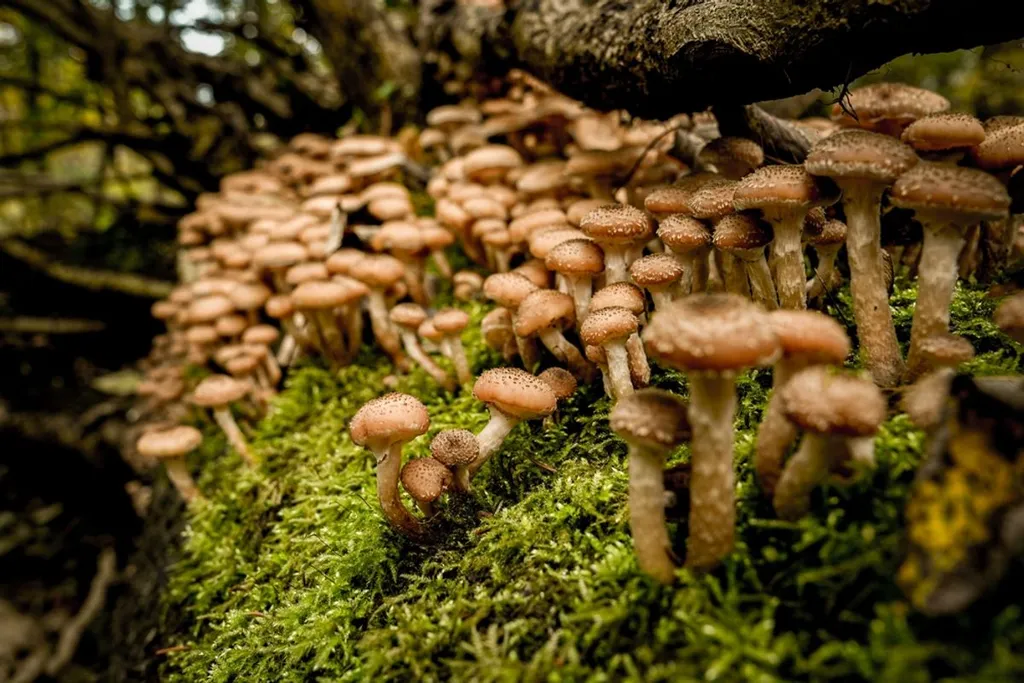
Fungi exhibit a range of remarkable abilities that challenge our understanding of life. Some species can manipulate the behavior of insects, while others form extensive underground networks for communication. Additionally, fungi are genetically closer to animals than to plants, highlighting their unique role in ecosystems.
- ▪Fungi can control the minds and behaviors of insects, such as the zombie-ant fungus that alters carpenter ants' actions.
- ▪The largest organism in the world is a fungus, Armillaria ostoyae, which spans 2,385 acres and weighs up to 35,000 tons.
- ▪Fungi are genetically and evolutionarily closer to animals than to plants, sharing part of their lifecycle with them.
Discover Magazine files mainly under science. We currently carry 86 of its stories.
Story provenance
Source · retrieval · rights · ranking — open for full record
inspect →
Story provenance
Attribution is not the same as permission. This drawer separates discovery metadata, excerpts, WeSearch-generated summaries, reuse status, and whether the publisher receives the visit. Nothing here claims a legal grant the publisher has not made.
Record
| Original publisher | Discover Magazine |
| Canonical URL | https://www.discovermagazine.com/a-fungus-that-can-hijack-minds-and-6-other-strange-fungal-abilities-experts-are-still-untangling-49111 |
| Publication time | Sat, 16 May 2026 14:00:00 GMT |
| Retrieval time | 2026-05-16T14:05:18.662Z |
| Last seen | 2026-05-16T14:05:18.662Z |
| Headline source | Publisher (no WeSearch rewrite) |
| Excerpt source | publisher body |
| Excerpt method | First ~120 words (~800 chars) of extracted publisher body, fair-use limited. |
| Summary | WeSearch · cerebras-chat (WeSearch summarizer) |
| Summary source text | contentText |
| Citation coverage | Summary is a WeSearch-generated derivative; primary citation is the original publisher URL. |
| Cluster | SMkPi202juYm |
| Cluster logic | Grouped by semantic title/content similarity across sources within a rolling window. Same-publisher template collisions are excluded from coverage comparison. |
| Ranking reason | Story pages are not engagement-ranked. Hub feeds use recency, with optional source-diversified chronological ordering (cap consecutive stories per source). No personalized ranking. |
| Publisher visit | Yes — open original |
| Substitutes article? | No — link-out required for full text |
Rights status (four layers)
WeSearch handling by dimension
| Indexing | May the item be indexed (stored, ranked, made findable)? | Allowed |
| Snippet | May a short excerpt of the publisher's text be shown? | Allowed |
| AI summary | May WeSearch generate its own short summary of the article? | Limited |
| Retrieval / RAG | May the content be exposed for third-party retrieval-augmented generation? | Not asserted |
| Model training | May the content be used to train AI models? | Not asserted |
| Commercial reuse | May the content be reused commercially? | Not permitted |
Basis: Derived from the published RSS/Atom feed. Contact: [email protected]. Reviewed: 2026-07-24.
Opening excerpt (first ~120 words) tap to expand
With an estimated five million species found around the world, according to a study in Scientific Reports, fungi inhabit nearly every corner of the world’s most remote and wild places. Fungi have also developed an impressive arsenal of abilities that help them thrive, from glowing in the dark to potentially helping them battle climate change. “Fungi live and interact with nature on the microscopic level. As a result, the natural world becomes a lot bigger in terms of the habitats and niches they can interact with,” Andrew Wilson, associate curator of mycology at the Denver Botanic Gardens, told Discover.Fungi don’t just survive in extreme environments — they reshape scientists’ understanding of life’s capabilities.
…
Excerpt limited to ~120 words for fair-use compliance. The full article is at Discover Magazine.