WeSearch
A Hidden Design Feature May Explain How the Great Pyramid Survives Earthquakes
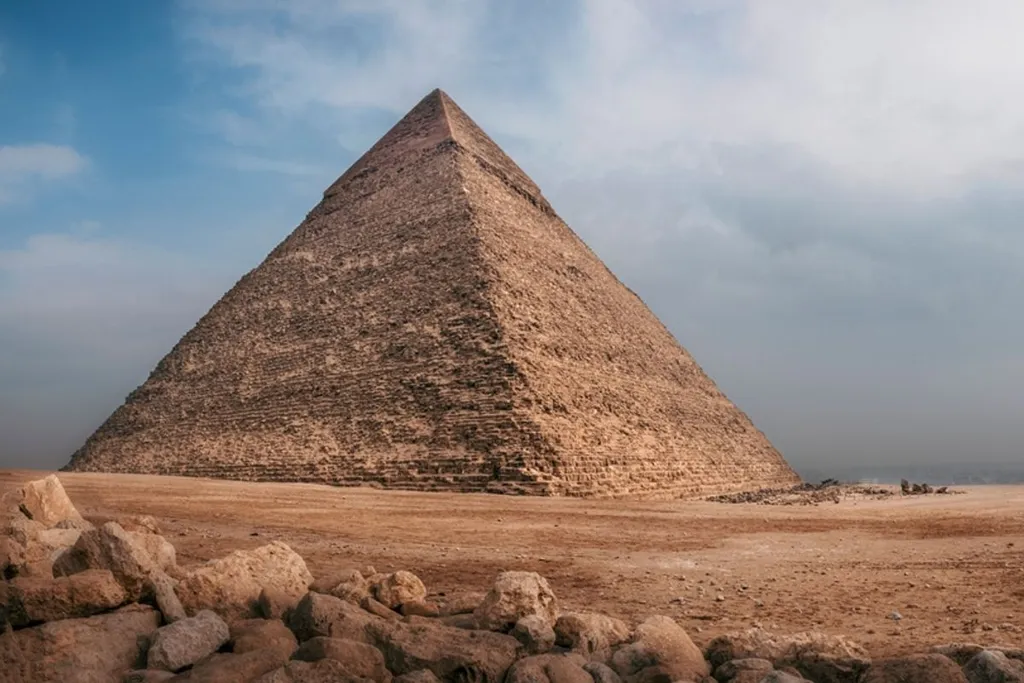
A Hidden Design Feature May Explain How the Great Pyramid Survives Earthquakes

Anastasia Scott· ·3 min read · 0 reactions · 0 comments · 55 views
More from Discover Magazine science Compare coverage Trending Talk Blindspots Daily Sources Live wire
TL;DR · WeSearch summary

A recent study reveals how the Great Pyramid of Giza has survived numerous earthquakes over the centuries. Researchers found that seismic energy moves through the pyramid differently than through the surrounding ground, helping to distribute stress and reduce damage. The pyramid's design, including its low center of gravity and specific chamber structures, may also contribute to its resilience against seismic activity.

Key facts
About this source

Discover Magazine files mainly under science. We currently carry 86 of its stories.

Original article
Discover Magazine · Anastasia Scott
Read full at Discover Magazine →

Story provenance

Source · retrieval · rights · ranking — open for full record
inspect →

Attribution is not the same as permission. This drawer separates discovery metadata, excerpts, WeSearch-generated summaries, reuse status, and whether the publisher receives the visit. Nothing here claims a legal grant the publisher has not made.

Record

Original publisherDiscover Magazine
Canonical URLhttps://www.discovermagazine.com/a-hidden-design-feature-may-explain-how-the-great-pyramid-survives-earthquakes-49147
Publication timeFri, 22 May 2026 21:20:00 GMT
Retrieval time2026-05-22T21:27:02.993Z
Last seen2026-05-22T21:27:02.993Z
Headline sourcePublisher (no WeSearch rewrite)
Excerpt sourcepublisher body
Excerpt methodFirst ~120 words (~800 chars) of extracted publisher body, fair-use limited.
SummaryWeSearch · cerebras-chat (WeSearch summarizer)
Summary source textcontentText
Citation coverageSummary is a WeSearch-generated derivative; primary citation is the original publisher URL.
ClusterG0G8q0nLInNO
Cluster logicGrouped by semantic title/content similarity across sources within a rolling window. Same-publisher template collisions are excluded from coverage comparison.
Ranking reasonStory pages are not engagement-ranked. Hub feeds use recency, with optional source-diversified chronological ordering (cap consecutive stories per source). No personalized ranking.
Publisher visitYes — open original
Substitutes article?No — link-out required for full text

Rights status (four layers)

Publisher-declared
No publisher-confirmed rights record for this source yet.
Machine-readable
No source-specific machine-readable restriction detected beyond the public feed.
WeSearch interpretation
WeSearch declared handling (basis: Derived from the published RSS/Atom feed). This is WeSearch policy, not a legal grant on the publisher's behalf.
Unknown
Retrieval and training permissions are not asserted unless the publisher confirms them.

WeSearch handling by dimension

Indexing May the item be indexed (stored, ranked, made findable)? Allowed
Snippet May a short excerpt of the publisher's text be shown? Allowed
AI summary May WeSearch generate its own short summary of the article? Limited
Retrieval / RAG May the content be exposed for third-party retrieval-augmented generation? Not asserted
Model training May the content be used to train AI models? Not asserted
Commercial reuse May the content be reused commercially? Not permitted

Basis: Derived from the published RSS/Atom feed. Contact: [email protected]. Reviewed: 2026-07-24.

Opening excerpt (first ~120 words) tap to expand

As earthquake vibrations travel upward through the Great Pyramid of Giza, they intensify before weakening inside chambers constructed above the King’s Chamber. That drop in vibration strength may be one reason the pyramid has survived thousands of years of earthquakes with relatively little damage.A new study, published in Scientific Reports, examines why the Pyramid of Khufu has endured centuries of seismic activity, including an 1847 earthquake estimated at magnitude 6.8 and the 1992 Cairo earthquake, which killed more than 500 people, without suffering serious internal or external damage.Researchers found that seismic energy moves through the pyramid differently than it does through the surrounding ground, helping distribute stress through much of the structure instead of concentrating…

Excerpt limited to ~120 words for fair-use compliance. The full article is at Discover Magazine.

Anonymous · no account needed
Share 𝕏 Facebook Reddit LinkedIn Threads WhatsApp Bluesky Mastodon Email

Discussion

0 comments

More from Discover Magazine