A Lyme Disease Vaccine Could Soon Be Available — Here's How to Prevent the Disease Until It's Ready
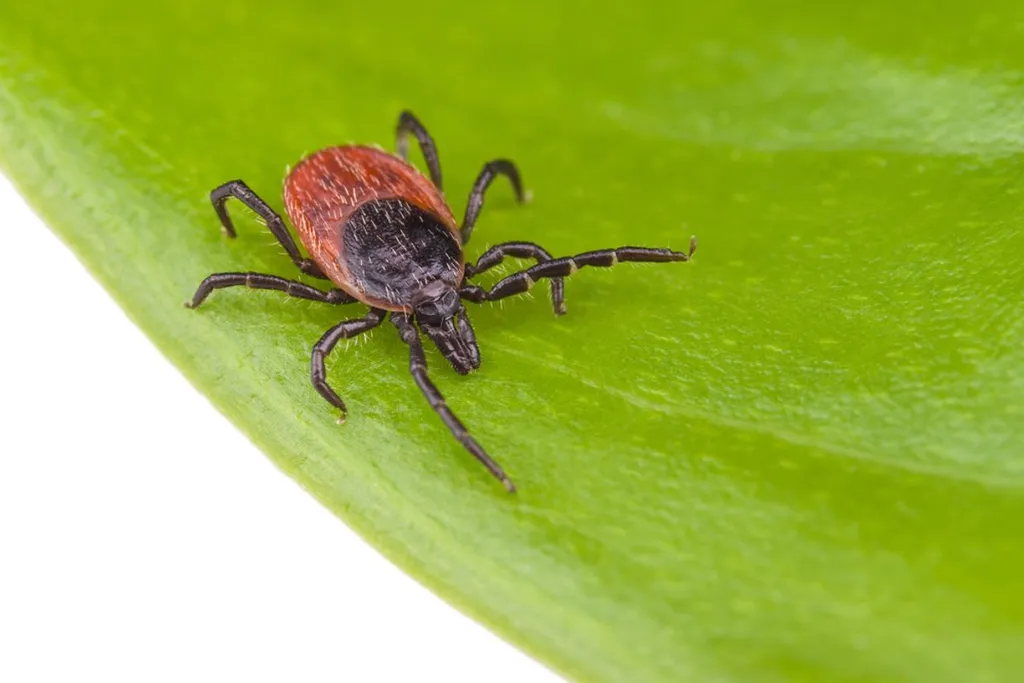
A Lyme disease vaccine developed by Pfizer and Valneva shows promise in Phase 3 trials, demonstrating about 73 percent effectiveness. Lyme disease, caused by the Borrelia burgdorferi bacterium, is contracted through bites from infected black-legged ticks and is becoming more prevalent. Until the vaccine is available, preventive measures include wearing protective clothing, using tick repellents, and performing regular tick checks after outdoor activities.
- ▪Lyme disease is caused by the bacterium Borrelia burgdorferi and is contracted from black-legged ticks.
- ▪Around 476,000 people contract Lyme disease annually in the U.S., with cases increasing due to environmental factors.
- ▪The new vaccine targets six strains of B. burgdorferi and aims to prevent transmission from ticks to humans.
Discover Magazine files mainly under science. We currently carry 86 of its stories.
Story provenance
Source · retrieval · rights · ranking — open for full record
inspect →
Story provenance
Attribution is not the same as permission. This drawer separates discovery metadata, excerpts, WeSearch-generated summaries, reuse status, and whether the publisher receives the visit. Nothing here claims a legal grant the publisher has not made.
Record
| Original publisher | Discover Magazine |
| Canonical URL | https://www.discovermagazine.com/a-lyme-disease-vaccine-could-soon-be-available-here-s-how-to-prevent-the-disease-until-it-s-ready-49165 |
| Publication time | Sat, 30 May 2026 14:00:00 GMT |
| Retrieval time | 2026-05-30T14:04:38.135Z |
| Last seen | 2026-05-30T14:04:38.135Z |
| Headline source | Publisher (no WeSearch rewrite) |
| Excerpt source | publisher body |
| Excerpt method | First ~120 words (~800 chars) of extracted publisher body, fair-use limited. |
| Summary | WeSearch · cerebras-chat (WeSearch summarizer) |
| Summary source text | contentText |
| Citation coverage | Summary is a WeSearch-generated derivative; primary citation is the original publisher URL. |
| Cluster | d7lZ0plO3eHO |
| Cluster logic | Grouped by semantic title/content similarity across sources within a rolling window. Same-publisher template collisions are excluded from coverage comparison. |
| Ranking reason | Story pages are not engagement-ranked. Hub feeds use recency, with optional source-diversified chronological ordering (cap consecutive stories per source). No personalized ranking. |
| Publisher visit | Yes — open original |
| Substitutes article? | No — link-out required for full text |
Rights status (four layers)
WeSearch handling by dimension
| Indexing | May the item be indexed (stored, ranked, made findable)? | Allowed |
| Snippet | May a short excerpt of the publisher's text be shown? | Allowed |
| AI summary | May WeSearch generate its own short summary of the article? | Limited |
| Retrieval / RAG | May the content be exposed for third-party retrieval-augmented generation? | Not asserted |
| Model training | May the content be used to train AI models? | Not asserted |
| Commercial reuse | May the content be reused commercially? | Not permitted |
Basis: Derived from the published RSS/Atom feed. Contact: [email protected]. Reviewed: 2026-07-24.
Opening excerpt (first ~120 words) tap to expand
Lyme disease is a serious condition caused by the bacterium Borrelia burgdorferi. It’s contracted from the bite of black-legged ticks, known as deer ticks, that carry the bacteria, according to the Mayo Clinic. The illness, which can lead to serious nerve issues, joint pain, and cardiovascular concerns, occurs in almost every state in the U.S., though it’s most common in the Northeast and Midwest. Vermont, Maine, and Rhode Island have the most cases in the U.S., according to the Centers for Disease Control and Prevention (CDC).The number of people who contract the condition is around 476,000 per year, and that number is growing due to a changing climate, a growing deer population, and humans moving into natural habitats where they’re more likely to be exposed to the bacteria, per Johns…
Excerpt limited to ~120 words for fair-use compliance. The full article is at Discover Magazine.