A Modern Web Browser For Classic Mac OS
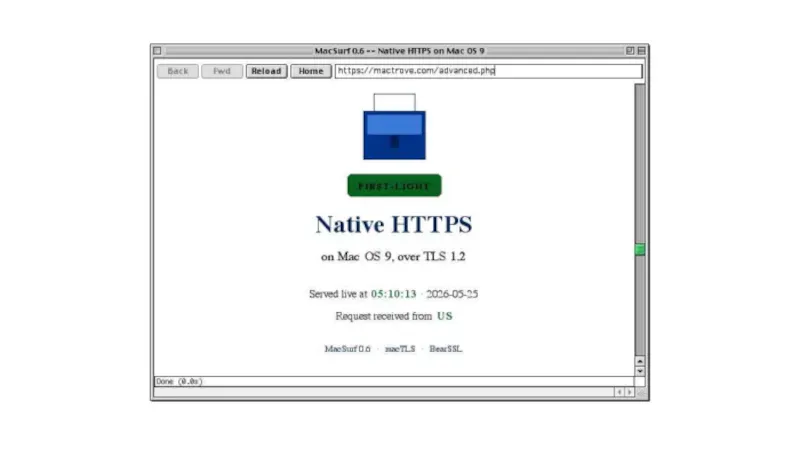
A new web browser called Macsurf has been developed for classic Mac OS 9 on PowerPC computers. This browser is a port of the Netsurf browser, which is known for its lightweight and portable nature. While it offers modern web capabilities, users may find it lacks the performance of contemporary browsers like Google Chrome.
- ▪Macsurf is a port of the Netsurf browser designed for classic Mac OS 9 on PowerPC.
- ▪The browser supports modern web standards including HTML, CSS, and JavaScript.
- ▪It is lightweight and ideal for older PowerPC Macs, but may struggle with sites designed for the latest browsers.
3 outlets in our directory ran this story, first to last over 23 hours. All of the coverage we found sits in one bucket: centre. That one-sidedness is itself worth noticing.
- ▪ The modern web, on a 25-year-old Mac — Macsurf
- ▪ Macsurf, "modern" web browser for macOS 9 — GitHub
Hackaday files mainly under tech. We currently carry 211 of its stories.
Story provenance
Source · retrieval · rights · ranking — open for full record
inspect →
Story provenance
Attribution is not the same as permission. This drawer separates discovery metadata, excerpts, WeSearch-generated summaries, reuse status, and whether the publisher receives the visit. Nothing here claims a legal grant the publisher has not made.
Record
| Original publisher | Hackaday |
| Canonical URL | https://hackaday.com/2026/05/29/a-modern-web-browser-for-classic-mac-os/ |
| Publication time | Fri, 29 May 2026 18:30:40 +0000 |
| Retrieval time | 2026-05-29T18:35:02.465Z |
| Last seen | 2026-05-29T18:35:02.465Z |
| Headline source | Publisher (no WeSearch rewrite) |
| Excerpt source | publisher body |
| Excerpt method | First ~120 words (~800 chars) of extracted publisher body, fair-use limited. |
| Summary | WeSearch · cerebras-chat (WeSearch summarizer) |
| Summary source text | contentText |
| Citation coverage | Summary is a WeSearch-generated derivative; primary citation is the original publisher URL. |
| Cluster | uYv8oFmiiAKV · 3 stories |
| Cluster logic | Grouped by semantic title/content similarity across sources within a rolling window. Same-publisher template collisions are excluded from coverage comparison. |
| Ranking reason | Story pages are not engagement-ranked. Hub feeds use recency, with optional source-diversified chronological ordering (cap consecutive stories per source). No personalized ranking. |
| Publisher visit | Yes — open original |
| Substitutes article? | No — link-out required for full text |
Rights status (four layers)
WeSearch handling by dimension
| Indexing | May the item be indexed (stored, ranked, made findable)? | Allowed |
| Snippet | May a short excerpt of the publisher's text be shown? | Allowed |
| AI summary | May WeSearch generate its own short summary of the article? | Limited |
| Retrieval / RAG | May the content be exposed for third-party retrieval-augmented generation? | Not asserted |
| Model training | May the content be used to train AI models? | Not asserted |
| Commercial reuse | May the content be reused commercially? | Not permitted |
Basis: Derived from the published RSS/Atom feed. Contact: [email protected]. Reviewed: 2026-07-24.
Opening excerpt (first ~120 words) tap to expand
A Modern Web Browser For Classic Mac OS No comments by: Jenny List May 29, 2026 Title: Copy Short Link: Copy When using older computers there comes a point at which modern software drops support, as for example is happening with builds for Windows XP. Every now and then though, along comes something that bucks the trend. Enter [mplsllc] with Macsurf, a port of the Netsurf browser for classic MacOS 9 on PowerPC. Bring your nineties beige box back online! The first generation of PowerPC Macs occupy an odd position, being faster and more capable than their predecessors while not sharing the ability to run MacOS X like their G3 descendants. Macsurf has the promise of bringing them into the 2020s, but if you’re expecting the equivalent of Google Chrome you might be disappointed.
…
Excerpt limited to ~120 words for fair-use compliance. The full article is at Hackaday.
Discussion
0 commentsMore from Hackaday