A Necessary History of the Oddest Letter: W
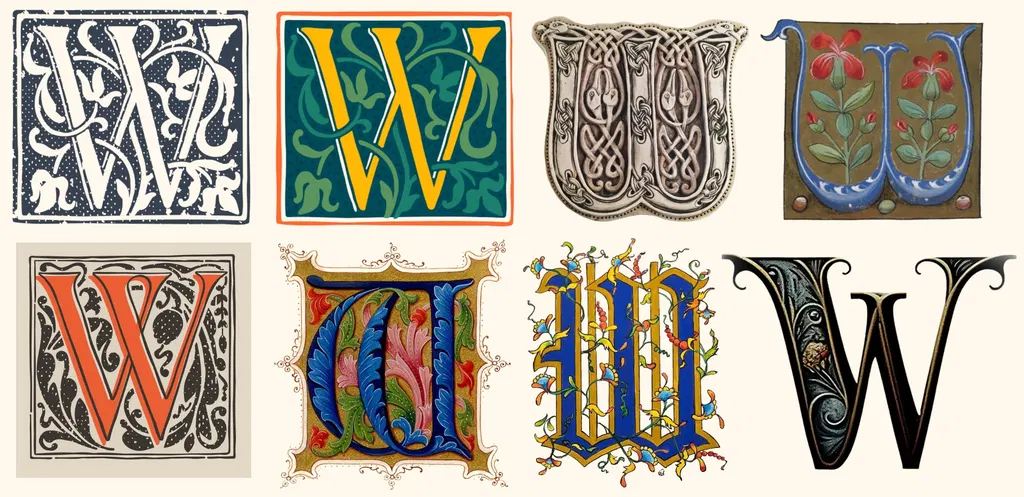
“The letter W is a child of the fall of Rome. In the fifth century CE, the western half of the Roman Empire disintegrated into a patchwork of new kingdoms and new rulers. The reasons behind this collapse of imperial power are complex, but a large role was played by various peoples who had formerly lived outside its borders.
- ▪“The letter W is a child of the fall of Rome.
- ▪In the fifth century CE, the western half of the Roman Empire disintegrated into a patchwork of new kingdoms and new rulers.
- ▪The reasons behind this collapse of imperial power are complex, but a large role was played by various peoples who had formerly lived outside its borders.
Hacker News (Front Page) files mainly under programming. We currently carry 1,915 of its stories. Top-voted stories on Hacker News.
Story provenance
Source · retrieval · rights · ranking — open for full record
inspect →
Story provenance
Attribution is not the same as permission. This drawer separates discovery metadata, excerpts, WeSearch-generated summaries, reuse status, and whether the publisher receives the visit. Nothing here claims a legal grant the publisher has not made.
Record
| Original publisher | Literary Hub |
| Canonical URL | https://lithub.com/a-necessary-history-of-the-oddest-letter-w/ |
| Publication time | Sun, 20 Sep 2026 17:55:57 +0000 |
| Retrieval time | 2026-09-20T18:13:46.875Z |
| Last seen | 2026-09-20T18:13:46.875Z |
| Headline source | Publisher (no WeSearch rewrite) |
| Excerpt source | publisher body |
| Excerpt method | First ~120 words (~800 chars) of extracted publisher body, fair-use limited. |
| Summary | WeSearch · cerebras-chat (WeSearch summarizer) |
| Summary source text | contentText |
| Citation coverage | Summary is a WeSearch-generated derivative; primary citation is the original publisher URL. |
| Cluster | EQFpFpKEKk3T · 1 stories |
| Cluster logic | Grouped by semantic title/content similarity across sources within a rolling window. Same-publisher template collisions are excluded from coverage comparison. |
| Ranking reason | Story pages are not engagement-ranked. Hub feeds use recency, with optional source-diversified chronological ordering (cap consecutive stories per source). No personalized ranking. |
| Publisher visit | Yes — open original |
| Substitutes article? | No — link-out required for full text |
Rights status (four layers)
WeSearch handling by dimension
| Indexing | May the item be indexed (stored, ranked, made findable)? | Allowed |
| Snippet | May a short excerpt of the publisher's text be shown? | Allowed |
| AI summary | May WeSearch generate its own short summary of the article? | Limited |
| Retrieval / RAG | May the content be exposed for third-party retrieval-augmented generation? | Not asserted |
| Model training | May the content be used to train AI models? | Not asserted |
| Commercial reuse | May the content be reused commercially? | Not permitted |
Basis: Derived from the published RSS/Atom feed. Contact: [email protected]. Reviewed: 2026-07-24.
Opening excerpt (first ~120 words) tap to expand
“The letter W is a child of the fall of Rome. In the fifth century CE, the western half of the Roman Empire disintegrated into a patchwork of new kingdoms and new rulers. The reasons behind this collapse of imperial power are complex, but a large role was played by various peoples who had formerly lived outside its borders. The Romans might have looked down on these migrants as ‘barbarians’, but they also increasingly came to rely on them for military support. They were foederati—peoples bound by treaty to fight Rome’s enemies in return for land and food. It was only with the help of the foederati (a Latin word related to English federation) that the Romans were able to see off the threat of Attila the Hun in 451.
…
Excerpt limited to ~120 words for fair-use compliance. The full article is at Literary Hub.
Discussion
0 commentsMore from Literary Hub