A Pawnshop of the Mind: In Praise of Object-Based Writing
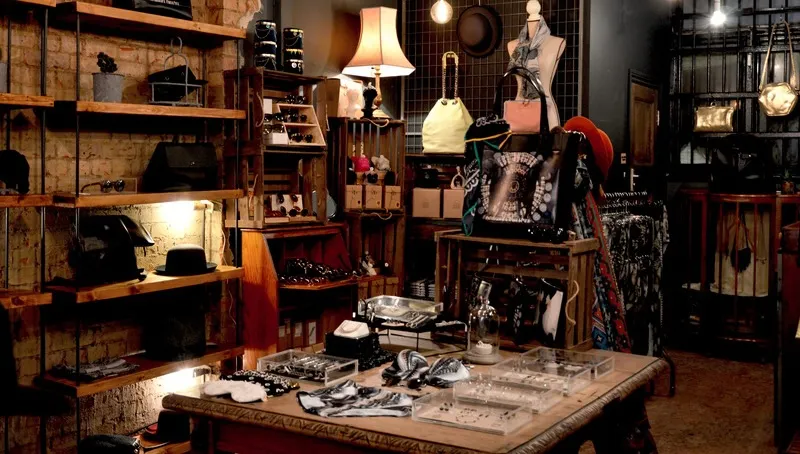
The article reflects on the author's experiences with Franca, a unique pawnshop owner in Nebraska, who taught the author about the significance of objects and their stories. Franca's shop was a chaotic yet meaningful space where discarded items were transformed and given new life. Through her creative expressions and the stories behind the objects, Franca helped the author find clarity and joy in life.
- ▪Franca owned a pawnshop in Nebraska that was filled with a variety of unique and discarded items.
- ▪She taught the author that objects have power and can be remade into something new and meaningful.
- ▪Franca's approach to her shop emphasized the importance of storytelling through objects, allowing for personal and creative expression.
Literary Hub (LitHub) files mainly under books. We currently carry 79 of its stories.
Story provenance
Source · retrieval · rights · ranking — open for full record
inspect →
Attribution is not the same as permission. This drawer separates discovery metadata, excerpts, WeSearch-generated summaries, reuse status, and whether the publisher receives the visit. Nothing here claims a legal grant the publisher has not made.
Record
| Original publisher | Literary Hub |
| Canonical URL | https://lithub.com/a-pawnshop-of-the-mind-in-praise-of-object-based-writing/ |
| Publication time | Wed, 20 May 2026 08:57:19 +0000 |
| Retrieval time | 2026-05-20T09:05:01.211Z |
| Last seen | 2026-05-20T09:05:01.211Z |
| Headline source | Publisher (no WeSearch rewrite) |
| Excerpt source | publisher body |
| Excerpt method | First ~120 words (~800 chars) of extracted publisher body, fair-use limited. |
| Summary | WeSearch · cerebras-chat (WeSearch summarizer) |
| Summary source text | contentText |
| Citation coverage | Summary is a WeSearch-generated derivative; primary citation is the original publisher URL. |
| Cluster | pHZ-8QnfkYx2 |
| Cluster logic | Grouped by semantic title/content similarity across sources within a rolling window. Same-publisher template collisions are excluded from coverage comparison. |
| Ranking reason | Story pages are not engagement-ranked. Hub feeds use recency, with optional source-diversified chronological ordering (cap consecutive stories per source). No personalized ranking. |
| Publisher visit | Yes — open original |
| Substitutes article? | No — link-out required for full text |
Rights status (four layers)
WeSearch handling by dimension
| Indexing | May the item be indexed (stored, ranked, made findable)? | Allowed |
| Snippet | May a short excerpt of the publisher's text be shown? | Allowed |
| AI summary | May WeSearch generate its own short summary of the article? | Limited |
| Retrieval / RAG | May the content be exposed for third-party retrieval-augmented generation? | Not asserted |
| Model training | May the content be used to train AI models? | Not asserted |
| Commercial reuse | May the content be reused commercially? | Not permitted |
Basis: Derived from the published RSS/Atom feed. Contact: [email protected]. Reviewed: 2026-07-24.
Opening excerpt (first ~120 words) tap to expand
“What we call the beginning is often the end And to make an end is to make a beginning. The end is where we start from.” –TS Eliot, from “A Little Gidding” from The Four Quartets *Article continues after advertisement Franca owned a pawnshop in a small town in Nebraska where Railroad Street intersects the loneliest stretch of windy I-80. She had an accent I couldn’t place and never asked or learned about, hair dyed a purplish red, a love for lace-trimmed floral dresses with puffy sleeves, and for a time she was my only friend after I wandered into her shop one day in 1990 looking like the sad teenager I was.
…
Excerpt limited to ~120 words for fair-use compliance. The full article is at Literary Hub.
Discussion
0 commentsMore from Literary Hub