A Super-Accurate Clock Using a Tiny Microcontroller
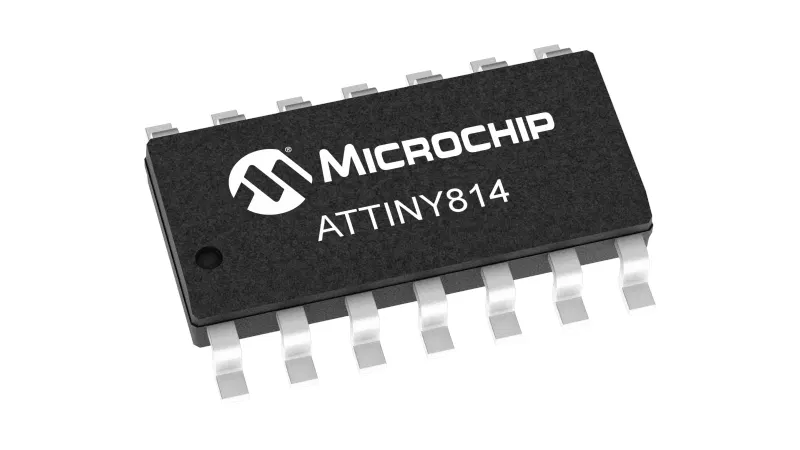
A hobbyist project demonstrates how a tiny ATtiny microcontroller can decode the DCF77 time signal to create a highly accurate radio-controlled clock. The device uses a simple interface with a push-button for navigation and can display time on an I2C screen. This build highlights that complex timing functions can be achieved with minimal hardware rather than powerful processors.
- ▪The project utilizes an ATtiny microcontroller to decode the DCF77 VLF time signal broadcast at 77.5 kHz.
- ▪The clock displays the time on an I2C interface and features a push-button for cycling modes or resetting the signal.
- ▪The design is optional compatible with external temperature sensors and real-time clock modules if the microcontroller has sufficient pins.
- ▪The article emphasizes that the simple digital format of the DCF77 signal allows for efficient decoding without requiring high-end hardware.
Hackaday files mainly under tech. We currently carry 365 of its stories.
Story provenance
Source · retrieval · rights · ranking — open for full record
inspect →
Story provenance
Attribution is not the same as permission. This drawer separates discovery metadata, excerpts, WeSearch-generated summaries, reuse status, and whether the publisher receives the visit. Nothing here claims a legal grant the publisher has not made.
Record
| Original publisher | Hackaday |
| Canonical URL | https://hackaday.com/2026/09/15/a-super-accurate-clock-using-a-tiny-microcontroller/ |
| Publication time | Wed, 16 Sep 2026 05:00:10 +0000 |
| Retrieval time | 2026-09-16T05:03:39.747Z |
| Last seen | 2026-09-16T05:03:39.747Z |
| Headline source | Publisher (no WeSearch rewrite) |
| Excerpt source | publisher body |
| Excerpt method | First ~120 words (~800 chars) of extracted publisher body, fair-use limited. |
| Summary | WeSearch · cerebras-chat (WeSearch summarizer) |
| Summary source text | contentText |
| Citation coverage | Summary is a WeSearch-generated derivative; primary citation is the original publisher URL. |
| Cluster | Xz9N5KIL-llf · 1 stories |
| Cluster logic | Grouped by semantic title/content similarity across sources within a rolling window. Same-publisher template collisions are excluded from coverage comparison. |
| Ranking reason | Story pages are not engagement-ranked. Hub feeds use recency, with optional source-diversified chronological ordering (cap consecutive stories per source). No personalized ranking. |
| Publisher visit | Yes — open original |
| Substitutes article? | No — link-out required for full text |
Rights status (four layers)
WeSearch handling by dimension
| Indexing | May the item be indexed (stored, ranked, made findable)? | Allowed |
| Snippet | May a short excerpt of the publisher's text be shown? | Allowed |
| AI summary | May WeSearch generate its own short summary of the article? | Limited |
| Retrieval / RAG | May the content be exposed for third-party retrieval-augmented generation? | Not asserted |
| Model training | May the content be used to train AI models? | Not asserted |
| Commercial reuse | May the content be reused commercially? | Not permitted |
Basis: Derived from the published RSS/Atom feed. Contact: [email protected]. Reviewed: 2026-07-24.
Opening excerpt (first ~120 words) tap to expand
A Super-Accurate Clock Using A Tiny Microcontroller No comments by: Jenny List September 15, 2026 Title: Copy Short Link: Copy DCF77 is a German VLF transmitting station that broadcasts a time signal across Europe on 77.5 kHz. Thus a common sight in a European home is a clock emblazoned with the words “Radio controlled”. With the timing broadcast in a simple and low speed digital format it doesn’t require the greatest of hardware to decode, and a small microcontroller can handle the task with ease. And there are few smaller than an ATtiny as used in [kwolf1909]’s decoder. It takes a DCF77 bitstream from a receiver, and shows the time on an I2C display. The receiver isn’t part of this project, however a single-frequency longwave receiver is not a difficult thing to build.
…
Excerpt limited to ~120 words for fair-use compliance. The full article is at Hackaday.
Discussion
0 commentsMore from Hackaday