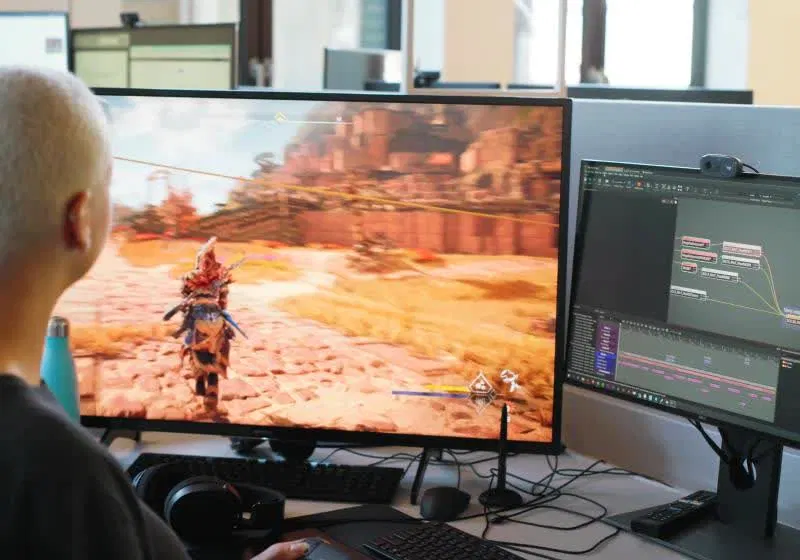
Almost 86% of Japanese game developers are using AI in their workflows, up from 51% in 2025
A survey by the Computer Entertainment Suppliers Association reveals that 85.8% of Japanese game developers now use generative AI in their workflows. This represents a significant increase from 51% adoption rates reported in 2025, with the majority of developers using these tools daily. The industry cites improved efficiency, shorter development cycles, and reduced costs as the primary benefits of this integration.
- ▪The CESA survey indicates that 63% of Japanese game developers use AI tools daily, while 22.8% use them occasionally.
- ▪Developers report that AI is primarily used for debugging, error correction, and automated testing rather than generating final code.
- ▪Studios maintain that all AI usage is supervised by human developers to ensure creative control and prevent intellectual property issues.
- ▪The full detailed report from the survey is scheduled to be published in December 2026.
TechSpot files mainly under tech. We currently carry 471 of its stories.
Story provenance
Source · retrieval · rights · ranking — open for full record
inspect →
Story provenance
Attribution is not the same as permission. This drawer separates discovery metadata, excerpts, WeSearch-generated summaries, reuse status, and whether the publisher receives the visit. Nothing here claims a legal grant the publisher has not made.
Record
| Original publisher | TechSpot |
| Canonical URL | https://www.techspot.com/news/113892-nearly-86-japanese-game-developers-using-generative-ai.html |
| Publication time | Fri, 18 Sep 2026 13:40 -0500 |
| Retrieval time | 2026-09-18T18:43:46.071Z |
| Last seen | 2026-09-18T18:43:46.071Z |
| Headline source | Publisher (no WeSearch rewrite) |
| Excerpt source | publisher body |
| Excerpt method | First ~120 words (~800 chars) of extracted publisher body, fair-use limited. |
| Summary | WeSearch · cerebras-chat (WeSearch summarizer) |
| Summary source text | contentText |
| Citation coverage | Summary is a WeSearch-generated derivative; primary citation is the original publisher URL. |
| Cluster | LFZSxfBzZsB7 · 1 stories |
| Cluster logic | Grouped by semantic title/content similarity across sources within a rolling window. Same-publisher template collisions are excluded from coverage comparison. |
| Ranking reason | Story pages are not engagement-ranked. Hub feeds use recency, with optional source-diversified chronological ordering (cap consecutive stories per source). No personalized ranking. |
| Publisher visit | Yes — open original |
| Substitutes article? | No — link-out required for full text |
Rights status (four layers)
WeSearch handling by dimension
| Indexing | May the item be indexed (stored, ranked, made findable)? | Allowed |
| Snippet | May a short excerpt of the publisher's text be shown? | Allowed |
| AI summary | May WeSearch generate its own short summary of the article? | Limited |
| Retrieval / RAG | May the content be exposed for third-party retrieval-augmented generation? | Not asserted |
| Model training | May the content be used to train AI models? | Not asserted |
| Commercial reuse | May the content be reused commercially? | Not permitted |
Basis: Derived from the published RSS/Atom feed. Contact: [email protected]. Reviewed: 2026-07-24.
Opening excerpt (first ~120 words) tap to expand
AI Gaming japan game development Almost 86% of Japanese game developers are using AI in their workflows, up from 51% in 2025 Benefits include improved efficiency, shorter development cycles, and reduced costs, according to survey By Kishalaya Kundu September 18, 2026, 13:40 Add TechSpot Serving tech enthusiasts for over 25 years. TechSpot means tech analysis and advice you can trust. In context: With AI coding assistants becoming an integral part of the software development process for professional programmers, many video game devs are reportedly using generative AI regularly in their workflows. A new report released at the 2026 Tokyo Game Show reveals just how widespread the practice has become.
…
Excerpt limited to ~120 words for fair-use compliance. The full article is at TechSpot.
Discussion
0 commentsMore from TechSpot