
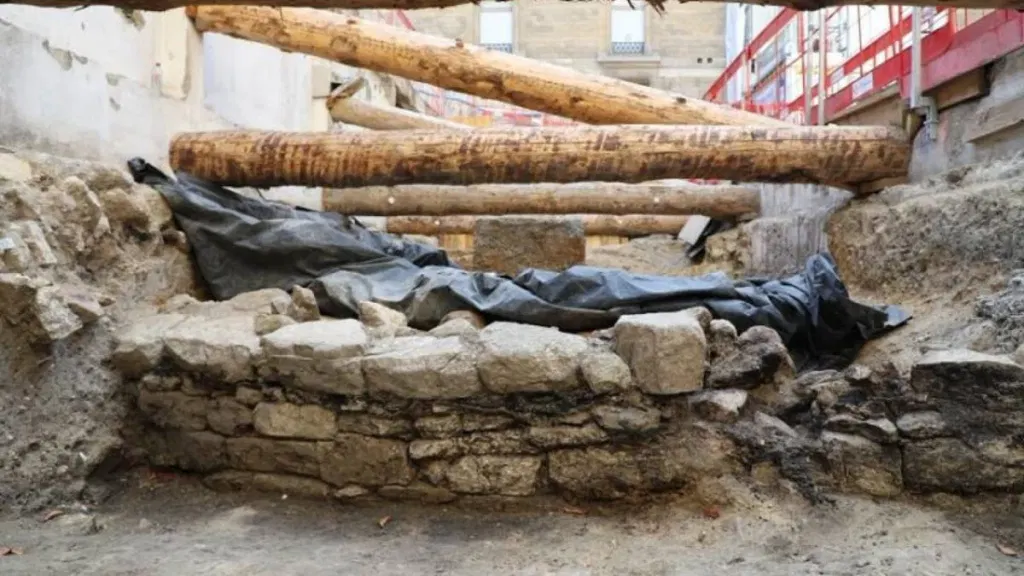
Ancient Parisians Torched Their Own City to Stop Caesar. Archaeologists May Have Found the Scorch Marks
Julius Caesar’s account of the Gallic Wars recounts how the Parisii—a Gallic tribe who lived on the Seine—burnt down their own capital, Lutetia, to prevent Roman invasion. The bold yet risky decision unfortunately didn’t stop the Romans, and it also meant the ancient settlement would stay lost for over two thousand years. In a statement, France’s ministry of culture announced the discovery of ancient Gallic stone and wood walls, as well as other Gallic artifacts.
- ▪Julius Caesar’s account of the Gallic Wars recounts how the Parisii—a Gallic tribe who lived on the Seine—burnt down their own capital, Lutetia, to prevent Roman invasion.
- ▪The bold yet risky decision unfortunately didn’t stop the Romans, and it also meant the ancient settlement would stay lost for over two thousand years.
- ▪In a statement, France’s ministry of culture announced the discovery of ancient Gallic stone and wood walls, as well as other Gallic artifacts.
Gizmodo files mainly under tech. We currently carry 1,313 of its stories.
Story provenance
Source · retrieval · rights · ranking — open for full record
inspect →
Story provenance
Attribution is not the same as permission. This drawer separates discovery metadata, excerpts, WeSearch-generated summaries, reuse status, and whether the publisher receives the visit. Nothing here claims a legal grant the publisher has not made.
Record
| Original publisher | Gizmodo |
| Canonical URL | https://gizmodo.com/ancient-parisians-torched-their-own-city-to-stop-caesar-archaeologists-may-have-found-the-scorch-marks-2000816792 |
| Publication time | Thu, 24 Sep 2026 17:20:50 +0000 |
| Retrieval time | 2026-09-24T17:25:27.484Z |
| Last seen | 2026-09-24T17:25:27.484Z |
| Headline source | Publisher (no WeSearch rewrite) |
| Excerpt source | publisher body |
| Excerpt method | First ~120 words (~800 chars) of extracted publisher body, fair-use limited. |
| Summary | WeSearch · cerebras-chat (WeSearch summarizer) |
| Summary source text | contentText |
| Citation coverage | Summary is a WeSearch-generated derivative; primary citation is the original publisher URL. |
| Cluster | HktKzenMtZe_ · 1 stories |
| Cluster logic | Grouped by semantic title/content similarity across sources within a rolling window. Same-publisher template collisions are excluded from coverage comparison. |
| Ranking reason | Story pages are not engagement-ranked. Hub feeds use recency, with optional source-diversified chronological ordering (cap consecutive stories per source). No personalized ranking. |
| Publisher visit | Yes — open original |
| Substitutes article? | No — link-out required for full text |
Rights status (four layers)
WeSearch handling by dimension
| Indexing | May the item be indexed (stored, ranked, made findable)? | Allowed |
| Snippet | May a short excerpt of the publisher's text be shown? | Allowed |
| AI summary | May WeSearch generate its own short summary of the article? | Limited |
| Retrieval / RAG | May the content be exposed for third-party retrieval-augmented generation? | Not asserted |
| Model training | May the content be used to train AI models? | Not asserted |
| Commercial reuse | May the content be reused commercially? | Not permitted |
Basis: Derived from the published RSS/Atom feed. Contact: [email protected]. Reviewed: 2026-07-24.
Opening excerpt (first ~120 words) tap to expand
Julius Caesar’s account of the Gallic Wars recounts how the Parisii—a Gallic tribe who lived on the Seine—burnt down their own capital, Lutetia, to prevent Roman invasion. The bold yet risky decision unfortunately didn’t stop the Romans, and it also meant the ancient settlement would stay lost for over two thousand years. Until now, that is. In a statement, France’s ministry of culture announced the discovery of ancient Gallic stone and wood walls, as well as other Gallic artifacts. The archaeological site is located in the courtyard of the Hôtel-Dieu, a public hospital that reportedly opened in 829. The hospital itself is on the Île de la Cité, an island in the middle of the Seine that was long believed to be the original location of Lutetia.
…
Excerpt limited to ~120 words for fair-use compliance. The full article is at Gizmodo.
Discussion
0 commentsMore from Gizmodo




![‘Never After Dark’ Welcomes You to a House Only Ghosts Could Love [Exclusive]](/img-proxy?url=https%3A%2F%2Fgizmodo.com%2Fapp%2Fuploads%2F2026%2F09%2FNever_After_Dark_hallway-1200x675.jpg&w=320)
