Arctic Sea Ice Helped Some Bowhead Whales Survive Centuries of Industrial Whaling
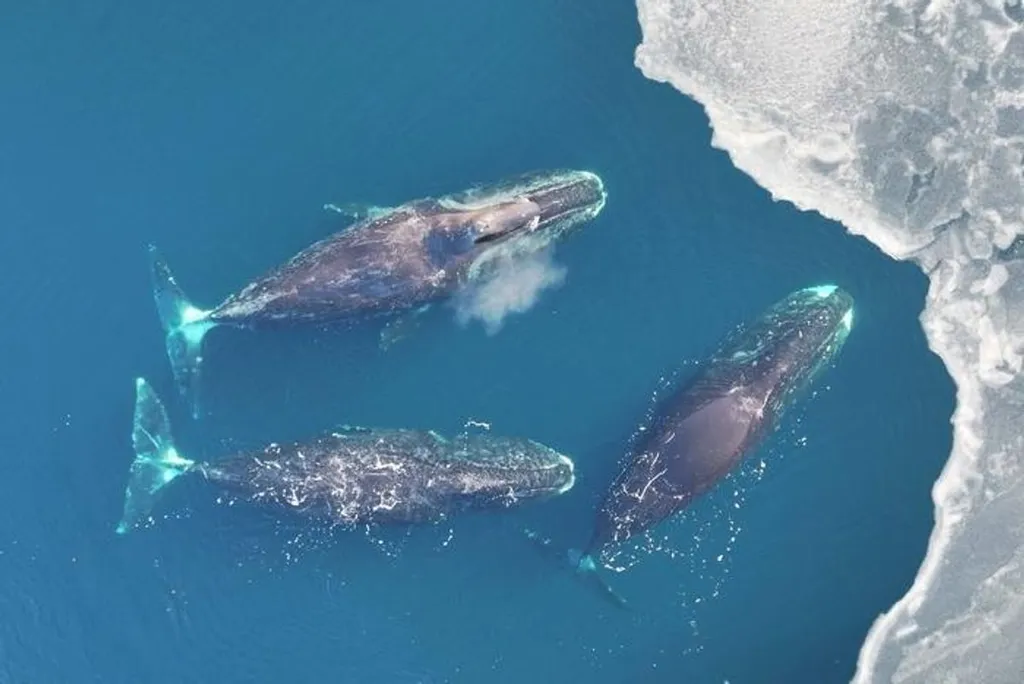
A new study reveals that Arctic sea ice played a crucial role in the survival of some bowhead whale populations during industrial whaling. The research indicates that whales in harder-to-reach areas were less exposed to hunting, allowing those populations to recover more quickly. In contrast, populations that were more accessible to whalers are still struggling to rebound.
- ▪Thick Arctic sea ice acted as a natural barrier to industrial whaling, limiting ship access to certain habitats.
- ▪Bowhead whale populations in protected zones are recovering faster than those in heavily hunted areas.
- ▪Only two of the four bowhead whale populations are currently rebounding significantly, while others remain small.
Discover Magazine files mainly under science. We currently carry 86 of its stories.
Story provenance
Source · retrieval · rights · ranking — open for full record
inspect →
Story provenance
Attribution is not the same as permission. This drawer separates discovery metadata, excerpts, WeSearch-generated summaries, reuse status, and whether the publisher receives the visit. Nothing here claims a legal grant the publisher has not made.
Record
| Original publisher | Discover Magazine |
| Canonical URL | https://www.discovermagazine.com/arctic-sea-ice-helped-some-bowhead-whales-survive-centuries-of-industrial-whaling-49027 |
| Publication time | Tue, 28 Apr 2026 19:25:00 GMT |
| Retrieval time | 2026-04-28T19:32:32.720Z |
| Last seen | 2026-04-28T19:32:32.720Z |
| Headline source | Publisher (no WeSearch rewrite) |
| Excerpt source | publisher body |
| Excerpt method | First ~120 words (~800 chars) of extracted publisher body, fair-use limited. |
| Summary | WeSearch · cerebras-chat (WeSearch summarizer) |
| Summary source text | contentText |
| Citation coverage | Summary is a WeSearch-generated derivative; primary citation is the original publisher URL. |
| Cluster | xcIca7uhVCts |
| Cluster logic | Grouped by semantic title/content similarity across sources within a rolling window. Same-publisher template collisions are excluded from coverage comparison. |
| Ranking reason | Story pages are not engagement-ranked. Hub feeds use recency, with optional source-diversified chronological ordering (cap consecutive stories per source). No personalized ranking. |
| Publisher visit | Yes — open original |
| Substitutes article? | No — link-out required for full text |
Rights status (four layers)
WeSearch handling by dimension
| Indexing | May the item be indexed (stored, ranked, made findable)? | Allowed |
| Snippet | May a short excerpt of the publisher's text be shown? | Allowed |
| AI summary | May WeSearch generate its own short summary of the article? | Limited |
| Retrieval / RAG | May the content be exposed for third-party retrieval-augmented generation? | Not asserted |
| Model training | May the content be used to train AI models? | Not asserted |
| Commercial reuse | May the content be reused commercially? | Not permitted |
Basis: Derived from the published RSS/Atom feed. Contact: [email protected]. Reviewed: 2026-07-24.
Opening excerpt (first ~120 words) tap to expand
Some bowhead whales are making a comeback. Others aren’t, and the difference may come down to where ships couldn’t go and what those unreachable waters protected.A new study published in Proceedings of the National Academy of Sciences finds that thick Arctic sea ice once acted as a natural barrier to industrial whaling, limiting how far ships could travel and which habitats they could reach. Some whale populations were partially shielded from the most intense hunting simply because they lived in places that were harder and riskier to access.
…
Excerpt limited to ~120 words for fair-use compliance. The full article is at Discover Magazine.