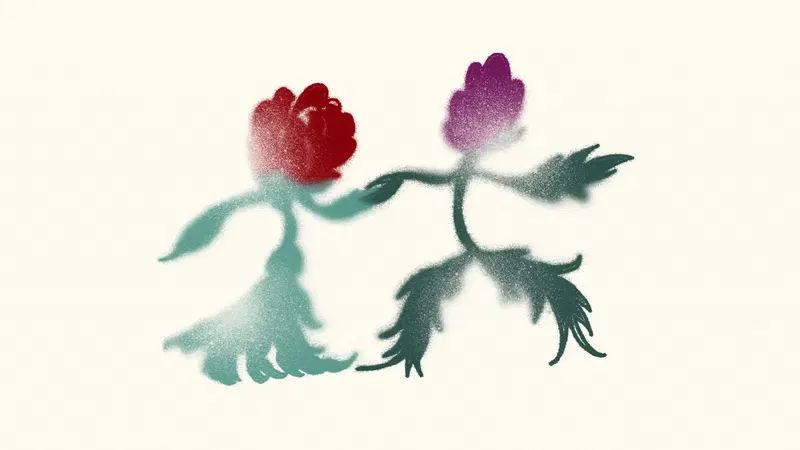
Are Raccoons Evolving Into Pets?
An article explores how urban raccoons are becoming more accustomed to human environments, illustrated by a Long Island resident’s encounters with both raccoons and feral cats. Scientific research published in Frontiers in Zoology documents behavioral shifts that suggest raccoons may be undergoing a form of self‑domestication. Media coverage has framed the trend as the emergence of a new type of American pet, while also noting health concerns such as rabies exposure.
- ▪Marilyn Smith, a Long Island resident, has been feeding both feral cats and raccoons, leading to frequent nighttime intrusions and health worries.
- ▪Urban raccoons have become less fearful of humans and display traits typical of domesticated animals.
- ▪A study in Frontiers in Zoology confirmed significant behavioral changes in raccoons that align with early stages of domestication.
- ▪The findings sparked media attention, with some outlets dubbing raccoons the “new American pet.”
The Atlantic files mainly under culture. We currently carry 425 of its stories.
Story provenance
Source · retrieval · rights · ranking — open for full record
inspect →
Story provenance
Attribution is not the same as permission. This drawer separates discovery metadata, excerpts, WeSearch-generated summaries, reuse status, and whether the publisher receives the visit. Nothing here claims a legal grant the publisher has not made.
Record
| Original publisher | The Atlantic |
| Canonical URL | https://www.theatlantic.com/ideas/2026/08/are-raccoons-evolving-pets/688231/?utm_source=feed |
| Publication time | 2026-08-09T08:11:17-04:00 |
| Retrieval time | 2026-08-09T12:38:03.149Z |
| Last seen | 2026-08-09T12:38:03.149Z |
| Headline source | Publisher (no WeSearch rewrite) |
| Excerpt source | publisher body |
| Excerpt method | First ~120 words (~800 chars) of extracted publisher body, fair-use limited. |
| Summary | WeSearch · cerebras-chat (WeSearch summarizer) |
| Summary source text | contentText |
| Citation coverage | Summary is a WeSearch-generated derivative; primary citation is the original publisher URL. |
| Cluster | MdlFiYyTx9hb |
| Cluster logic | Grouped by semantic title/content similarity across sources within a rolling window. Same-publisher template collisions are excluded from coverage comparison. |
| Ranking reason | Story pages are not engagement-ranked. Hub feeds use recency, with optional source-diversified chronological ordering (cap consecutive stories per source). No personalized ranking. |
| Publisher visit | Yes — open original |
| Substitutes article? | No — link-out required for full text |
Rights status (four layers)
WeSearch handling by dimension
| Indexing | May the item be indexed (stored, ranked, made findable)? | Allowed |
| Snippet | May a short excerpt of the publisher's text be shown? | Allowed |
| AI summary | May WeSearch generate its own short summary of the article? | Limited |
| Retrieval / RAG | May the content be exposed for third-party retrieval-augmented generation? | Not asserted |
| Model training | May the content be used to train AI models? | Not asserted |
| Commercial reuse | May the content be reused commercially? | Not permitted |
Basis: Derived from the published RSS/Atom feed. Contact: [email protected]. Reviewed: 2026-07-24.
Opening excerpt (first ~120 words) tap to expand
IdeasAre Raccoons Evolving Into Pets?The myth and science of the country’s favorite floofy, fluffy cuddle-badgersBy Annie LowreyIllustration by Pedro NekoiAugust 9, 2026, 8:11 AM ET ShareSave At 10 p.m. in early July, Long Island was sweltering under a heat dome. As bedroom lights dimmed and heavy clouds rolled in, a raccoon ambled onto the porch of a split-level home, found a crack in a sliding door, and slipped inside. He tongue-polished a lasagna tray on the floor near the kitchen counter before waddling back into the damp fug of the summer night.Soon after, a raccoon with a facial scar and a thin tail entered, ate a snack, and flopped down for a nap.
…
Excerpt limited to ~120 words for fair-use compliance. The full article is at The Atlantic.
Discussion
0 commentsMore from The Atlantic