Attention is all you have
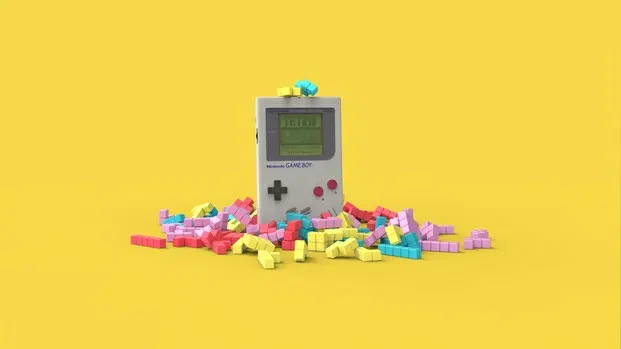
The Tetris effect is one of psychology’s most easy to reproduce experiments. Simply spend a bit of time playing the eponymous game every day for a few weeks. After a little while, you’ll start recognizing familiar Tetromino shapes in clouds, buildings, and everyday objects.
- ▪The Tetris effect is one of psychology’s most easy to reproduce experiments.
- ▪Simply spend a bit of time playing the eponymous game every day for a few weeks.
- ▪After a little while, you’ll start recognizing familiar Tetromino shapes in clouds, buildings, and everyday objects.
Hacker News (Front Page) files mainly under programming. We currently carry 1,969 of its stories. Top-voted stories on Hacker News.
Story provenance
Source · retrieval · rights · ranking — open for full record
inspect →
Story provenance
Attribution is not the same as permission. This drawer separates discovery metadata, excerpts, WeSearch-generated summaries, reuse status, and whether the publisher receives the visit. Nothing here claims a legal grant the publisher has not made.
Record
| Original publisher | Alicegg |
| Canonical URL | https://alicegg.tech/2026/09/21/attention |
| Publication time | Mon, 21 Sep 2026 14:26:56 +0000 |
| Retrieval time | 2026-09-21T16:08:49.130Z |
| Last seen | 2026-09-21T16:08:49.130Z |
| Headline source | Publisher (no WeSearch rewrite) |
| Excerpt source | publisher body |
| Excerpt method | First ~120 words (~800 chars) of extracted publisher body, fair-use limited. |
| Summary | WeSearch · cerebras-chat (WeSearch summarizer) |
| Summary source text | contentText |
| Citation coverage | Summary is a WeSearch-generated derivative; primary citation is the original publisher URL. |
| Cluster | None |
| Cluster logic | Not yet clustered, or no peer story found in the clustering window. |
| Ranking reason | Story pages are not engagement-ranked. Hub feeds use recency, with optional source-diversified chronological ordering (cap consecutive stories per source). No personalized ranking. |
| Publisher visit | Yes — open original |
| Substitutes article? | No — link-out required for full text |
Rights status (four layers)
WeSearch handling by dimension
| Indexing | May the item be indexed (stored, ranked, made findable)? | Allowed |
| Snippet | May a short excerpt of the publisher's text be shown? | Allowed |
| AI summary | May WeSearch generate its own short summary of the article? | Limited |
| Retrieval / RAG | May the content be exposed for third-party retrieval-augmented generation? | Not asserted |
| Model training | May the content be used to train AI models? | Not asserted |
| Commercial reuse | May the content be reused commercially? | Not permitted |
Basis: Derived from the published RSS/Atom feed. Contact: [email protected]. Reviewed: 2026-07-24.
Opening excerpt (first ~120 words) tap to expand
The Tetris effect is one of psychology’s most easy to reproduce experiments. Simply spend a bit of time playing the eponymous game every day for a few weeks. After a little while, you’ll start recognizing familiar Tetromino shapes in clouds, buildings, and everyday objects. You might even see them appear before your eyes when you start falling asleep. Photo by Tom Tang Attention hijacking There’s one lesson the Tetris effect teaches us: whatever you focus on long enough will end up shaping your thoughts. This can be a good thing since it’s how we learn new skills and discover new ideas. Sadly, less and less of our attention is focused intentionally. Instead of picking what we want to see we let other people decide what is supposed to be good for us.
…
Excerpt limited to ~120 words for fair-use compliance. The full article is at Alicegg.
Discussion
0 commentsMore from Alicegg