Basically, Galvanizing Metal Without Acid
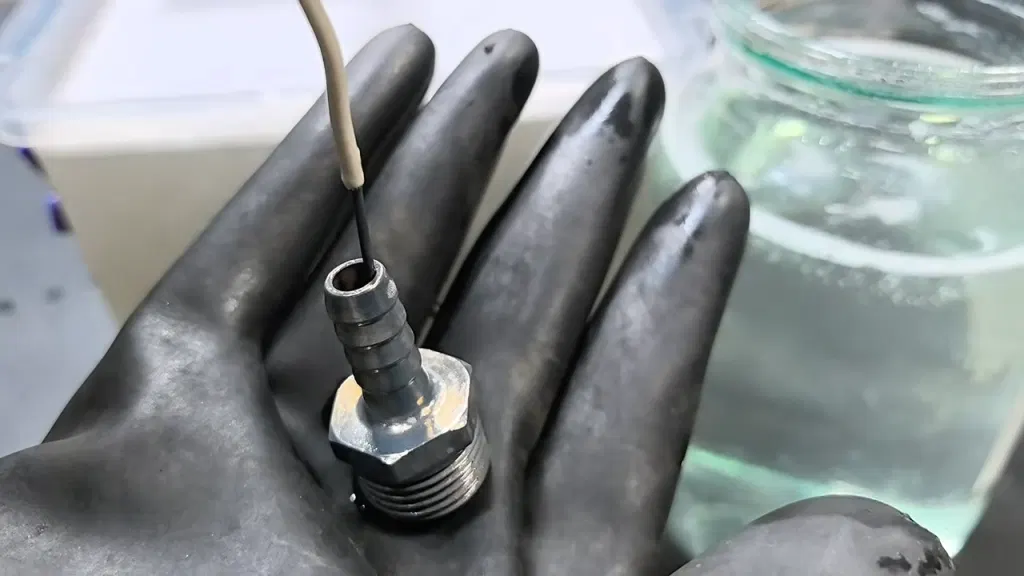
A new method allows for the galvanizing of metal parts without the use of strong acids, making the process more accessible for home workshops. The technique utilizes a caustic solution of sodium hydroxide and dissolved zinc, applying an electric current to deposit a protective zinc layer. This base-based approach is particularly effective for coating non-uniform shapes with deep crevices that might otherwise coat unevenly.
- ▪Galvanizing typically involves strong acids, but this alternative method substitutes them with strong bases like sodium hydroxide.
- ▪The process requires dissolving metallic zinc in a solution of distilled water, sugar, and liquid soap.
- ▪An electric current is applied using a graphite anode and the metal part as the cathode to deposit the zinc coating.
- ▪The base-based method is advantageous for plating parts with complex shapes or deep crevices.
- ▪Safety measures are still required because the sodium hydroxide solution remains caustic despite the absence of strong acids.
Hackaday files mainly under tech. We currently carry 464 of its stories.
Story provenance
Source · retrieval · rights · ranking — open for full record
inspect →
Story provenance
Attribution is not the same as permission. This drawer separates discovery metadata, excerpts, WeSearch-generated summaries, reuse status, and whether the publisher receives the visit. Nothing here claims a legal grant the publisher has not made.
Record
| Original publisher | Hackaday |
| Canonical URL | https://hackaday.com/2026/09/26/basically-galvanizing-metal-without-acid/ |
| Publication time | Sun, 27 Sep 2026 05:00:00 +0000 |
| Retrieval time | 2026-09-27T05:00:40.313Z |
| Last seen | 2026-09-27T05:00:40.313Z |
| Headline source | Publisher (no WeSearch rewrite) |
| Excerpt source | publisher body |
| Excerpt method | First ~120 words (~800 chars) of extracted publisher body, fair-use limited. |
| Summary | WeSearch · cerebras-chat (WeSearch summarizer) |
| Summary source text | contentText |
| Citation coverage | Summary is a WeSearch-generated derivative; primary citation is the original publisher URL. |
| Cluster | oY-kF0YdZc7b · 1 stories |
| Cluster logic | Grouped by semantic title/content similarity across sources within a rolling window. Same-publisher template collisions are excluded from coverage comparison. |
| Ranking reason | Story pages are not engagement-ranked. Hub feeds use recency, with optional source-diversified chronological ordering (cap consecutive stories per source). No personalized ranking. |
| Publisher visit | Yes — open original |
| Substitutes article? | No — link-out required for full text |
Rights status (four layers)
WeSearch handling by dimension
| Indexing | May the item be indexed (stored, ranked, made findable)? | Allowed |
| Snippet | May a short excerpt of the publisher's text be shown? | Allowed |
| AI summary | May WeSearch generate its own short summary of the article? | Limited |
| Retrieval / RAG | May the content be exposed for third-party retrieval-augmented generation? | Not asserted |
| Model training | May the content be used to train AI models? | Not asserted |
| Commercial reuse | May the content be reused commercially? | Not permitted |
Basis: Derived from the published RSS/Atom feed. Contact: [email protected]. Reviewed: 2026-07-24.
Opening excerpt (first ~120 words) tap to expand
Basically, Galvanizing Metal Without Acid No comments by: Bryan Cockfield September 26, 2026 Title: Copy Short Link: Copy As useful as steel and iron are to the modern world, their tendency to rust is a major downside. There’s a spectrum of ways to prevent it, from quickly slapping on a coat of paint on the easy side to alloying, chromizing, or physical vapor deposition at the extremely difficult or industrial-only end. For a middle ground accessible to the home shop, galvanizing is a go-to method of rust prevention that deposits a layer of zinc onto the metal instead, but even this generally involves the use of strong acids. This method, though, makes galvanizing accessible without any acids.
…
Excerpt limited to ~120 words for fair-use compliance. The full article is at Hackaday.
Discussion
0 commentsMore from Hackaday