Building a DIY Centrifuge For Blood Processing
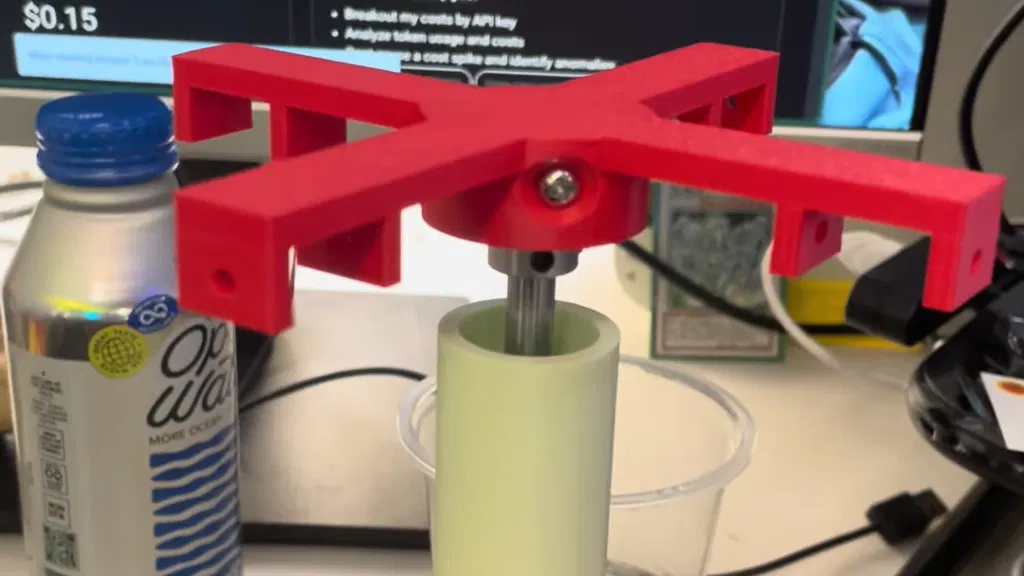
Thomas Nguyen constructed a custom DIY centrifuge to separate T cells from blood for laboratory analysis. The device utilizes a Raspberry Pi Pico, a 3D-printed frame, and a brushless motor to achieve the necessary rotational speeds. Safety mechanisms including vibration detection and speed monitoring are integrated to ensure safe operation during testing.
- ▪Thomas Nguyen built the centrifuge to handle 15 mL conical tubes for T cell separation.
- ▪The build incorporates a Raspberry Pi Pico and an A2212 brushless motor with a 30 amp electronic speed controller.
- ▪An MPU-6050 sensor is used for vibration detection to shut down the unit if dangerous imbalances occur.
- ▪An IR sensor monitors and controls the rotational speed of the centrifuge.
- ▪The project is currently in development, with initial tests planned using dyed water and glycerol before using real blood.
- ▪tags
Hackaday files mainly under tech. We currently carry 383 of its stories.
Story provenance
Source · retrieval · rights · ranking — open for full record
inspect →
Story provenance
Attribution is not the same as permission. This drawer separates discovery metadata, excerpts, WeSearch-generated summaries, reuse status, and whether the publisher receives the visit. Nothing here claims a legal grant the publisher has not made.
Record
| Original publisher | Hackaday |
| Canonical URL | https://hackaday.com/2026/09/17/building-a-diy-centrifuge-for-blood-processing/ |
| Publication time | Fri, 18 Sep 2026 05:00:18 +0000 |
| Retrieval time | 2026-09-18T05:03:45.235Z |
| Last seen | 2026-09-18T05:03:45.235Z |
| Headline source | Publisher (no WeSearch rewrite) |
| Excerpt source | publisher body |
| Excerpt method | First ~120 words (~800 chars) of extracted publisher body, fair-use limited. |
| Summary | WeSearch · cerebras-chat (WeSearch summarizer) |
| Summary source text | contentText |
| Citation coverage | Summary is a WeSearch-generated derivative; primary citation is the original publisher URL. |
| Cluster | BjysbIIRI6xr · 1 stories |
| Cluster logic | Grouped by semantic title/content similarity across sources within a rolling window. Same-publisher template collisions are excluded from coverage comparison. |
| Ranking reason | Story pages are not engagement-ranked. Hub feeds use recency, with optional source-diversified chronological ordering (cap consecutive stories per source). No personalized ranking. |
| Publisher visit | Yes — open original |
| Substitutes article? | No — link-out required for full text |
Rights status (four layers)
WeSearch handling by dimension
| Indexing | May the item be indexed (stored, ranked, made findable)? | Allowed |
| Snippet | May a short excerpt of the publisher's text be shown? | Allowed |
| AI summary | May WeSearch generate its own short summary of the article? | Limited |
| Retrieval / RAG | May the content be exposed for third-party retrieval-augmented generation? | Not asserted |
| Model training | May the content be used to train AI models? | Not asserted |
| Commercial reuse | May the content be reused commercially? | Not permitted |
Basis: Derived from the published RSS/Atom feed. Contact: [email protected]. Reviewed: 2026-07-24.
Opening excerpt (first ~120 words) tap to expand
Building A DIY Centrifuge For Blood Processing No comments by: Zoe Skyforest September 17, 2026 Title: Copy Short Link: Copy If you want to do certain types of lab work with blood, you’ll need a centrifuge. It’s often possible to find serviceable units on the used market, but they may not meet your requirements if you’re doing something quite specific. For that reason, [Thomas Nguyen] decided to build his own centrifuge from scratch. His goal was to separate T cells from blood for further lab analysis, and he needed to be able to work with blood in 15 mL conical tubes. Capable centrifuges weren’t affordable, but he figured he could build his own quite easily. To that end, he enlisted a Raspberry Pi Pico, a 3D printer, and an A2212 brushless motor with a 30 amp electronic speed controller.
…
Excerpt limited to ~120 words for fair-use compliance. The full article is at Hackaday.
Discussion
0 commentsMore from Hackaday