California Will Soon Have More Than 300 Data Centers. Where Will They Get Their Water?
California is expected to have over 300 data centers as demand for digital infrastructure grows, raising concerns about water usage in already strained regions. A proposed data center in the Imperial Valley would consume 750,000 gallons of water daily, sparking local opposition over resource allocation. Experts and officials warn that meeting the water and energy needs of 24 additional facilities will be a significant challenge.
- ▪A proposed data center in Imperial, California, would require 750,000 gallons of water per day for operation.
- ▪The data center would be at least 950,000 square feet and occupy land equivalent to 17 football fields.
- ▪Developer Sebastian Rucci claims the project will not increase local electricity or water costs and has conducted environmental studies.
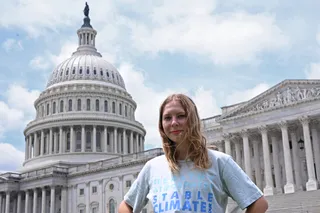
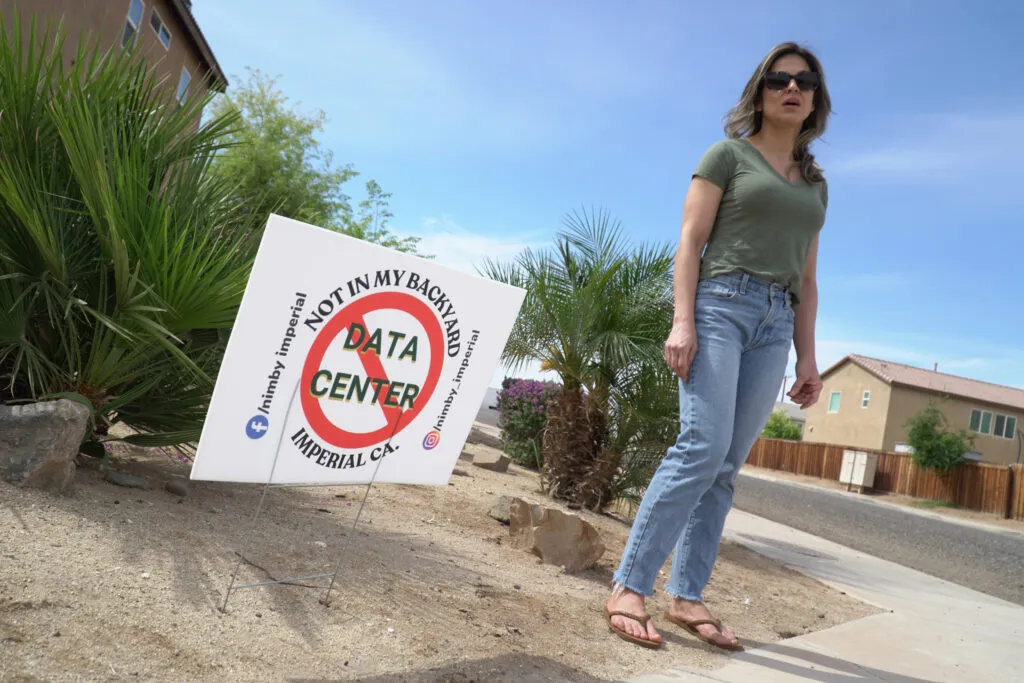
- ▪Local resident Margie Padilla expressed concerns about rising utility costs for families in the area.
- ▪Experts say supplying water and power to 24 new data centers in California will be challenging, especially in drought-prone regions.
Inside Climate News files mainly under climate. We currently carry 45 of its stories.
Story provenance
Source · retrieval · rights · ranking — open for full record
inspect →
Story provenance
Attribution is not the same as permission. This drawer separates discovery metadata, excerpts, WeSearch-generated summaries, reuse status, and whether the publisher receives the visit. Nothing here claims a legal grant the publisher has not made.
Record
| Original publisher | Inside Climate News |
| Canonical URL | https://insideclimatenews.org/news/29042026/california-data-center-boom-water-issues/ |
| Publication time | Wed, 29 Apr 2026 09:00:00 +0000 |
| Retrieval time | 2026-04-29T09:06:54.500Z |
| Last seen | 2026-04-29T09:06:54.500Z |
| Headline source | Publisher (no WeSearch rewrite) |
| Excerpt source | publisher body |
| Excerpt method | First ~120 words (~800 chars) of extracted publisher body, fair-use limited. |
| Summary | WeSearch · cerebras-chat (WeSearch summarizer) |
| Summary source text | contentText |
| Citation coverage | Summary is a WeSearch-generated derivative; primary citation is the original publisher URL. |
| Cluster | KhO_X9-_nrP1 |
| Cluster logic | Grouped by semantic title/content similarity across sources within a rolling window. Same-publisher template collisions are excluded from coverage comparison. |
| Ranking reason | Story pages are not engagement-ranked. Hub feeds use recency, with optional source-diversified chronological ordering (cap consecutive stories per source). No personalized ranking. |
| Publisher visit | Yes — open original |
| Substitutes article? | No — link-out required for full text |
Rights status (four layers)
WeSearch handling by dimension
| Indexing | May the item be indexed (stored, ranked, made findable)? | Allowed |
| Snippet | May a short excerpt of the publisher's text be shown? | Allowed |
| AI summary | May WeSearch generate its own short summary of the article? | Limited |
| Retrieval / RAG | May the content be exposed for third-party retrieval-augmented generation? | Not asserted |
| Model training | May the content be used to train AI models? | Not asserted |
| Commercial reuse | May the content be reused commercially? | Not permitted |
Basis: Derived from the published RSS/Atom feed. Contact: [email protected]. Reviewed: 2026-07-24.
Opening excerpt (first ~120 words) tap to expand
Justice & Health California Will Soon Have More Than 300 Data Centers. Where Will They Get Their Water? A proposed data center in the Imperial Valley would need 750,000 gallons of water a day. Satisfying the thirst of 24 more facilities expected to open in the state will be challenging, experts and officials say. By Steven RodasApril 29, 2026 Share This Article Republish Margie Padilla is worried that a proposed data center near her home in Imperial, Calif., will increase power and water costs for her family.
…
Excerpt limited to ~120 words for fair-use compliance. The full article is at Inside Climate News.
Discussion
0 commentsMore from Inside Climate News