Can AI Write Your Code?
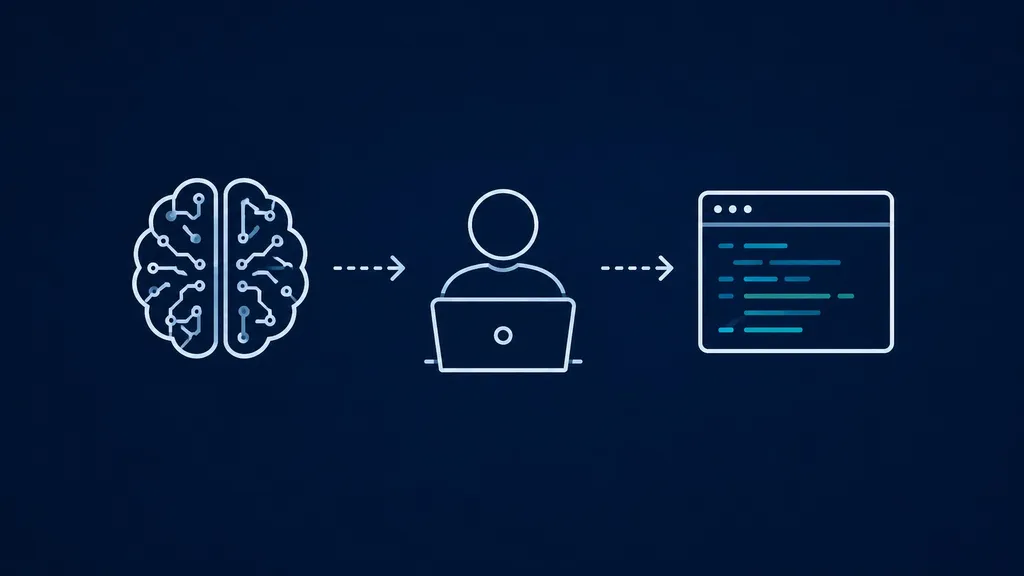
A recent study evaluates ChatGPT's ability to generate code for complex causal inference tasks in Python, R, and Stata. The research focuses on three widely used methods: Difference-in-Differences, Inverse Probability Treatment Weighting, and Regression Discontinuity. By comparing ChatGPT's outputs to standardized benchmarks, the study aims to provide a more objective assessment of AI's coding capabilities in quantitative research.
- ▪The study was published in Health Economics Review and focuses on ChatGPT-4.0 Pro's coding abilities.
- ▪It evaluates ChatGPT's performance against benchmark solutions from Causal Inference: The Mixtape.
- ▪The research includes Stata, a language often used in empirical research but less frequently analyzed in AI coding studies.
Towards Data Science files mainly under ai. We currently carry 83 of its stories.
Story provenance
Source · retrieval · rights · ranking — open for full record
inspect →
Attribution is not the same as permission. This drawer separates discovery metadata, excerpts, WeSearch-generated summaries, reuse status, and whether the publisher receives the visit. Nothing here claims a legal grant the publisher has not made.
Record
| Original publisher | Towards Data Science |
| Canonical URL | https://towardsdatascience.com/can-ai-write-your-code/ |
| Publication time | Mon, 25 May 2026 17:15:24 +0000 |
| Retrieval time | 2026-05-25T17:22:38.846Z |
| Last seen | 2026-05-25T17:22:38.846Z |
| Headline source | Publisher (no WeSearch rewrite) |
| Excerpt source | publisher body |
| Excerpt method | First ~120 words (~800 chars) of extracted publisher body, fair-use limited. |
| Summary | WeSearch · cerebras-chat (WeSearch summarizer) |
| Summary source text | contentText |
| Citation coverage | Summary is a WeSearch-generated derivative; primary citation is the original publisher URL. |
| Cluster | None |
| Cluster logic | Not yet clustered, or no peer story found in the clustering window. |
| Ranking reason | Story pages are not engagement-ranked. Hub feeds use recency, with optional source-diversified chronological ordering (cap consecutive stories per source). No personalized ranking. |
| Publisher visit | Yes — open original |
| Substitutes article? | No — link-out required for full text |
Rights status (four layers)
WeSearch handling by dimension
| Indexing | May the item be indexed (stored, ranked, made findable)? | Allowed |
| Snippet | May a short excerpt of the publisher's text be shown? | Allowed |
| AI summary | May WeSearch generate its own short summary of the article? | Limited |
| Retrieval / RAG | May the content be exposed for third-party retrieval-augmented generation? | Not asserted |
| Model training | May the content be used to train AI models? | Not asserted |
| Commercial reuse | May the content be reused commercially? | Not permitted |
Basis: Derived from the published RSS/Atom feed. Contact: [email protected]. Reviewed: 2026-07-24.
Opening excerpt (first ~120 words) tap to expand
Can AI Write Your Code? What a recent study on ChatGPT, Python, R, and Stata tells us about AI-assisted coding for causal inference JUNIOR JUMBONG May 25, 2026 15 min read Share Image generated with ChatGPT What if the real question is no longer whether AI can write code, but whether we can trust the code it writes? Over the past few years, ChatGPT and other large language models have become increasingly common in the daily workflow of students, analysts, researchers, and data scientists. Many of us have already used AI tools to generate a Python function, debug an error message, automate a repetitive task, or quickly translate code from one language to another.
…
Excerpt limited to ~120 words for fair-use compliance. The full article is at Towards Data Science.
Discussion
0 commentsMore from Towards Data Science