Can HawaiʻI Deliver All of America from Citizens United?
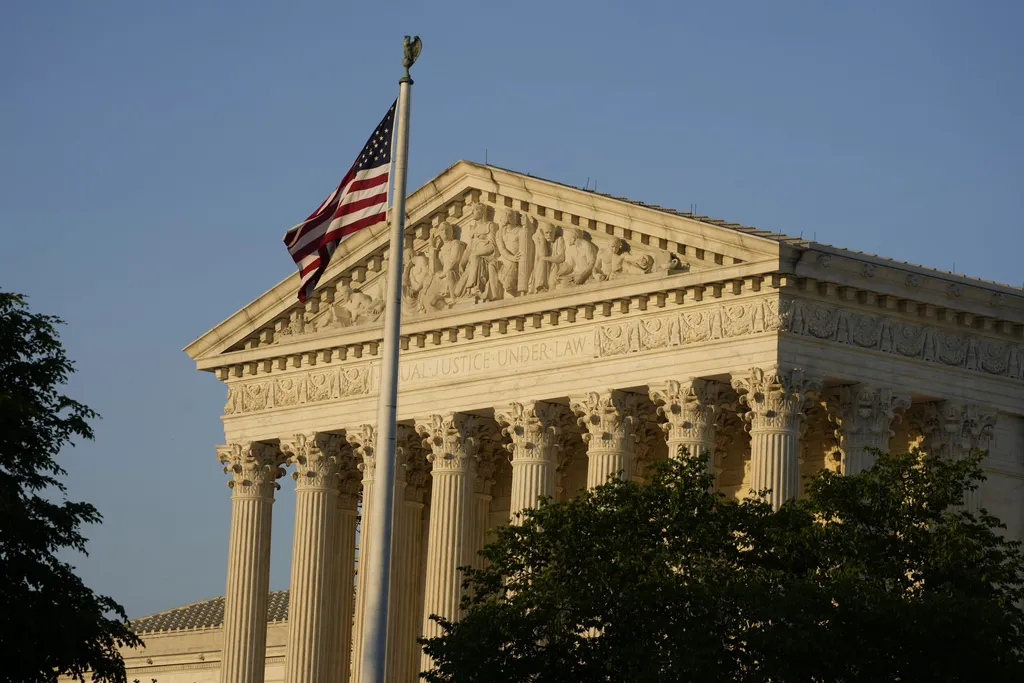
A proposed state Senate bill in Hawaiʻi aims to challenge the Citizens United ruling by redefining the powers of corporations in relation to political contributions. If passed, Senate Bill 2471 would clarify that corporations cannot spend money to influence elections, potentially limiting the influence of super PACs. The bill has garnered support from lawmakers and experts, although it faces opposition from the Attorney General's Office over constitutional concerns.
- ▪Senate Bill 2471 seeks to redefine corporations as 'artificial persons' without the power to influence elections financially.
- ▪The bill has passed the Senate unanimously and is awaiting further consideration in the House.
- ▪Supporters argue it could lead to greater transparency in political donations.
Hacker News (Newest) files mainly under programming. We currently carry 5,306 of its stories.
Story provenance
Source · retrieval · rights · ranking — open for full record
inspect →
Story provenance
Attribution is not the same as permission. This drawer separates discovery metadata, excerpts, WeSearch-generated summaries, reuse status, and whether the publisher receives the visit. Nothing here claims a legal grant the publisher has not made.
Record
| Original publisher | Honolulu Civil Beat |
| Canonical URL | https://www.civilbeat.org/2026/04/can-hawaii-deliver-all-of-america-from-citizens-united/ |
| Publication time | Tue, 26 May 2026 15:30:11 +0000 |
| Retrieval time | 2026-05-26T15:37:49.954Z |
| Last seen | 2026-05-26T15:37:49.954Z |
| Headline source | Publisher (no WeSearch rewrite) |
| Excerpt source | publisher body |
| Excerpt method | First ~120 words (~800 chars) of extracted publisher body, fair-use limited. |
| Summary | WeSearch · cerebras-chat (WeSearch summarizer) |
| Summary source text | contentText |
| Citation coverage | Summary is a WeSearch-generated derivative; primary citation is the original publisher URL. |
| Cluster | uhazFmAtu6NE |
| Cluster logic | Grouped by semantic title/content similarity across sources within a rolling window. Same-publisher template collisions are excluded from coverage comparison. |
| Ranking reason | Story pages are not engagement-ranked. Hub feeds use recency, with optional source-diversified chronological ordering (cap consecutive stories per source). No personalized ranking. |
| Publisher visit | Yes — open original |
| Substitutes article? | No — link-out required for full text |
Rights status (four layers)
WeSearch handling by dimension
| Indexing | May the item be indexed (stored, ranked, made findable)? | Allowed |
| Snippet | May a short excerpt of the publisher's text be shown? | Allowed |
| AI summary | May WeSearch generate its own short summary of the article? | Limited |
| Retrieval / RAG | May the content be exposed for third-party retrieval-augmented generation? | Not asserted |
| Model training | May the content be used to train AI models? | Not asserted |
| Commercial reuse | May the content be reused commercially? | Not permitted |
Basis: Derived from the published RSS/Atom feed. Contact: [email protected]. Reviewed: 2026-07-24.
Opening excerpt (first ~120 words) tap to expand
A state Senate bill proposes a novel approach that one legal expert says would make the controversial national campaign finance law irrelevant in the islands. Few decisions by the U.S. Supreme Court have had a greater impact on the nation’s political landscape than the 2010 ruling in Citizens United v. Federal Election Commission. The 5-4 decision allowed corporations and other outside groups including labor unions to spend unlimited money on elections. The ruling is the law of land unless the high court reverses itself or the states and Congress agree to amend the constitution — both very high bars in the current political climate.
…
Excerpt limited to ~120 words for fair-use compliance. The full article is at Honolulu Civil Beat.
Discussion
0 commentsMore from Honolulu Civil Beat