
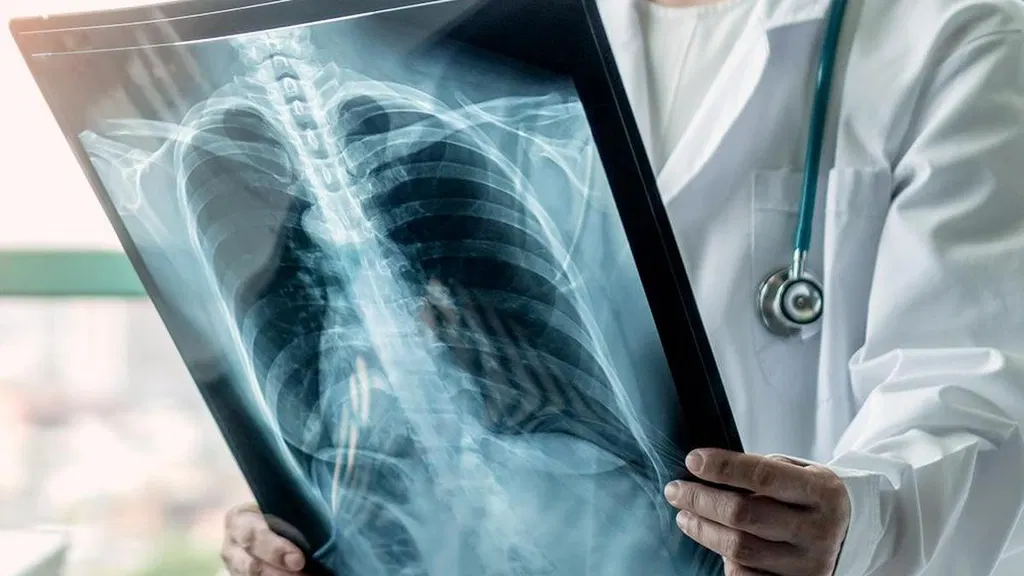
Can lung cancer be prevented using a drug?
On June 4 2026, a paper was published in the journal Cell, in which researchers from The Francis Crick Institute, University College London and elsewhere, identified a set of blood proteins that appeared to predict lung cancer five years before it became clinically apparent. However, medical research is far too complex to simplify into generic headlines such as these. It is important to explore the facts behind the research and understand the fallacies in making overtly optimistic predictions based on the findings.
- ▪On June 4 2026, a paper was published in the journal Cell, in which researchers from The Francis Crick Institute, University College London and elsewhere, identified a set of blood proteins that appeared to predict lung cancer five years be
- ▪However, medical research is far too complex to simplify into generic headlines such as these.
- ▪It is important to explore the facts behind the research and understand the fallacies in making overtly optimistic predictions based on the findings.
2 outlets in our directory ran this story, first to last over 35 hours. All of the coverage we found sits in one bucket: centre. That one-sidedness is itself worth noticing.
- ▪ Early Research Suggests a Path to Predict and Prevent Lung Cancer — Hacker News (Newest)
The Hindu publishes from India and files mainly under world. We currently carry 1,042 of its stories.
Story provenance
Source · retrieval · rights · ranking — open for full record
inspect →
Story provenance
Attribution is not the same as permission. This drawer separates discovery metadata, excerpts, WeSearch-generated summaries, reuse status, and whether the publisher receives the visit. Nothing here claims a legal grant the publisher has not made.
Record
| Original publisher | The Hindu |
| Canonical URL | https://www.thehindu.com/sci-tech/health/can-lung-cancer-be-prevented-using-a-drug/article71093454.ece |
| Publication time | Sat, 13 Jun 2026 17:34:36 +0530 |
| Retrieval time | 2026-06-13T12:33:54.534Z |
| Last seen | 2026-06-13T12:33:54.534Z |
| Headline source | Publisher (no WeSearch rewrite) |
| Excerpt source | publisher body |
| Excerpt method | First ~120 words (~800 chars) of extracted publisher body, fair-use limited. |
| Summary | WeSearch · cerebras-chat (WeSearch summarizer) |
| Summary source text | contentText |
| Citation coverage | Summary is a WeSearch-generated derivative; primary citation is the original publisher URL. |
| Cluster | 0Vg8QeyVoUYx · 3 stories |
| Cluster logic | Grouped by semantic title/content similarity across sources within a rolling window. Same-publisher template collisions are excluded from coverage comparison. |
| Ranking reason | Story pages are not engagement-ranked. Hub feeds use recency, with optional source-diversified chronological ordering (cap consecutive stories per source). No personalized ranking. |
| Publisher visit | Yes — open original |
| Substitutes article? | No — link-out required for full text |
Rights status (four layers)
WeSearch handling by dimension
| Indexing | May the item be indexed (stored, ranked, made findable)? | Allowed |
| Snippet | May a short excerpt of the publisher's text be shown? | Allowed |
| AI summary | May WeSearch generate its own short summary of the article? | Limited |
| Retrieval / RAG | May the content be exposed for third-party retrieval-augmented generation? | Not asserted |
| Model training | May the content be used to train AI models? | Not asserted |
| Commercial reuse | May the content be reused commercially? | Not permitted |
Basis: Derived from the published RSS/Atom feed. Contact: [email protected]. Reviewed: 2026-07-24.
Opening excerpt (first ~120 words) tap to expand
On June 4 2026, a paper was published in the journal Cell, in which researchers from The Francis Crick Institute, University College London and elsewhere, identified a set of blood proteins that appeared to predict lung cancer five years before it became clinically apparent. In addition, the researchers proposed that a human monoclonal antibody called Canakinumab, which targets interleukin-1 beta (a component of the body’s immune response), might reduce the risk of lung cancer among individuals with this protein signature, based on a retrospective analysis of an earlier clinical trial.The dramatic appeal of these claims attracted significant media attention, leading many people to believe that they could simply do a blood test to predict lung cancer and then take a drug to prevent it from…
Excerpt limited to ~120 words for fair-use compliance. The full article is at The Hindu.
Discussion
0 commentsMore from The Hindu


