CAPTCHAs can still detect AI agents
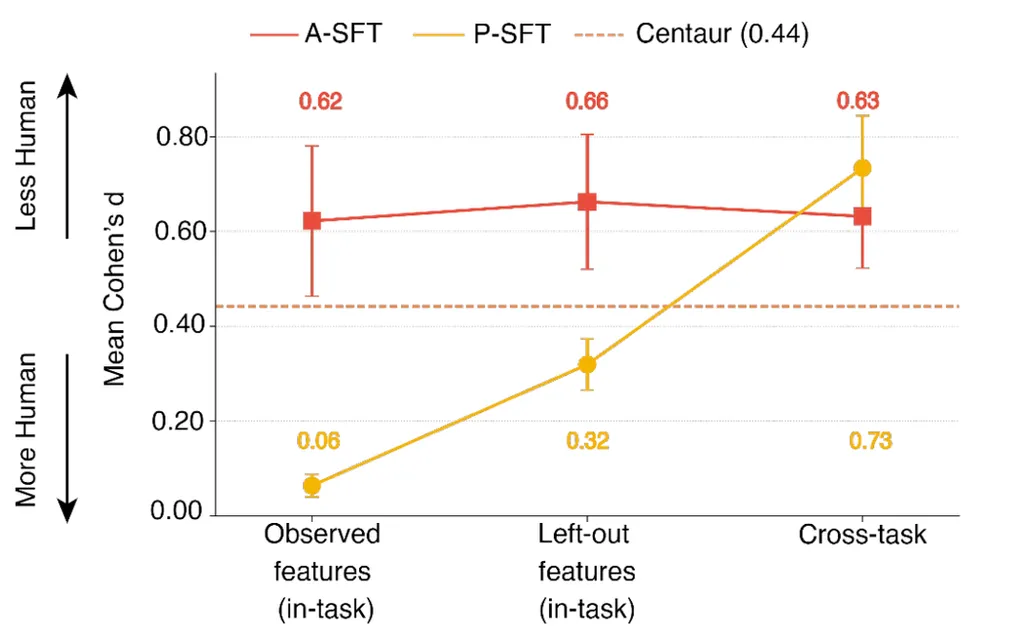
Recent research indicates that while AI can solve CAPTCHAs, it does so differently than humans. The study highlights significant differences in the processes used by AI and human participants when completing these tasks. This suggests that AI's ability to mimic human output does not equate to a similar cognitive process.
- ▪AI can recognize images in CAPTCHAs but does not solve them like humans.
- ▪The study found statistically significant differences in error patterns and decision-making processes between humans and AI.
- ▪CogCAPTCHA30 was developed to measure the process behavior of humans and AI across various cognitive tasks.
Hacker News (AI / LLM) files mainly under ai. We currently carry 2,794 of its stories.
Story provenance
Source · retrieval · rights · ranking — open for full record
inspect →
Story provenance
Attribution is not the same as permission. This drawer separates discovery metadata, excerpts, WeSearch-generated summaries, reuse status, and whether the publisher receives the visit. Nothing here claims a legal grant the publisher has not made.
Record
| Original publisher | Roundtable Research |
| Canonical URL | https://research.roundtable.ai/captchas-detect-ai/ |
| Publication time | Fri, 29 May 2026 15:57:37 +0000 |
| Retrieval time | 2026-05-29T16:25:02.263Z |
| Last seen | 2026-05-29T16:25:02.263Z |
| Headline source | Publisher (no WeSearch rewrite) |
| Excerpt source | publisher body |
| Excerpt method | First ~120 words (~800 chars) of extracted publisher body, fair-use limited. |
| Summary | WeSearch · cerebras-chat (WeSearch summarizer) |
| Summary source text | contentText |
| Citation coverage | Summary is a WeSearch-generated derivative; primary citation is the original publisher URL. |
| Cluster | BeZZahNnHFDe |
| Cluster logic | Grouped by semantic title/content similarity across sources within a rolling window. Same-publisher template collisions are excluded from coverage comparison. |
| Ranking reason | Story pages are not engagement-ranked. Hub feeds use recency, with optional source-diversified chronological ordering (cap consecutive stories per source). No personalized ranking. |
| Publisher visit | Yes — open original |
| Substitutes article? | No — link-out required for full text |
Rights status (four layers)
WeSearch handling by dimension
| Indexing | May the item be indexed (stored, ranked, made findable)? | Allowed |
| Snippet | May a short excerpt of the publisher's text be shown? | Allowed |
| AI summary | May WeSearch generate its own short summary of the article? | Limited |
| Retrieval / RAG | May the content be exposed for third-party retrieval-augmented generation? | Not asserted |
| Model training | May the content be used to train AI models? | Not asserted |
| Commercial reuse | May the content be reused commercially? | Not permitted |
Basis: Derived from the published RSS/Atom feed. Contact: [email protected]. Reviewed: 2026-07-24.
Opening excerpt (first ~120 words) tap to expand
This is a ~1000 word overview of our recent machine learning conference paper submission. To read the full preprint, click here. "CAPTCHAs are broken these days." AI can easily identify all the traffic lights in a static grid. So CAPTCHAs don't provide a valuable human signal, right? Yes and no. Yes, because vision language models (VLMs) can recognize images like chimneys, fire hydrants, and traffic lights. Deep learning "solved" CAPTCHA-style image classification in the early 2010s. No, because AI does not complete CAPTCHAs like humans. If you look across all the data of humans and AI completing CAPTCHAs, you start noticing differences in features like error patterns.
…
Excerpt limited to ~120 words for fair-use compliance. The full article is at Roundtable Research.
Discussion
0 commentsMore from Roundtable Research