Elegy for the Royal Navy
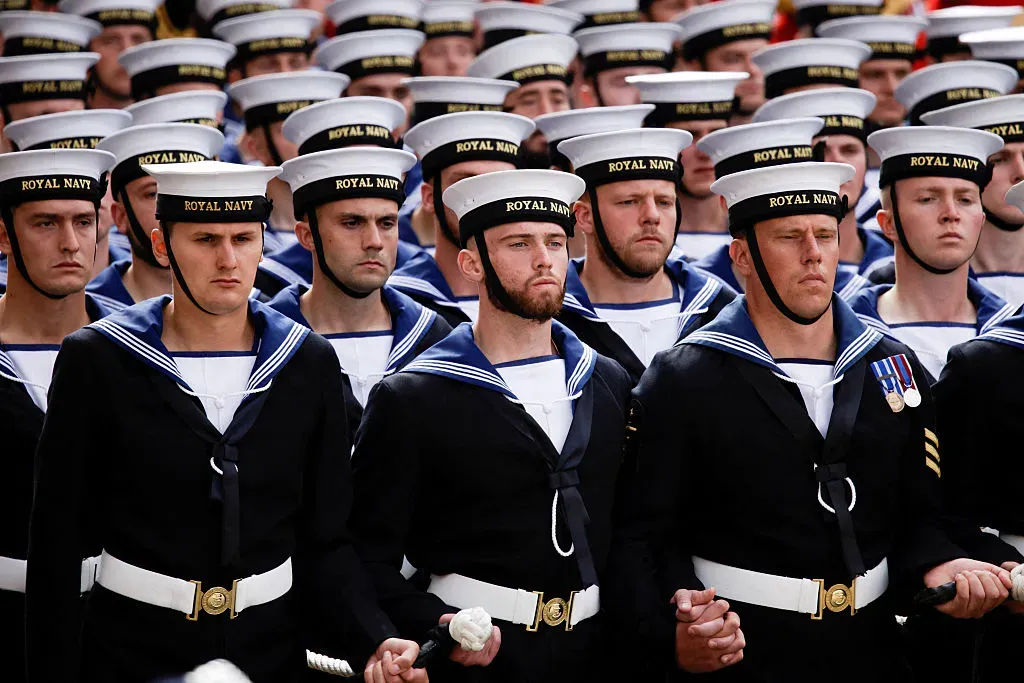
The article reflects on the historical significance and public perception of the Royal Navy in Britain. It contrasts the admiration for sailors with the fear often associated with soldiers throughout history. The author reminisces about the Navy's role in national pride and security, highlighting its unique relationship with the public.
- ▪The Royal Navy has a history of mutinies, including notable events on HMS Bounty and during the General Strike of 1926.
- ▪Sailors were often idealized in British society, seen as defenders of the realm rather than figures of authority to be feared.
- ▪The Navy's presence was a source of reassurance for the public, especially in major seaport cities.
UnHerd publishes from United Kingdom and files mainly under culture. We currently carry 40 of its stories.
Story provenance
Source · retrieval · rights · ranking — open for full record
inspect →
Story provenance
Attribution is not the same as permission. This drawer separates discovery metadata, excerpts, WeSearch-generated summaries, reuse status, and whether the publisher receives the visit. Nothing here claims a legal grant the publisher has not made.
Record
| Original publisher | UnHerd |
| Canonical URL | https://unherd.com/2026/05/elegy-for-the-royal-navy/?edition=us |
| Publication time | Sun, 24 May 2026 23:03:17 +0000 |
| Retrieval time | 2026-05-24T23:07:34.930Z |
| Last seen | 2026-05-24T23:07:34.930Z |
| Headline source | Publisher (no WeSearch rewrite) |
| Excerpt source | publisher body |
| Excerpt method | First ~120 words (~800 chars) of extracted publisher body, fair-use limited. |
| Summary | WeSearch · cerebras-chat (WeSearch summarizer) |
| Summary source text | contentText |
| Citation coverage | Summary is a WeSearch-generated derivative; primary citation is the original publisher URL. |
| Cluster | 0hwj9-C4lfJE |
| Cluster logic | Grouped by semantic title/content similarity across sources within a rolling window. Same-publisher template collisions are excluded from coverage comparison. |
| Ranking reason | Story pages are not engagement-ranked. Hub feeds use recency, with optional source-diversified chronological ordering (cap consecutive stories per source). No personalized ranking. |
| Publisher visit | Yes — open original |
| Substitutes article? | No — link-out required for full text |
Rights status (four layers)
WeSearch handling by dimension
| Indexing | May the item be indexed (stored, ranked, made findable)? | Allowed |
| Snippet | May a short excerpt of the publisher's text be shown? | Allowed |
| AI summary | May WeSearch generate its own short summary of the article? | Limited |
| Retrieval / RAG | May the content be exposed for third-party retrieval-augmented generation? | Not asserted |
| Model training | May the content be used to train AI models? | Not asserted |
| Commercial reuse | May the content be reused commercially? | Not permitted |
Basis: Derived from the published RSS/Atom feed. Contact: [email protected]. Reviewed: 2026-07-24.
Opening excerpt (first ~120 words) tap to expand
Elegy for the Royal Navy Britain has gone down with its ships 'In an era when soldiers were often despised, or even feared, sailors were not.' (Alkis Konstantinidis/Pool/AFP/Getty) 'In an era when soldiers were often despised, or even feared, sailors were not.' (Alkis Konstantinidis/Pool/AFP/Getty) British EmpireCinemaMilitaryRoyal NavySecond World War Peter Hitchens May 25 2026 - 12:03am 7 mins I do not think there has ever been a naval dictatorship. Hungary’s Admiral Horthy, though a sort of dictator, lacked an actual navy, or even any sea, by the time he came to power. So he doesn’t count. Why might this be? Seamen tend to be wary of authority, unless it is wisely exercised. For they know a bad captain is more likely to kill them than to kill the enemy.
…
Excerpt limited to ~120 words for fair-use compliance. The full article is at UnHerd.