Eurovision’s Troubles Mask a Deeper Problem
The Eurovision Song Contest is facing significant controversy due to Israel's participation amid the ongoing conflict in Gaza. Several countries and former contestants have announced boycotts, reflecting a broader crisis within the event and its values. This turmoil highlights the challenges facing the liberal internationalist project that Eurovision has historically represented.
- ▪Protests erupted ahead of the Eurovision Song Contest due to Israel's participation amid the Gaza conflict.
- ▪Five countries, including Iceland and Spain, announced they would not attend the contest.
- ▪Numerous former contestants boycotted the event, with the 2024 winner returning their trophy.
Foreign Policy files mainly under world. We currently carry 82 of its stories.
Story provenance
Source · retrieval · rights · ranking — open for full record
inspect →
Story provenance
Attribution is not the same as permission. This drawer separates discovery metadata, excerpts, WeSearch-generated summaries, reuse status, and whether the publisher receives the visit. Nothing here claims a legal grant the publisher has not made.
Record
| Original publisher | Foreign Policy |
| Canonical URL | https://foreignpolicy.com/2026/05/20/eurovision-controversy-israel-boycott-liberal-international-order/ |
| Publication time | Wed, 20 May 2026 11:00:05 +0000 |
| Retrieval time | 2026-05-20T11:10:02.222Z |
| Last seen | 2026-05-20T11:10:02.222Z |
| Headline source | Publisher (no WeSearch rewrite) |
| Excerpt source | publisher body |
| Excerpt method | First ~120 words (~800 chars) of extracted publisher body, fair-use limited. |
| Summary | WeSearch · cerebras-chat (WeSearch summarizer) |
| Summary source text | contentText |
| Citation coverage | Summary is a WeSearch-generated derivative; primary citation is the original publisher URL. |
| Cluster | aHnZFiwlW-ol |
| Cluster logic | Grouped by semantic title/content similarity across sources within a rolling window. Same-publisher template collisions are excluded from coverage comparison. |
| Ranking reason | Story pages are not engagement-ranked. Hub feeds use recency, with optional source-diversified chronological ordering (cap consecutive stories per source). No personalized ranking. |
| Publisher visit | Yes — open original |
| Substitutes article? | No — link-out required for full text |
Rights status (four layers)
WeSearch handling by dimension
| Indexing | May the item be indexed (stored, ranked, made findable)? | Allowed |
| Snippet | May a short excerpt of the publisher's text be shown? | Allowed |
| AI summary | May WeSearch generate its own short summary of the article? | Limited |
| Retrieval / RAG | May the content be exposed for third-party retrieval-augmented generation? | Not asserted |
| Model training | May the content be used to train AI models? | Not asserted |
| Commercial reuse | May the content be reused commercially? | Not permitted |
Basis: Derived from the published RSS/Atom feed. Contact: [email protected]. Reviewed: 2026-07-24.
Opening excerpt (first ~120 words) tap to expand
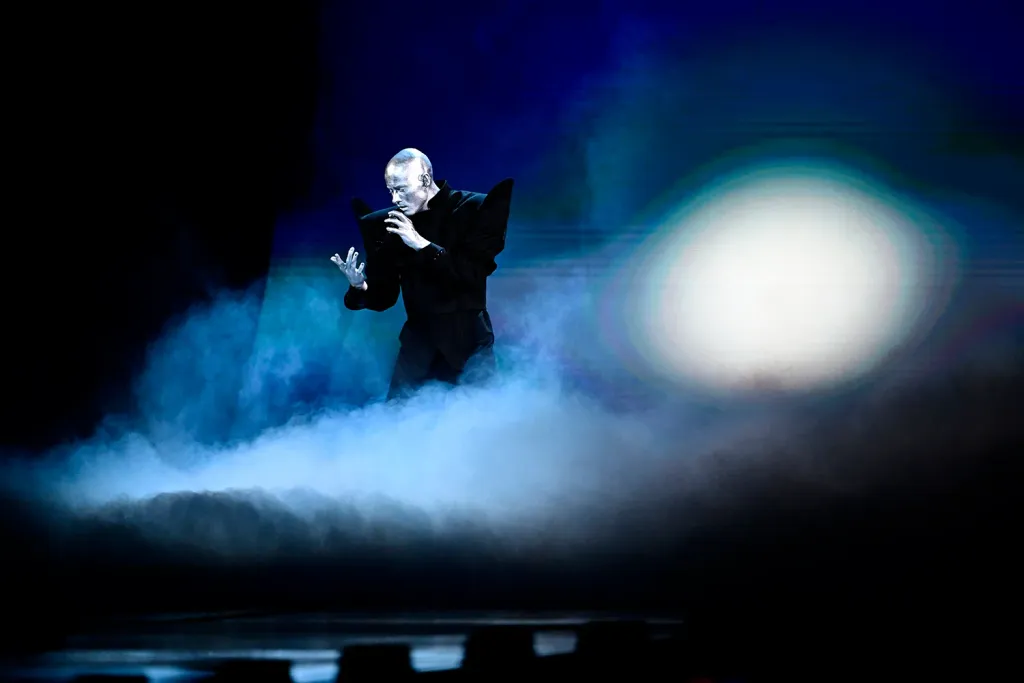
Dispatch Eurovision’s Troubles Mask a Deeper Problem It’s not just the song contest that’s at risk of breaking up. May 20, 2026, 7:00 AM By Charlie Sohne, a TV, film, and theater writer based in New York. A person painted in metallic silver body paint wears a structured black outfit with exaggerated, pointed shoulders. They stand in a dramatic pose on a smoky stage under moody blue and white spotlighting, looking down at one of their hands. Lithuanian singer Lion Ceccah performs during the Eurovision Song Contest in Vienna on May 12. Tobias Schwarz/AFP via Getty Images Get audio access with any FP subscription. Subscribe Now ALREADY AN FP SUBSCRIBER? LOGIN VIENNA—On May 9, the day before the Eurovision Song Contest held its opening ceremony, protesters were already in the streets.
…
Excerpt limited to ~120 words for fair-use compliance. The full article is at Foreign Policy.
Discussion
0 commentsMore from Foreign Policy