
Flow state, the dinner rush and AI brain fry
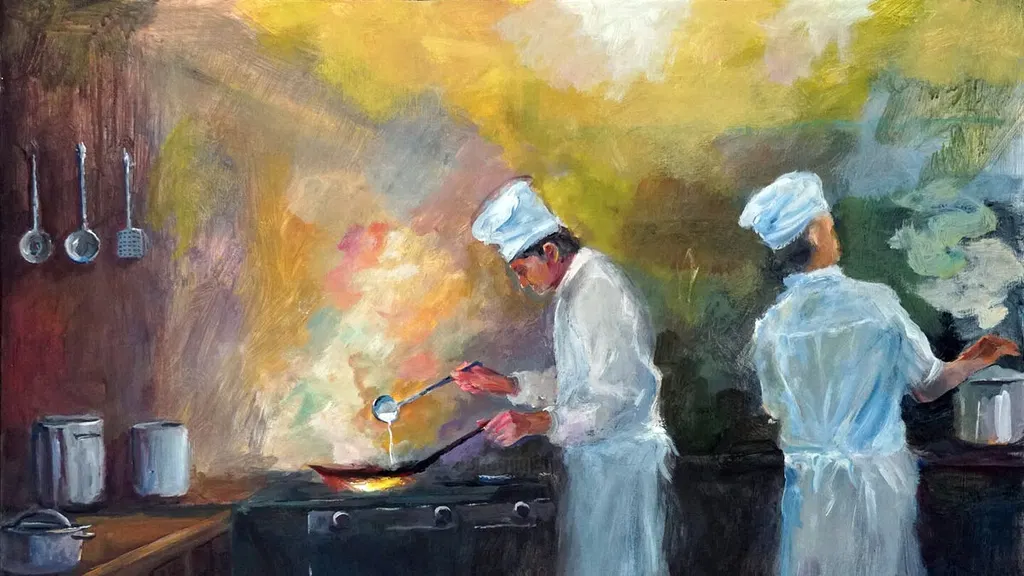
The article likens coordinating AI agents to the hectic environment of a restaurant kitchen, contrasting it with the calm of a chef’s flow state. Research cited indicates that supervising AI increases mental fatigue and information overload, turning AI into an additional layer of work. The author suggests that balancing AI assistance with periods of deep, focused work is necessary to avoid burnout and maintain productivity.
- ▪The author compares working with AI agents to a restaurant chef during a dinner rush, describing it as mentally taxing.
- ▪Studies show that overseeing AI leads to higher mental effort, fatigue, and information overload.
- ▪The article argues that while AI can boost productivity, it challenges deep work and may cause burnout if not managed properly.
Hacker News (AI / LLM) files mainly under ai. We currently carry 8,001 of its stories.
Story provenance
Source · retrieval · rights · ranking — open for full record
inspect →
Story provenance
Attribution is not the same as permission. This drawer separates discovery metadata, excerpts, WeSearch-generated summaries, reuse status, and whether the publisher receives the visit. Nothing here claims a legal grant the publisher has not made.
Record
| Original publisher | Substack |
| Canonical URL | https://jamespember.substack.com/p/flow-state-the-dinner-rush-and-ai |
| Publication time | Mon, 12 Oct 2026 02:45:48 +0000 |
| Retrieval time | 2026-10-12T02:53:14.218Z |
| Last seen | 2026-10-12T02:53:14.218Z |
| Headline source | Publisher (no WeSearch rewrite) |
| Excerpt source | publisher body |
| Excerpt method | First ~120 words (~800 chars) of extracted publisher body, fair-use limited. |
| Summary | WeSearch · cerebras-chat (WeSearch summarizer) |
| Summary source text | contentText |
| Citation coverage | Summary is a WeSearch-generated derivative; primary citation is the original publisher URL. |
| Cluster | o8TEDJShXUgx |
| Cluster logic | Grouped by semantic title/content similarity across sources within a rolling window. Same-publisher template collisions are excluded from coverage comparison. |
| Ranking reason | Story pages are not engagement-ranked. Hub feeds use recency, with optional source-diversified chronological ordering (cap consecutive stories per source). No personalized ranking. |
| Publisher visit | Yes — open original |
| Substitutes article? | No — link-out required for full text |
Rights status (four layers)
WeSearch handling by dimension
| Indexing | May the item be indexed (stored, ranked, made findable)? | Allowed |
| Snippet | May a short excerpt of the publisher's text be shown? | Allowed |
| AI summary | May WeSearch generate its own short summary of the article? | Limited |
| Retrieval / RAG | May the content be exposed for third-party retrieval-augmented generation? | Not asserted |
| Model training | May the content be used to train AI models? | Not asserted |
| Commercial reuse | May the content be reused commercially? | Not permitted |
Basis: Derived from the published RSS/Atom feed. Contact: [email protected]. Reviewed: 2026-07-24.
Opening excerpt (first ~120 words) tap to expand
Flow state, the dinner rush and AI brain fryJames PemberAug 26, 20261ShareI stumbled across this post from Juan on LinkedIn the other day, comparing working with AI agents to being a restaurant chef. It’s a novel, thought-provoking, and accurate analogy. To be clear, I’ve never been a professional chef, though I did work at Domino’s in my teenage years. Funnily enough, I found it incredibly relaxing. Coming in early, alone with my music, methodically prepping a terrifying volume of dough. Working with agents is like the exact opposite of that kind of zen. It’s peak dinner rush. It is mind-boggling just how much you can achieve working with agents, but there is a mental toll. Some are calling it “AI Brain Fry”. I’ve felt it, and I’m sure you have too.
…
Excerpt limited to ~120 words for fair-use compliance. The full article is at Substack.
Discussion
0 commentsMore from Substack


