
Fly counters help to spot signs of river pollution
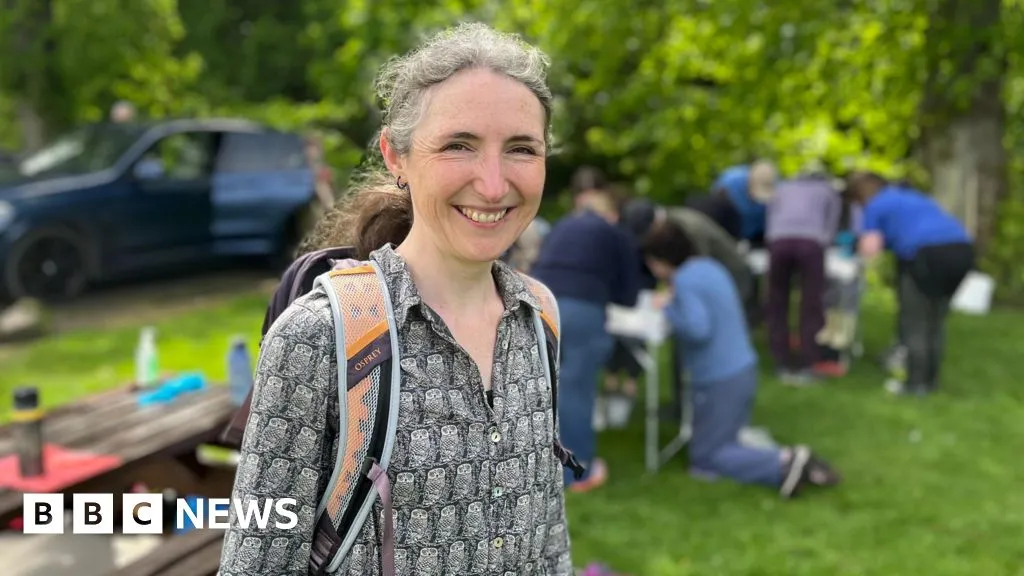
A network of volunteers is expanding across Scotland to monitor river health through fly counting. The Riverfly Partnership scheme has led to the formation of over 60 groups dedicated to detecting changes in water quality. This initiative allows for quick reporting to the Scottish Environment Protection Agency when issues arise.
- ▪More than 60 groups of voluntary river detectives have been formed in Scotland since the Riverfly Partnership scheme began four years ago.
- ▪The program allows for the monitoring of invertebrate life in rivers, which serves as an early warning system for water quality deterioration.
- ▪Training for new monitoring volunteers is ongoing to further expand the program and enhance river health protection.
BBC News — Science publishes from United Kingdom and files mainly under science. We currently carry 87 of its stories.
Story provenance
Source · retrieval · rights · ranking — open for full record
inspect →
Attribution is not the same as permission. This drawer separates discovery metadata, excerpts, WeSearch-generated summaries, reuse status, and whether the publisher receives the visit. Nothing here claims a legal grant the publisher has not made.
Record
| Original publisher | BBC News — Science |
| Canonical URL | https://www.bbc.com/news/articles/czj21vv3z7eo?at_medium=RSS&at_campaign=rss |
| Publication time | Tue, 26 May 2026 09:54:49 GMT |
| Retrieval time | 2026-05-26T09:57:47.818Z |
| Last seen | 2026-05-26T09:57:47.818Z |
| Headline source | Publisher (no WeSearch rewrite) |
| Excerpt source | publisher body |
| Excerpt method | First ~120 words (~800 chars) of extracted publisher body, fair-use limited. |
| Summary | WeSearch · cerebras-chat (WeSearch summarizer) |
| Summary source text | contentText |
| Citation coverage | Summary is a WeSearch-generated derivative; primary citation is the original publisher URL. |
| Cluster | Cnnhh-Hqz7g6 |
| Cluster logic | Grouped by semantic title/content similarity across sources within a rolling window. Same-publisher template collisions are excluded from coverage comparison. |
| Ranking reason | Story pages are not engagement-ranked. Hub feeds use recency, with optional source-diversified chronological ordering (cap consecutive stories per source). No personalized ranking. |
| Publisher visit | Yes — open original |
| Substitutes article? | No — link-out required for full text |
Rights status (four layers)
WeSearch handling by dimension
| Indexing | May the item be indexed (stored, ranked, made findable)? | Allowed |
| Snippet | May a short excerpt of the publisher's text be shown? | Allowed |
| AI summary | May WeSearch generate its own short summary of the article? | Limited |
| Retrieval / RAG | May the content be exposed for third-party retrieval-augmented generation? | Not asserted |
| Model training | May the content be used to train AI models? | Not asserted |
| Commercial reuse | May the content be reused commercially? | Not permitted |
Basis: Derived from the published RSS/Atom feed. Contact: [email protected]. Reviewed: 2026-07-24.
Opening excerpt (first ~120 words) tap to expand
Fly counters help to spot signs of river pollutionJust nowShareSaveAdd as preferred on GoogleDavid KnoxBBC Scotland News, PeeblesBBCConservation management student, Anna Dorward, took part in the Peebles trainingA safety net against water pollution is widening across the country thanks to a growing army of fly-counting volunteers.More than 60 groups of voluntary river detectives have now been formed since the Riverfly Partnership scheme arrived in Scotland four years ago.By regularly monitoring the invertebrate life in rivers and burns, any deterioration in water quality can quickly be detected.This year's training has just started for the latest monitoring volunteers in a bid to expand the early warning system even further.Elaine Rainey said changes could be reported quickly to the…
Excerpt limited to ~120 words for fair-use compliance. The full article is at BBC News — Science.
Discussion
0 commentsMore from BBC News — Science


