
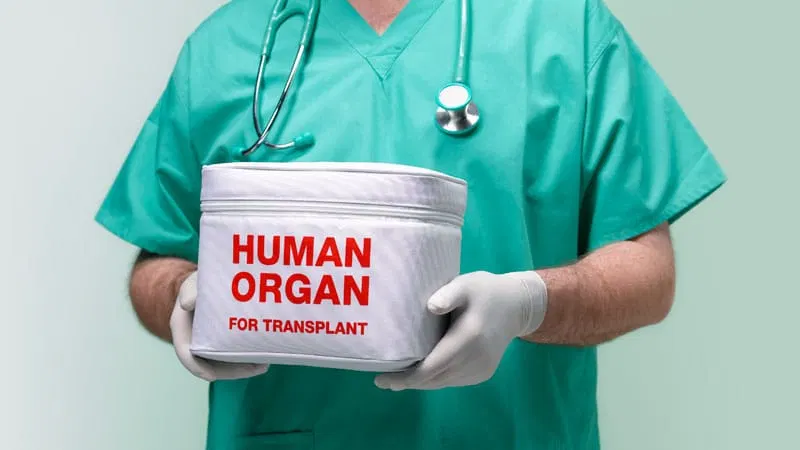
For Doctors, Opt-Out Donation = Tough Family Conversations
Opt-out organ donation systems in Europe are intended to simplify consent, but family discussions often complicate the process. Despite presumed consent, relatives frequently play a crucial role in the decision-making, which can lead to emotional conflicts. Experts suggest that trained professionals and clear communication are essential to navigate these sensitive conversations effectively.
- ▪Opt-out organ donation systems presume consent unless a person objects.
- ▪Family members often influence the final decision, leading to potential conflicts during emotionally charged moments.
- ▪Research indicates that cultural beliefs and generational differences can complicate discussions about organ donation.
Medscape files mainly under health. We currently carry 231 of its stories.
Story provenance
Source · retrieval · rights · ranking — open for full record
inspect →
Story provenance
Attribution is not the same as permission. This drawer separates discovery metadata, excerpts, WeSearch-generated summaries, reuse status, and whether the publisher receives the visit. Nothing here claims a legal grant the publisher has not made.
Record
| Original publisher | Medscape |
| Canonical URL | https://www.medscape.com/viewarticle/doctors-opt-out-donation-tough-family-conversations-2026a1000ift?src=rss |
| Publication time | Wed, 3 Jun 2026 04:10:11 EDT |
| Retrieval time | 2026-06-03T08:11:59.578Z |
| Last seen | 2026-06-03T08:11:59.578Z |
| Headline source | Publisher (no WeSearch rewrite) |
| Excerpt source | publisher body |
| Excerpt method | First ~120 words (~800 chars) of extracted publisher body, fair-use limited. |
| Summary | WeSearch · cerebras-chat (WeSearch summarizer) |
| Summary source text | contentText |
| Citation coverage | Summary is a WeSearch-generated derivative; primary citation is the original publisher URL. |
| Cluster | bdwlgDmrmjzw |
| Cluster logic | Grouped by semantic title/content similarity across sources within a rolling window. Same-publisher template collisions are excluded from coverage comparison. |
| Ranking reason | Story pages are not engagement-ranked. Hub feeds use recency, with optional source-diversified chronological ordering (cap consecutive stories per source). No personalized ranking. |
| Publisher visit | Yes — open original |
| Substitutes article? | No — link-out required for full text |
Rights status (four layers)
WeSearch handling by dimension
| Indexing | May the item be indexed (stored, ranked, made findable)? | Allowed |
| Snippet | May a short excerpt of the publisher's text be shown? | Allowed |
| AI summary | May WeSearch generate its own short summary of the article? | Limited |
| Retrieval / RAG | May the content be exposed for third-party retrieval-augmented generation? | Not asserted |
| Model training | May the content be used to train AI models? | Not asserted |
| Commercial reuse | May the content be reused commercially? | Not permitted |
Basis: Derived from the published RSS/Atom feed. Contact: [email protected]. Reviewed: 2026-07-24.
Opening excerpt (first ~120 words) tap to expand
Across Europe, opt-out organ donation systems were designed to make donation decisions clearer: unless a person records an objection, consent is presumed. At the bedside, however, presumed consent is rarely the end of the conversation. In many countries, relatives are still consulted and donation may not proceed when families object, leaving clinicians and donation teams to navigate grief, uncertainty, law, culture, and ethics at once.That tension is a central challenge for physicians. The policy default may say one thing: The family, facing a death they may not have expected, may be unsure what the patient wanted or they are divided over what to do.
…
Excerpt limited to ~120 words for fair-use compliance. The full article is at Medscape.
Discussion
0 commentsMore from Medscape


