From indemnity to indispensability: China’s 125-year reversal
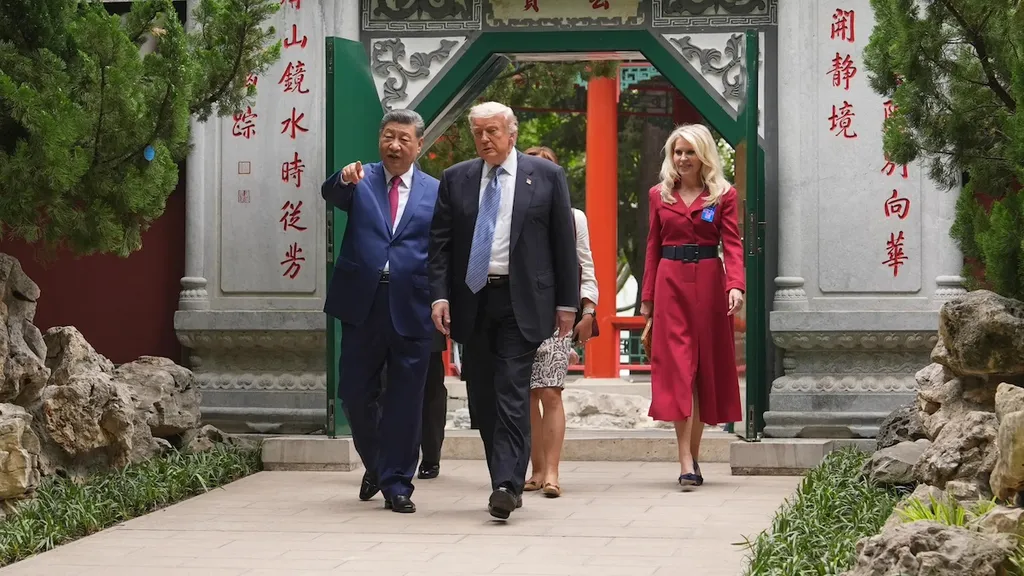
The article discusses the significant shift in China's global standing over the past 125 years, from being subjected to foreign domination to hosting world leaders as equals. It highlights the contrasting dynamics of the 1900 Boxer Protocol and the 2026 Trump-Xi summit, emphasizing China's newfound role as a diplomatic power. The piece concludes by noting that while China's current position may seem strong, it faces underlying challenges that could impact its future.
- ▪In 1900, foreign troops occupied Beijing and imposed the Boxer Protocol, marking a low point for Chinese sovereignty.
- ▪By 2026, the dynamics have shifted, with China hosting the US and Russian presidents as equals in diplomatic discussions.
- ▪China's current geopolitical status is characterized by both strength and underlying demographic and economic challenges.
Opening excerpt (first ~120 words) tap to expand
When eight foreign flags flew over Beijing in August 1900, no one in the Forbidden City could have imagined that the city would, 125 years later, host the president of the United States as a guest of honor and the president of Russia just days afterward. The contrast is almost cinematic. In 1900, some 51,755 troops from Austria-Hungary, Britain, France, Germany, Italy, Japan, Russia and the United States marched into the Chinese capital, looted the Forbidden City and the Old Summer Palace, destroyed volumes of the Yongle Dadian and the Siku Quanshu, and imposed the punitive Boxer Protocol of September 1901. In May 2026, those same eight capitals — through their successors and alliances — watch as Beijing, not foreign legations, sets the choreography of great-power diplomacy.
…
Excerpt limited to ~120 words for fair-use compliance. The full article is at Asia Times.
Discussion
0 commentsMore from Asia Times