From K-wave to ‘Chinamaxxing’? Testing China’s cultural pull
A new trend called 'Chinamaxxing' is emerging on American social media, where users adopt various aspects of Chinese lifestyle and culture. This trend reflects a modest shift in how some Americans perceive China, with a growing number expressing favorable views. However, analysts caution that this trend is largely superficial and lacks the depth seen in previous cultural waves like K-pop.
- ▪'Chinamaxxing' involves young Americans embracing Chinese habits such as drinking hot water and cooking congee.
- ▪A recent Pew Research Center survey indicates that 27 percent of U.S. adults now hold a favorable view of China, particularly among younger respondents.
- ▪Despite the trend's popularity, 71 percent of U.S. adults still view China unfavorably, indicating a complex relationship.
Korea Times publishes from South Korea and files mainly under world. We currently carry 375 of its stories.
Story provenance
Source · retrieval · rights · ranking — open for full record
inspect →
Story provenance
Attribution is not the same as permission. This drawer separates discovery metadata, excerpts, WeSearch-generated summaries, reuse status, and whether the publisher receives the visit. Nothing here claims a legal grant the publisher has not made.
Record
| Original publisher | Korea Times |
| Canonical URL | https://www.koreatimes.co.kr/world/20260429/from-k-wave-to-chinamaxxing-testing-chinas-cultural-pull?utm_source=rss |
| Publication time | Tue, 28 Apr 2026 17:52:03 GMT |
| Retrieval time | 2026-04-28T17:59:40.768Z |
| Last seen | 2026-04-28T17:59:40.768Z |
| Headline source | Publisher (no WeSearch rewrite) |
| Excerpt source | publisher body |
| Excerpt method | First ~120 words (~800 chars) of extracted publisher body, fair-use limited. |
| Summary | WeSearch · cerebras-chat (WeSearch summarizer) |
| Summary source text | contentText |
| Citation coverage | Summary is a WeSearch-generated derivative; primary citation is the original publisher URL. |
| Cluster | J1lbSWwboN6S |
| Cluster logic | Grouped by semantic title/content similarity across sources within a rolling window. Same-publisher template collisions are excluded from coverage comparison. |
| Ranking reason | Story pages are not engagement-ranked. Hub feeds use recency, with optional source-diversified chronological ordering (cap consecutive stories per source). No personalized ranking. |
| Publisher visit | Yes — open original |
| Substitutes article? | No — link-out required for full text |
Rights status (four layers)
WeSearch handling by dimension
| Indexing | May the item be indexed (stored, ranked, made findable)? | Allowed |
| Snippet | May a short excerpt of the publisher's text be shown? | Allowed |
| AI summary | May WeSearch generate its own short summary of the article? | Limited |
| Retrieval / RAG | May the content be exposed for third-party retrieval-augmented generation? | Not asserted |
| Model training | May the content be used to train AI models? | Not asserted |
| Commercial reuse | May the content be reused commercially? | Not permitted |
Basis: Derived from the published RSS/Atom feed. Contact: [email protected]. Reviewed: 2026-07-24.
Opening excerpt (first ~120 words) tap to expand
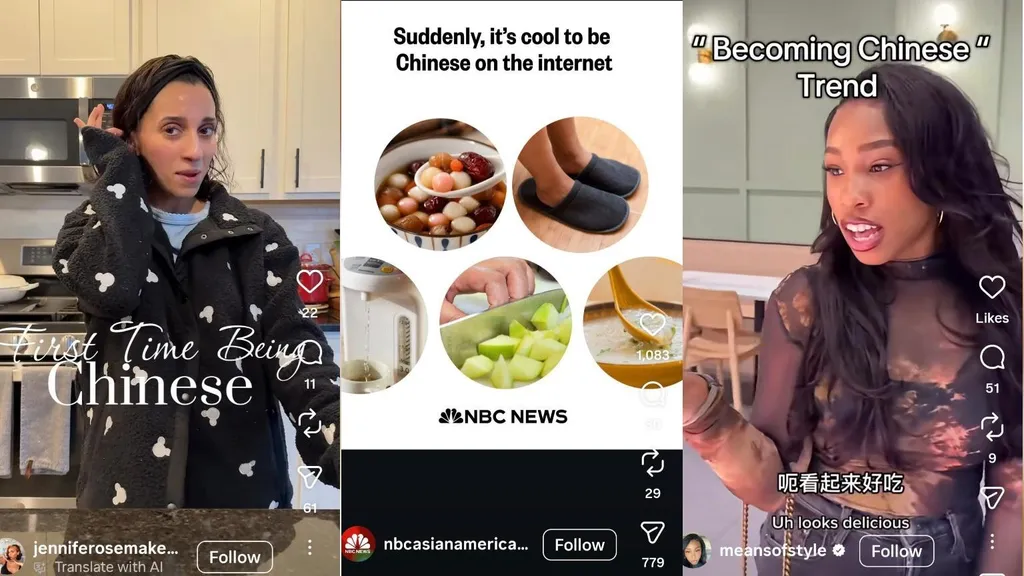
Screenshots captured from Instagram show the “Chinamaxxing” trend, with users embracing everyday Chinese habits and lifestyle routines.SEATTLE — After years of K-pop, K-dramas and K-beauty reshaping global tastes, a new and unlikely trend has surfaced on American social media feeds: “Chinamaxxing,” a viral mix of lifestyle imitation, wellness habits and online curiosity that hints at shifting perceptions of China.On platforms like TikTok, videos tagged with the trend show young Americans declaring they are in a “Chinese era” of their lives. They sip hot water instead of iced drinks, cook congee (rice porridge) and hotpot, walk with hands clasped behind their backs and swap coffee for green tea.
…
Excerpt limited to ~120 words for fair-use compliance. The full article is at Korea Times.
Discussion
0 commentsMore from Korea Times