FTC’s Strict Anti-Deepfake Rule Kicks in Today. Here’s What That Means for Grok
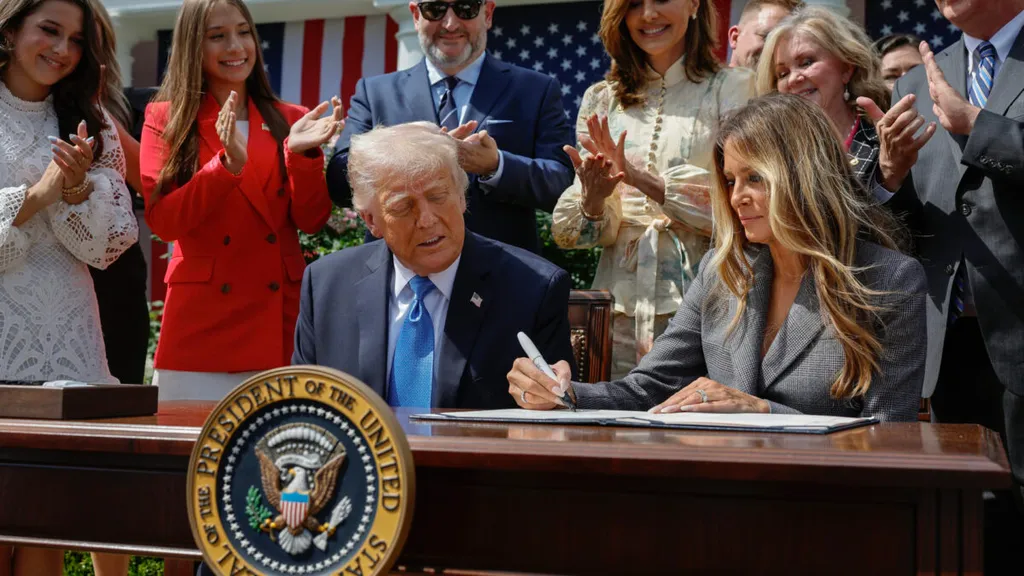
The Federal Trade Commission is enforcing Section 3 of the Take It Down Act, which targets the distribution of nonconsensual intimate images and deepfakes. Digital platforms must now provide a process for victims to request the removal of such content within 48 hours. Critics remain skeptical about the effectiveness of the law in curbing the ongoing issue of nonconsensual deepfakes online.
- ▪The Take It Down Act allows prosecution for distributing deepfakes or intimate images of minors and non-consenting adults.
- ▪Digital platforms are required to establish a process for victims to request the removal of harmful content within 48 hours.
- ▪The FTC has threatened civil penalties of over $53,000 per violation to encourage compliance from tech companies.
Gizmodo files mainly under tech. We currently carry 532 of its stories.
Story provenance
Source · retrieval · rights · ranking — open for full record
inspect →
Attribution is not the same as permission. This drawer separates discovery metadata, excerpts, WeSearch-generated summaries, reuse status, and whether the publisher receives the visit. Nothing here claims a legal grant the publisher has not made.
Record
| Original publisher | Gizmodo |
| Canonical URL | https://gizmodo.com/ftcs-strict-anti-deepfake-rule-kicks-in-today-heres-what-that-means-for-grok-2000759607 |
| Publication time | Tue, 19 May 2026 13:00:43 +0000 |
| Retrieval time | 2026-05-19T13:04:57.585Z |
| Last seen | 2026-05-19T13:04:57.585Z |
| Headline source | Publisher (no WeSearch rewrite) |
| Excerpt source | publisher body |
| Excerpt method | First ~120 words (~800 chars) of extracted publisher body, fair-use limited. |
| Summary | WeSearch · cerebras-chat (WeSearch summarizer) |
| Summary source text | contentText |
| Citation coverage | Summary is a WeSearch-generated derivative; primary citation is the original publisher URL. |
| Cluster | sAnnQBMqZRGg |
| Cluster logic | Grouped by semantic title/content similarity across sources within a rolling window. Same-publisher template collisions are excluded from coverage comparison. |
| Ranking reason | Story pages are not engagement-ranked. Hub feeds use recency, with optional source-diversified chronological ordering (cap consecutive stories per source). No personalized ranking. |
| Publisher visit | Yes — open original |
| Substitutes article? | No — link-out required for full text |
Rights status (four layers)
WeSearch handling by dimension
| Indexing | May the item be indexed (stored, ranked, made findable)? | Allowed |
| Snippet | May a short excerpt of the publisher's text be shown? | Allowed |
| AI summary | May WeSearch generate its own short summary of the article? | Limited |
| Retrieval / RAG | May the content be exposed for third-party retrieval-augmented generation? | Not asserted |
| Model training | May the content be used to train AI models? | Not asserted |
| Commercial reuse | May the content be reused commercially? | Not permitted |
Basis: Derived from the published RSS/Atom feed. Contact: [email protected]. Reviewed: 2026-07-24.
Opening excerpt (first ~120 words) tap to expand
Roughly one year ago today, President Trump signed into law the Take It Down Act (TIDA), a first-of-its-kind federal law aimed at curbing the proliferation of nonconsensual intimate photos and videos online. Now, starting on Tuesday, the Federal Trade Commission will finally begin enforcing one of its key provisions, Section 3. When it was enacted into law, TIDA allowed the prosecution of anyone who knowingly distributes deepfakes or intimate images of any minor or non-consenting adult. Last month, a 37-year-old man from Columbus, Ohio, became “the first person in the United States to be convicted under the Take It Down Act,” in the words of U.S. Attorney Dominick S. Gerace II.
…
Excerpt limited to ~120 words for fair-use compliance. The full article is at Gizmodo.
Discussion
0 commentsMore from Gizmodo