Goats win, tigers lose, but stalemate is optimal performance
The article discusses the strategic stalemate in the US-Israeli-Iran conflict, likening it to the game Bagh-chal. While the US and Israel have achieved tactical victories, they have failed to secure a decisive advantage, leading to a prolonged conflict. Iran's strategy has effectively countered conventional military strength by creating resilience through proxy forces.
- ▪The game Bagh-chal symbolizes the current US-Israeli-Iran conflict, where tactical victories do not lead to strategic success.
- ▪Iran's geography and network of proxy forces have made it difficult for the US-Israeli axis to deliver a knockout blow.
- ▪The conflict has evolved into a war of attrition, with both sides unable to achieve a decisive outcome.
Asia Times files mainly under world. We currently carry 130 of its stories.
Opening excerpt (first ~120 words) tap to expand
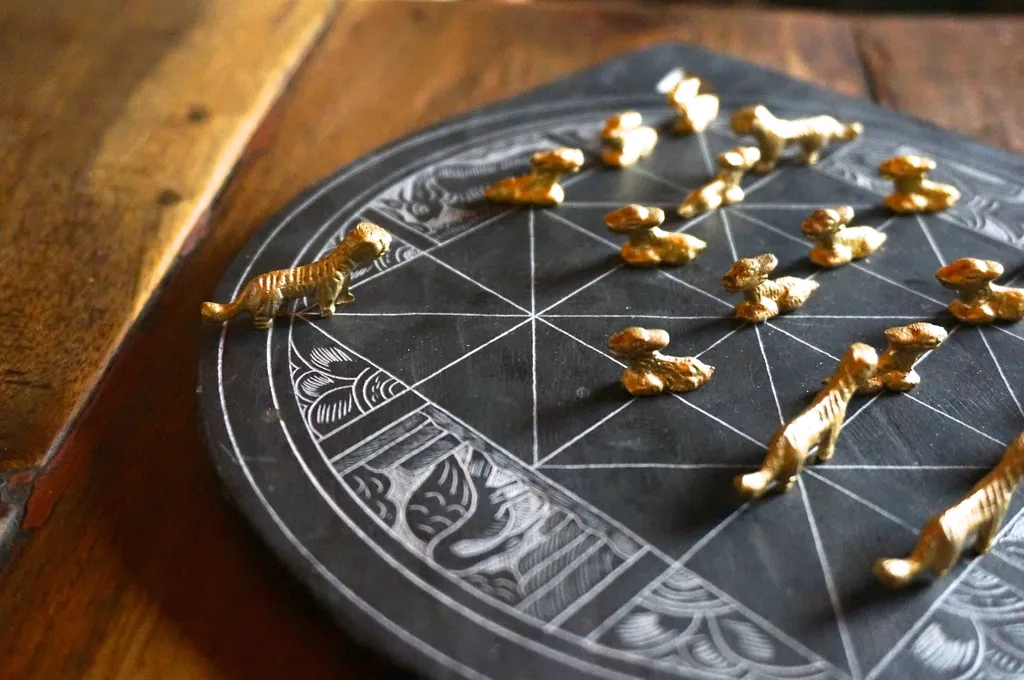
Somewhere in the foothills of Nepal, old men still gather around a wooden board carved into a five-by-five grid, moving carved tigers and goats across its intersections with quiet concentration. The game is called Bagh-chal — literally, ‘Tiger Move’ — and it has been played here for a thousand years. Most young Nepalis have never heard of it and that is a shame. Right now, in the deserts and mountain ranges of West Asia, Bagh-chal is being played on a very large scale. The US-Israeli-Iran war is, for the moment, frozen. Washington rejected Tehran’s proposal. Tehran rejected Washington’s. After months of air strikes, proxy battles, and nervous watching of oil prices, the conflict has settled into something neither side wanted — a stalemate.
…
Excerpt limited to ~120 words for fair-use compliance. The full article is at Asia Times.
Discussion
0 commentsMore from Asia Times