Google Briefly Turned Google Earth Into an AI Slop Factory
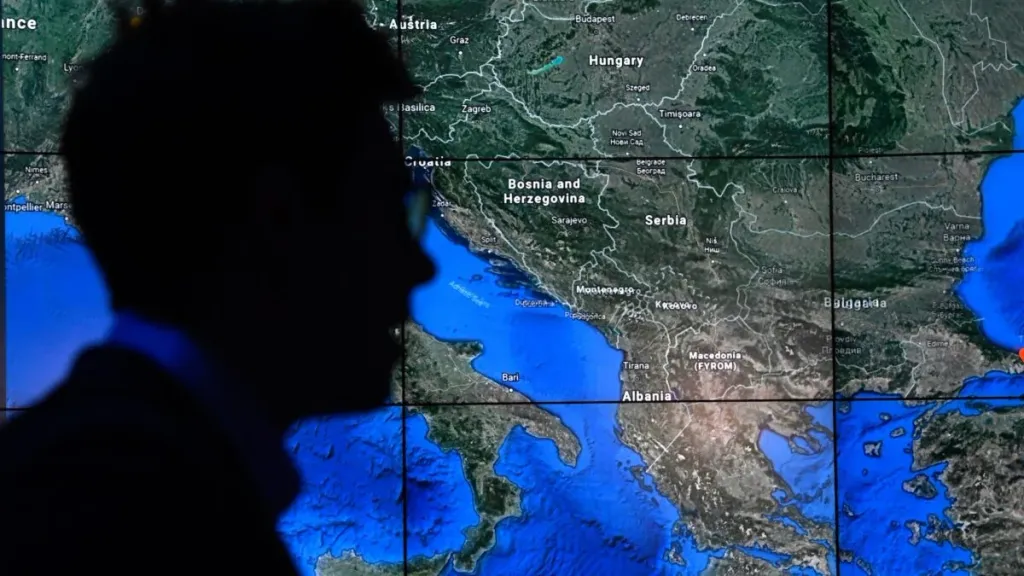
Google introduced a new AI feature in Google Earth that allowed users to generate synthetic images. After users produced controversial depictions, including a fictitious nuclear plant in Iran and a plane crash at the World Trade Center, the company faced significant online backlash. Google subsequently disabled the feature, citing policy violations and the need for stronger safeguards.
- ▪Google released an AI image-generation feature for Google Earth on Thursday.
- ▪Users created fake images such as a nuclear plant in Iran and a plane crashing into One World Trade Center, sparking backlash.
- ▪Google stated the generated images were watermarked and not displayed in the main Earth experience.
- ▪The company rolled back the feature to implement stronger guardrails and address policy concerns.
Gizmodo files mainly under tech. We currently carry 692 of its stories.
Story provenance
Source · retrieval · rights · ranking — open for full record
inspect →
Story provenance
Attribution is not the same as permission. This drawer separates discovery metadata, excerpts, WeSearch-generated summaries, reuse status, and whether the publisher receives the visit. Nothing here claims a legal grant the publisher has not made.
Record
| Original publisher | Gizmodo |
| Canonical URL | https://gizmodo.com/google-briefly-turned-google-earth-into-an-ai-slop-factory-2000793605 |
| Publication time | Sat, 01 Aug 2026 15:00:09 +0000 |
| Retrieval time | 2026-08-01T15:03:39.111Z |
| Last seen | 2026-08-01T15:03:39.111Z |
| Headline source | Publisher (no WeSearch rewrite) |
| Excerpt source | publisher body |
| Excerpt method | First ~120 words (~800 chars) of extracted publisher body, fair-use limited. |
| Summary | WeSearch · cerebras-chat (WeSearch summarizer) |
| Summary source text | contentText |
| Citation coverage | Summary is a WeSearch-generated derivative; primary citation is the original publisher URL. |
| Cluster | xCU9QtdrmZGU · 1 stories |
| Cluster logic | Grouped by semantic title/content similarity across sources within a rolling window. Same-publisher template collisions are excluded from coverage comparison. |
| Ranking reason | Story pages are not engagement-ranked. Hub feeds use recency, with optional source-diversified chronological ordering (cap consecutive stories per source). No personalized ranking. |
| Publisher visit | Yes — open original |
| Substitutes article? | No — link-out required for full text |
Rights status (four layers)
WeSearch handling by dimension
| Indexing | May the item be indexed (stored, ranked, made findable)? | Allowed |
| Snippet | May a short excerpt of the publisher's text be shown? | Allowed |
| AI summary | May WeSearch generate its own short summary of the article? | Limited |
| Retrieval / RAG | May the content be exposed for third-party retrieval-augmented generation? | Not asserted |
| Model training | May the content be used to train AI models? | Not asserted |
| Commercial reuse | May the content be reused commercially? | Not permitted |
Basis: Derived from the published RSS/Atom feed. Contact: [email protected]. Reviewed: 2026-07-24.
Opening excerpt (first ~120 words) tap to expand
On Thursday, Google released a new AI feature that allowed anyone to create fake images in Google Earth. Naturally, people used the AI to put a fake nuclear plant in Iran and show a plane crashing into One World Trade Center in New York. After massive online backlash, the tech giant killed the feature on Friday.cnx.cmd.push(function(){cnx({"playerId":"92b7b46b-43ed-4e0e-b21b-2c999302d9d7","settings":{"advertising":{"macros":{"AD_UNIT":"/23178111854/od.gizmodo.com/article","CHILD_UNIT":"article","POST_ID":"2000793605","POST_TYPE":"post","CHANNEL":"tech","SECTION":"artificial-intelligence","SUBSECTION":"","CATEGORIES":"artificial-intelligence","TAGS":"ai,artificial-intelligence,google,google-earth","NOP":"0"},"timeBeforeFirstAd":0}}}).render("cnx-player-main")}); “We know that people…
Excerpt limited to ~120 words for fair-use compliance. The full article is at Gizmodo.
Discussion
0 commentsMore from Gizmodo