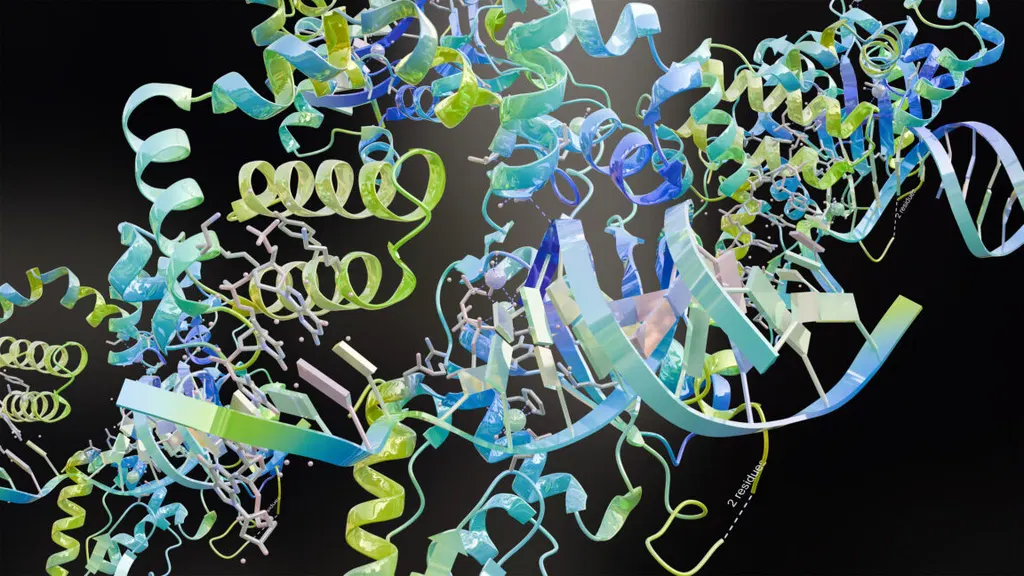
Google figures out how to watermark AI-designed proteins
That’ll leave a mark Google figures out how to watermark AI-designed proteins Intended to help with biosecurity, it works with a popular AI protein design tool. One area where we seem to be ahead of the game, however, is in biosecurity. As with most things biological, utility goes hand in hand with threats.
- ▪That’ll leave a mark Google figures out how to watermark AI-designed proteins Intended to help with biosecurity, it works with a popular AI protein design tool.
- ▪One area where we seem to be ahead of the game, however, is in biosecurity.
- ▪As with most things biological, utility goes hand in hand with threats.
2 outlets in our directory ran this story, first to last over 3 hours. All of the coverage we found sits in one bucket: centre. That one-sidedness is itself worth noticing.
Hacker News (AI / LLM) files mainly under ai. We currently carry 7,087 of its stories.
Story provenance
Source · retrieval · rights · ranking — open for full record
inspect →
Story provenance
Attribution is not the same as permission. This drawer separates discovery metadata, excerpts, WeSearch-generated summaries, reuse status, and whether the publisher receives the visit. Nothing here claims a legal grant the publisher has not made.
Record
| Original publisher | Ars Technica |
| Canonical URL | https://arstechnica.com/science/2026/09/google-figures-out-how-to-watermark-ai-designed-proteins/ |
| Publication time | Wed, 30 Sep 2026 22:42:59 +0000 |
| Retrieval time | 2026-09-30T22:52:06.429Z |
| Last seen | 2026-09-30T22:52:06.429Z |
| Headline source | Publisher (no WeSearch rewrite) |
| Excerpt source | publisher body |
| Excerpt method | First ~120 words (~800 chars) of extracted publisher body, fair-use limited. |
| Summary | WeSearch · cerebras-chat (WeSearch summarizer) |
| Summary source text | contentText |
| Citation coverage | Summary is a WeSearch-generated derivative; primary citation is the original publisher URL. |
| Cluster | t9HuYkwTa9AN · 2 stories |
| Cluster logic | Grouped by semantic title/content similarity across sources within a rolling window. Same-publisher template collisions are excluded from coverage comparison. |
| Ranking reason | Story pages are not engagement-ranked. Hub feeds use recency, with optional source-diversified chronological ordering (cap consecutive stories per source). No personalized ranking. |
| Publisher visit | Yes — open original |
| Substitutes article? | No — link-out required for full text |
Rights status (four layers)
WeSearch handling by dimension
| Indexing | May the item be indexed (stored, ranked, made findable)? | Allowed |
| Snippet | May a short excerpt of the publisher's text be shown? | Allowed |
| AI summary | May WeSearch generate its own short summary of the article? | Limited |
| Retrieval / RAG | May the content be exposed for third-party retrieval-augmented generation? | Not asserted |
| Model training | May the content be used to train AI models? | Not asserted |
| Commercial reuse | May the content be reused commercially? | Not permitted |
Basis: Derived from the published RSS/Atom feed. Contact: [email protected]. Reviewed: 2026-07-24.
Opening excerpt (first ~120 words) tap to expand
That’ll leave a mark Google figures out how to watermark AI-designed proteins Intended to help with biosecurity, it works with a popular AI protein design tool. John Timmer – Sep 30, 2026 11:54 am | 27 Credit: ALIOUI Mohammed Elamine Credit: ALIOUI Mohammed Elamine Text settings Story text Size Small Standard Large Width * Standard Wide Links Standard Orange * Subscribers only Learn more Minimize to nav AI-based tools seem to be causing security threats on a nearly daily basis, in part because we’ve been slow to recognize potential threats. One area where we seem to be ahead of the game, however, is in biosecurity. As with most things biological, utility goes hand in hand with threats.
…
Excerpt limited to ~120 words for fair-use compliance. The full article is at Ars Technica.
Discussion
0 commentsMore from Ars Technica