Google Is in Full-On Damage Control Over Its New Health App
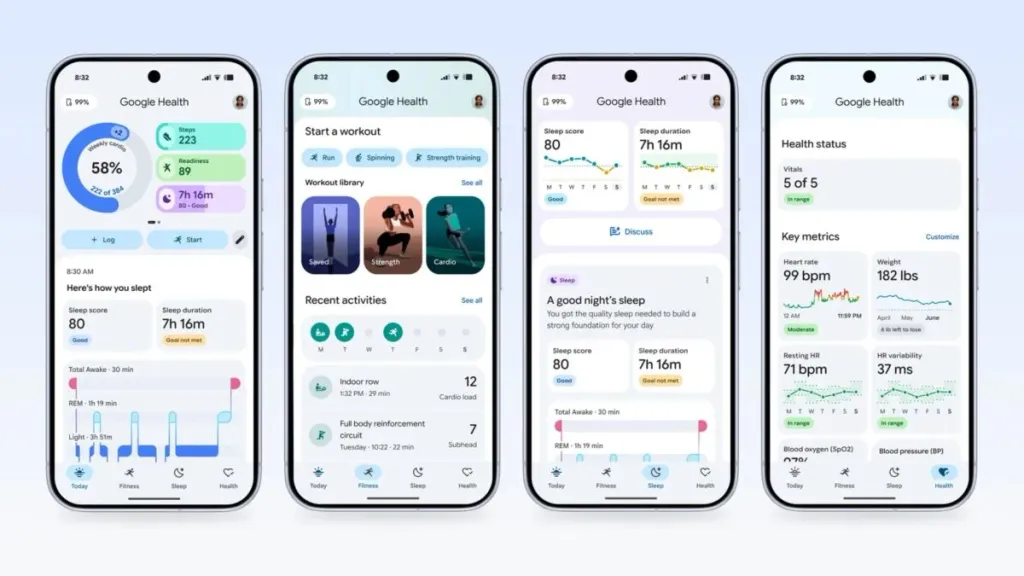
Google is facing backlash over its transition from the Fitbit app to the new Google Health app. Users have reported numerous issues, including incorrect data and app crashes, leading to dissatisfaction with the update. The company is working to address these problems, but the negative reception may linger as users consider alternative health wearables.
- ▪Google recently launched the Google Health app, replacing the Fitbit app.
- ▪Users have reported various issues, including incorrect data points and app crashes.
- ▪Google is rushing to fix the bugs and has outlined updates in a recent blog post.
Gizmodo files mainly under tech. We currently carry 536 of its stories.
Story provenance
Source · retrieval · rights · ranking — open for full record
inspect →
Attribution is not the same as permission. This drawer separates discovery metadata, excerpts, WeSearch-generated summaries, reuse status, and whether the publisher receives the visit. Nothing here claims a legal grant the publisher has not made.
Record
| Original publisher | Gizmodo |
| Canonical URL | https://gizmodo.com/google-is-in-full-on-damage-control-over-its-new-health-app-2000764027 |
| Publication time | Wed, 27 May 2026 18:50:05 +0000 |
| Retrieval time | 2026-05-27T18:53:02.556Z |
| Last seen | 2026-05-27T18:53:02.556Z |
| Headline source | Publisher (no WeSearch rewrite) |
| Excerpt source | publisher body |
| Excerpt method | First ~120 words (~800 chars) of extracted publisher body, fair-use limited. |
| Summary | WeSearch · cerebras-chat (WeSearch summarizer) |
| Summary source text | contentText |
| Citation coverage | Summary is a WeSearch-generated derivative; primary citation is the original publisher URL. |
| Cluster | UTQf4RL82rzh |
| Cluster logic | Grouped by semantic title/content similarity across sources within a rolling window. Same-publisher template collisions are excluded from coverage comparison. |
| Ranking reason | Story pages are not engagement-ranked. Hub feeds use recency, with optional source-diversified chronological ordering (cap consecutive stories per source). No personalized ranking. |
| Publisher visit | Yes — open original |
| Substitutes article? | No — link-out required for full text |
Rights status (four layers)
WeSearch handling by dimension
| Indexing | May the item be indexed (stored, ranked, made findable)? | Allowed |
| Snippet | May a short excerpt of the publisher's text be shown? | Allowed |
| AI summary | May WeSearch generate its own short summary of the article? | Limited |
| Retrieval / RAG | May the content be exposed for third-party retrieval-augmented generation? | Not asserted |
| Model training | May the content be used to train AI models? | Not asserted |
| Commercial reuse | May the content be reused commercially? | Not permitted |
Basis: Derived from the published RSS/Atom feed. Contact: [email protected]. Reviewed: 2026-07-24.
Opening excerpt (first ~120 words) tap to expand
If there’s one thing you don’t want to screw around with as a tech company, it’s apps. Just ask Sonos, which literally had to fire its CEO and start anew over fallout from a botched app update. Google apparently didn’t get that memo because its recent shift from the Fitbit app to the newly christened Google Health has been… rocky. People are crashing out over the recent app update, and it’s not hard to see why. In case you missed it, Google recently retired its Fitbit app with the launch of the Fitbit Air, a screenless fitness band and Whoop competitor. In name and in design, the Fitbit app is no more, and Google Health is the new software du jour. That shift has ushered in quite a few changes, and to no one’s surprise, several of those tweaks have to do with AI.
…
Excerpt limited to ~120 words for fair-use compliance. The full article is at Gizmodo.
Discussion
0 commentsMore from Gizmodo