Google is launching AI chips into space to see if they survive up there
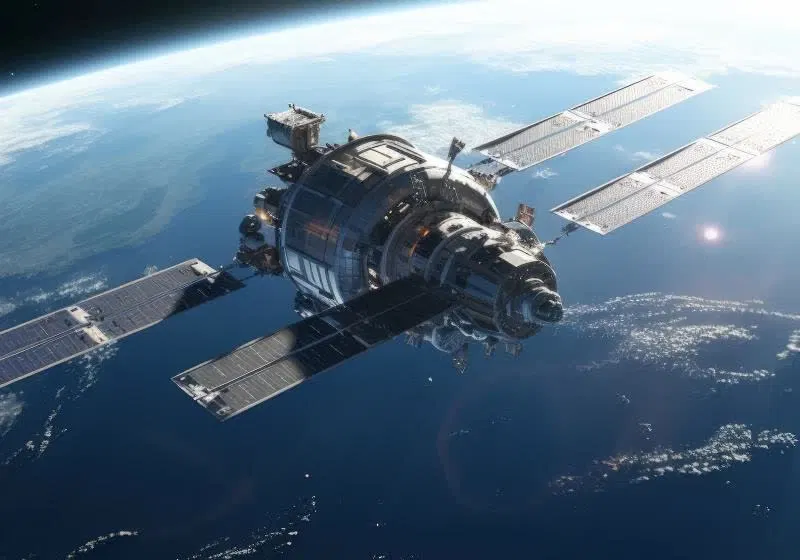
Google is launching an experimental satellite named MVP next month to test the viability of AI chips in space as part of its Project Suncatcher initiative. The mission aims to evaluate whether solar-powered orbital hardware can withstand radiation and heat challenges while processing short AI requests. This early experiment is not intended for immediate commercial use but serves as a foundational step toward potential space-based data centers.
- ▪The MVP satellite will carry four of Google's tensor processing units and is scheduled to launch on a SpaceX Falcon 9 rocket from Vandenberg Space Force Base.
- ▪Ground testing at the Crocker Nuclear Laboratory revealed that restarting the chips can usually correct radiation-induced bit flips.
- ▪The satellite's cooling system allows the AI chips to operate for approximately 15 minutes before they must shut down to dissipate heat into space.
- ▪Google is collaborating with Planet Labs to accelerate the timeline, moving the initial launch forward from a planned 2027 date to next month.
TechSpot files mainly under tech. We currently carry 558 of its stories.
Story provenance
Source · retrieval · rights · ranking — open for full record
inspect →
Story provenance
Attribution is not the same as permission. This drawer separates discovery metadata, excerpts, WeSearch-generated summaries, reuse status, and whether the publisher receives the visit. Nothing here claims a legal grant the publisher has not made.
Record
| Original publisher | TechSpot |
| Canonical URL | https://www.techspot.com/news/113989-google-launching-ai-chips-space-see-if-they.html |
| Publication time | Fri, 25 Sep 2026 12:16 -0500 |
| Retrieval time | 2026-09-25T17:20:34.526Z |
| Last seen | 2026-09-25T17:20:34.526Z |
| Headline source | Publisher (no WeSearch rewrite) |
| Excerpt source | publisher body |
| Excerpt method | First ~120 words (~800 chars) of extracted publisher body, fair-use limited. |
| Summary | WeSearch · cerebras-chat (WeSearch summarizer) |
| Summary source text | contentText |
| Citation coverage | Summary is a WeSearch-generated derivative; primary citation is the original publisher URL. |
| Cluster | SYqnLCv-buTu · 1 stories |
| Cluster logic | Grouped by semantic title/content similarity across sources within a rolling window. Same-publisher template collisions are excluded from coverage comparison. |
| Ranking reason | Story pages are not engagement-ranked. Hub feeds use recency, with optional source-diversified chronological ordering (cap consecutive stories per source). No personalized ranking. |
| Publisher visit | Yes — open original |
| Substitutes article? | No — link-out required for full text |
Rights status (four layers)
WeSearch handling by dimension
| Indexing | May the item be indexed (stored, ranked, made findable)? | Allowed |
| Snippet | May a short excerpt of the publisher's text be shown? | Allowed |
| AI summary | May WeSearch generate its own short summary of the article? | Limited |
| Retrieval / RAG | May the content be exposed for third-party retrieval-augmented generation? | Not asserted |
| Model training | May the content be used to train AI models? | Not asserted |
| Commercial reuse | May the content be reused commercially? | Not permitted |
Basis: Derived from the published RSS/Atom feed. Contact: [email protected]. Reviewed: 2026-07-24.
Opening excerpt (first ~120 words) tap to expand
Space Electronics google data center Google is launching AI chips into space to see if they survive up there Google's space AI chip test isn't about power, it's about whether the hardware survives at all By Skye Jacobs September 25, 2026, 12:16 Add TechSpot Serving tech enthusiasts for over 25 years. TechSpot means tech analysis and advice you can trust. Highly anticipated: Google plans to launch an experimental satellite carrying AI chips next month, taking its first step toward testing whether AI computing can operate reliably in orbit. The satellite, called MVP, is scheduled to launch aboard a SpaceX Falcon 9 rocket from Vandenberg Space Force Base in California.
…
Excerpt limited to ~120 words for fair-use compliance. The full article is at TechSpot.
Discussion
0 commentsMore from TechSpot