Google Quickly Rolls Back a Feature That Could Make Deepfake Satellite Images
Google introduced an AI image generation feature for Google Earth using its Nano Banana 2 model, allowing users to create custom visuals over satellite and 3D maps. After researchers highlighted the potential for realistic deepfake images and misinformation, the company faced criticism. Google subsequently removed the feature and announced plans to strengthen its safeguards.
- ▪Google launched the Nano Banana 2 feature on Thursday, enabling AI-generated images based on Google Earth’s satellite, aerial, and 3D data.
- ▪Researchers demonstrated that the tool could create convincing fake images, such as a fabricated nuclear plant in Iran, raising concerns about misinformation.
- ▪Following the backlash, Google withdrew the feature on Friday and said it would develop stronger guardrails for future use.
- ▪The generated images were only visible to the individual user, watermarked as AI-generated, but could still be shared via screenshots or saved projects.
CNET files mainly under tech. We currently carry 358 of its stories.
Story provenance
Source · retrieval · rights · ranking — open for full record
inspect →
Story provenance
Attribution is not the same as permission. This drawer separates discovery metadata, excerpts, WeSearch-generated summaries, reuse status, and whether the publisher receives the visit. Nothing here claims a legal grant the publisher has not made.
Record
| Original publisher | CNET |
| Canonical URL | https://www.cnet.com/tech/services-and-software/google-quickly-rolls-back-a-feature-that-could-make-deepfake-satellite-images/ |
| Publication time | 2026-07-31T19:23:00Z |
| Retrieval time | 2026-07-31T19:34:04.727Z |
| Last seen | 2026-07-31T19:34:04.727Z |
| Headline source | Publisher (no WeSearch rewrite) |
| Excerpt source | publisher body |
| Excerpt method | First ~120 words (~800 chars) of extracted publisher body, fair-use limited. |
| Summary | WeSearch · cerebras-chat (WeSearch summarizer) |
| Summary source text | contentText |
| Citation coverage | Summary is a WeSearch-generated derivative; primary citation is the original publisher URL. |
| Cluster | lOi9NCiY7OQp · 1 stories |
| Cluster logic | Grouped by semantic title/content similarity across sources within a rolling window. Same-publisher template collisions are excluded from coverage comparison. |
| Ranking reason | Story pages are not engagement-ranked. Hub feeds use recency, with optional source-diversified chronological ordering (cap consecutive stories per source). No personalized ranking. |
| Publisher visit | Yes — open original |
| Substitutes article? | No — link-out required for full text |
Rights status (four layers)
WeSearch handling by dimension
| Indexing | May the item be indexed (stored, ranked, made findable)? | Allowed |
| Snippet | May a short excerpt of the publisher's text be shown? | Allowed |
| AI summary | May WeSearch generate its own short summary of the article? | Limited |
| Retrieval / RAG | May the content be exposed for third-party retrieval-augmented generation? | Not asserted |
| Model training | May the content be used to train AI models? | Not asserted |
| Commercial reuse | May the content be reused commercially? | Not permitted |
Basis: Derived from the published RSS/Atom feed. Contact: [email protected]. Reviewed: 2026-07-24.
Opening excerpt (first ~120 words) tap to expand
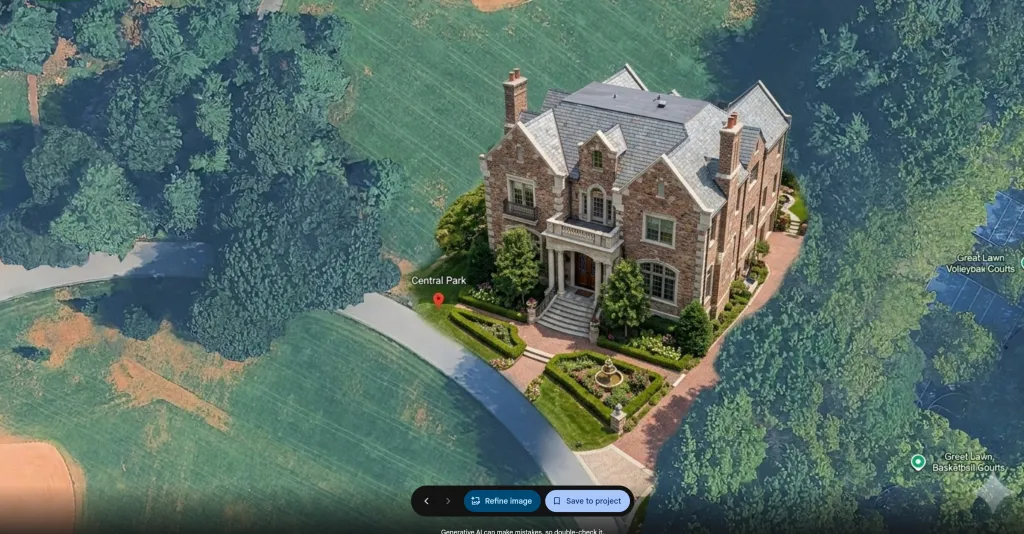
Tech > Services & Software > AI Google Quickly Rolls Back a Feature That Could Make Deepfake Satellite Images Google Earth's AI image generator let me put my dream home in Central Park, but other potential uses aren't so innocent. Dashia Milden Editor Dashia is the consumer insights editor for CNET.… Read full bio Dashia Milden Editor Read full bio July 31, 2026, 3:24 pm ET 2 min read Google removed the feature on Friday. Dashia Milden/CNET Google announced a new way to use AI this week. Then pulled it a day later. As of Thursday, you could use the company’s Nano Banana 2 AI model to generate images based on Google Earth’s satellite, aerial and 3D images.
…
Excerpt limited to ~120 words for fair-use compliance. The full article is at CNET.
Discussion
0 commentsMore from CNET