Grapefruit-sized hail may become more common in a warmer world
A recent study indicates that climate change may lead to an increase in the frequency and size of destructive hailstones in certain regions. This phenomenon has been observed with recent storms causing significant damage, including injuries to people and animals. The risks associated with large hail will vary depending on the geographical area.
- ▪A hailstorm in Springfield, Mo., recently dropped ice chunks the size of baseballs and grapefruits.
- ▪The giant hail caused extensive damage to vehicles and homes, as well as injuries.
- ▪Research suggests that climate change may contribute to larger and more destructive hail in various regions.
Science News files mainly under science. We currently carry 42 of its stories.
Story provenance
Source · retrieval · rights · ranking — open for full record
inspect →
Story provenance
Attribution is not the same as permission. This drawer separates discovery metadata, excerpts, WeSearch-generated summaries, reuse status, and whether the publisher receives the visit. Nothing here claims a legal grant the publisher has not made.
Record
| Original publisher | Science News |
| Canonical URL | https://www.sciencenews.org/article/large-hail-climate-change-more-common |
| Publication time | Wed, 27 May 2026 15:00:00 +0000 |
| Retrieval time | 2026-05-27T15:03:01.294Z |
| Last seen | 2026-05-27T15:03:01.294Z |
| Headline source | Publisher (no WeSearch rewrite) |
| Excerpt source | publisher body |
| Excerpt method | First ~120 words (~800 chars) of extracted publisher body, fair-use limited. |
| Summary | WeSearch · cerebras-chat (WeSearch summarizer) |
| Summary source text | contentText |
| Citation coverage | Summary is a WeSearch-generated derivative; primary citation is the original publisher URL. |
| Cluster | hmXZs7mottlt |
| Cluster logic | Grouped by semantic title/content similarity across sources within a rolling window. Same-publisher template collisions are excluded from coverage comparison. |
| Ranking reason | Story pages are not engagement-ranked. Hub feeds use recency, with optional source-diversified chronological ordering (cap consecutive stories per source). No personalized ranking. |
| Publisher visit | Yes — open original |
| Substitutes article? | No — link-out required for full text |
Rights status (four layers)
WeSearch handling by dimension
| Indexing | May the item be indexed (stored, ranked, made findable)? | Allowed |
| Snippet | May a short excerpt of the publisher's text be shown? | Allowed |
| AI summary | May WeSearch generate its own short summary of the article? | Limited |
| Retrieval / RAG | May the content be exposed for third-party retrieval-augmented generation? | Not asserted |
| Model training | May the content be used to train AI models? | Not asserted |
| Commercial reuse | May the content be reused commercially? | Not permitted |
Basis: Derived from the published RSS/Atom feed. Contact: [email protected]. Reviewed: 2026-07-24.
Opening excerpt (first ~120 words) tap to expand
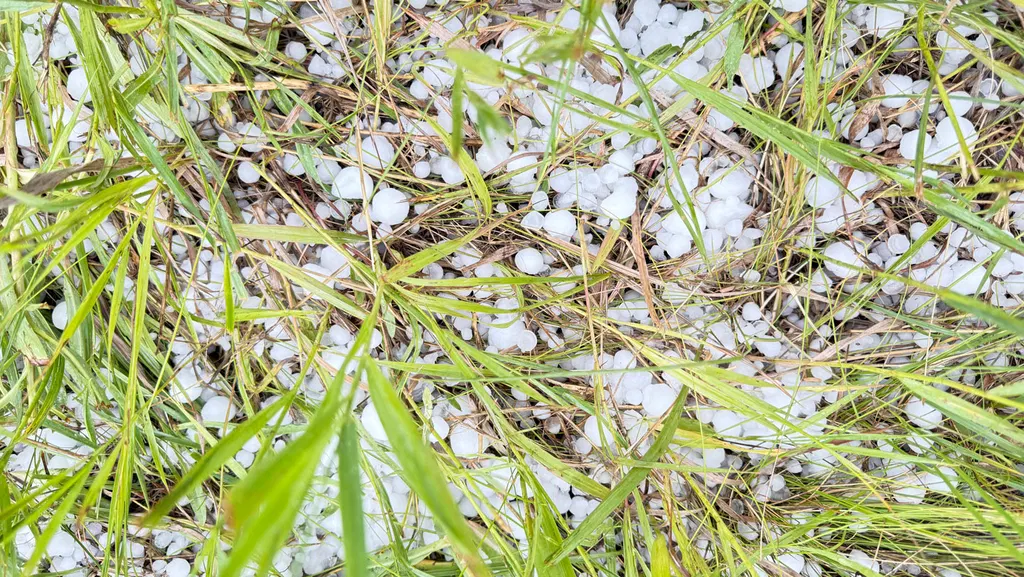
News Climate Grapefruit-sized hail may become more common in a warmer world Climate change may make hail more destructive in some regions while easing risks in others Hailstones cover the grass in Bismarck, N.D., after a June 27, 2025, storm. A new study suggests climate change may make large, damaging hail more common in some regions. Qinghong Zhang By Yujia Huang 1 minute ago Share this:Share Share via email (Opens in new window) Email Share on Facebook (Opens in new window) Facebook Share on Reddit (Opens in new window) Reddit Share on X (Opens in new window) X Print (Opens in new window) Print On April 28, a fierce hailstorm battered Springfield, Mo., dropping ice chunks the size of baseballs, with some even larger than grapefruits.
…
Excerpt limited to ~120 words for fair-use compliance. The full article is at Science News.
Discussion
0 commentsMore from Science News