
Heat vulnerability follows more than temperature, and this global map exposes the overlooked fault lines
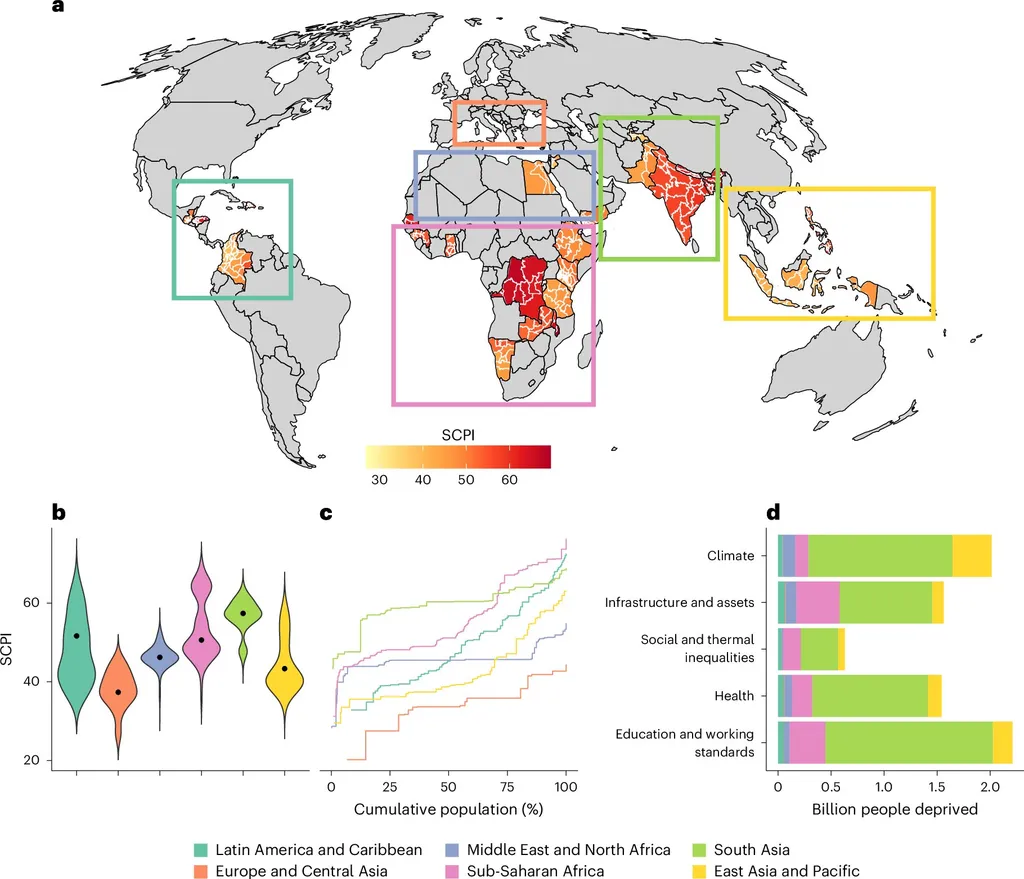
Editors have highlighted the following attributes while ensuring the content's credibility: fact-checked peer-reviewed publication proofread The GIST Add as preferred source Distribution of individuals covered by our 28-country sample across SCP levels and drivers. Across the three billion individuals represented in the study's dataset, more than two thirds are found to be thermally unsafe in at least one dimension, and almost 600 million people live in regions with severe Systemic Cooling Poverty, facing multiple forms of deprivation at the same time. Going into more detail, education and working standards emerge as the prevalent driver, affecting around 2.2 billion people, followed by climate exposure, infrastructure and health.
- ▪Editors have highlighted the following attributes while ensuring the content's credibility: fact-checked peer-reviewed publication proofread The GIST Add as preferred source Distribution of individuals covered by our 28-country sample acros
- ▪Across the three billion individuals represented in the study's dataset, more than two thirds are found to be thermally unsafe in at least one dimension, and almost 600 million people live in regions with severe Systemic Cooling Poverty, fa
- ▪Going into more detail, education and working standards emerge as the prevalent driver, affecting around 2.2 billion people, followed by climate exposure, infrastructure and health.
Phys.org files mainly under science. We currently carry 1,136 of its stories.
Opening excerpt (first ~120 words) tap to expand
May 22, 2026 Heat vulnerability follows more than temperature, and this global map exposes the overlooked fault lines by CMCC Foundation edited by Sadie Harley, reviewed by Robert Egan Sadie Harley Scientific Editor Meet our editorial team Behind our editorial process Robert Egan Associate Editor Meet our editorial team Behind our editorial process Editors' notes This article has been reviewed according to Science X's editorial process and policies. Editors have highlighted the following attributes while ensuring the content's credibility: fact-checked peer-reviewed publication proofread The GIST Add as preferred source Distribution of individuals covered by our 28-country sample across SCP levels and drivers. Credit: Nature Sustainability (2026).
…
Excerpt limited to ~120 words for fair-use compliance. The full article is at Phys.org.