Here’s How AI Agents Can Protect EV Chargers
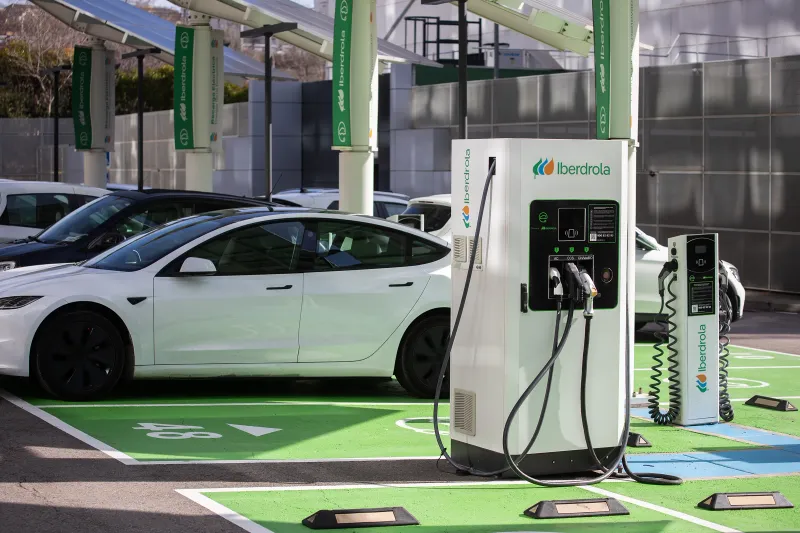
She says this complex architecture not only keeps the chargers working efficiently but also presents a host of new and far-reaching security vulnerabilities. The OCCP standard is one of the most widely used for the operation and management of electric-vehicle chargers. The researchers say this limitation makes it difficult to identify where in the system an anomaly is occurring, which network components are compromised, the extent of any vulnerabilities, and the ways in which a potential attack might spread.Call in the AIThe researchers propose a system that uses multiple AI agents.
- ▪She says this complex architecture not only keeps the chargers working efficiently but also presents a host of new and far-reaching security vulnerabilities.
- ▪The OCCP standard is one of the most widely used for the operation and management of electric-vehicle chargers.
- ▪The researchers say this limitation makes it difficult to identify where in the system an anomaly is occurring, which network components are compromised, the extent of any vulnerabilities, and the ways in which a potential attack might spre
WIRED files mainly under tech. We currently carry 522 of its stories.
Story provenance
Source · retrieval · rights · ranking — open for full record
inspect →
Attribution is not the same as permission. This drawer separates discovery metadata, excerpts, WeSearch-generated summaries, reuse status, and whether the publisher receives the visit. Nothing here claims a legal grant the publisher has not made.
Record
| Original publisher | WIRED |
| Canonical URL | https://www.wired.com/story/researchers-in-spain-show-how-ai-agents-can-protect-ev-chargers/ |
| Publication time | Sat, 13 Jun 2026 06:30:00 +0000 |
| Retrieval time | 2026-06-13T08:10:03.889Z |
| Last seen | 2026-06-13T10:19:49.515Z |
| Headline source | Publisher (no WeSearch rewrite) |
| Excerpt source | publisher body |
| Excerpt method | First ~120 words (~800 chars) of extracted publisher body, fair-use limited. |
| Summary | WeSearch · cerebras-chat (WeSearch summarizer) |
| Summary source text | contentText |
| Citation coverage | Summary is a WeSearch-generated derivative; primary citation is the original publisher URL. |
| Cluster | YcO50Psj3Ae6 |
| Cluster logic | Grouped by semantic title/content similarity across sources within a rolling window. Same-publisher template collisions are excluded from coverage comparison. |
| Ranking reason | Story pages are not engagement-ranked. Hub feeds use recency, with optional source-diversified chronological ordering (cap consecutive stories per source). No personalized ranking. |
| Publisher visit | Yes — open original |
| Substitutes article? | No — link-out required for full text |
Rights status (four layers)
WeSearch handling by dimension
| Indexing | May the item be indexed (stored, ranked, made findable)? | Allowed |
| Snippet | May a short excerpt of the publisher's text be shown? | Allowed |
| AI summary | May WeSearch generate its own short summary of the article? | Limited |
| Retrieval / RAG | May the content be exposed for third-party retrieval-augmented generation? | Not asserted |
| Model training | May the content be used to train AI models? | Not asserted |
| Commercial reuse | May the content be reused commercially? | Not permitted |
Basis: Derived from the published RSS/Atom feed. Contact: [email protected]. Reviewed: 2026-07-24.
Opening excerpt (first ~120 words) tap to expand
Fernanda GonzálezGearJun 13, 2026 2:30 AMHere’s How AI Agents Can Protect EV ChargersAn AI agent system proposed by researchers in Spain promises to prevent energy theft and damage to EV chargers, as well as the critical energy infrastructure that powers them.Photograph: Alejandro Martinez Velez/Getty ImagesCommentLoaderSave StorySave this storyCommentLoaderSave StorySave this storyThe number of electric vehicles on roads around the world continues to grow. The boom in EV adoption has driven the development of accessible, fast, and efficient charging infrastructure.However, this expansion also brings with it new cybersecurity risks that have been not been widely studied, and for which there are still few viable solutions.Cristina Alcaraz, an infrastructure-security researcher at Spain’s…
Excerpt limited to ~120 words for fair-use compliance. The full article is at WIRED.
Discussion
0 commentsMore from WIRED