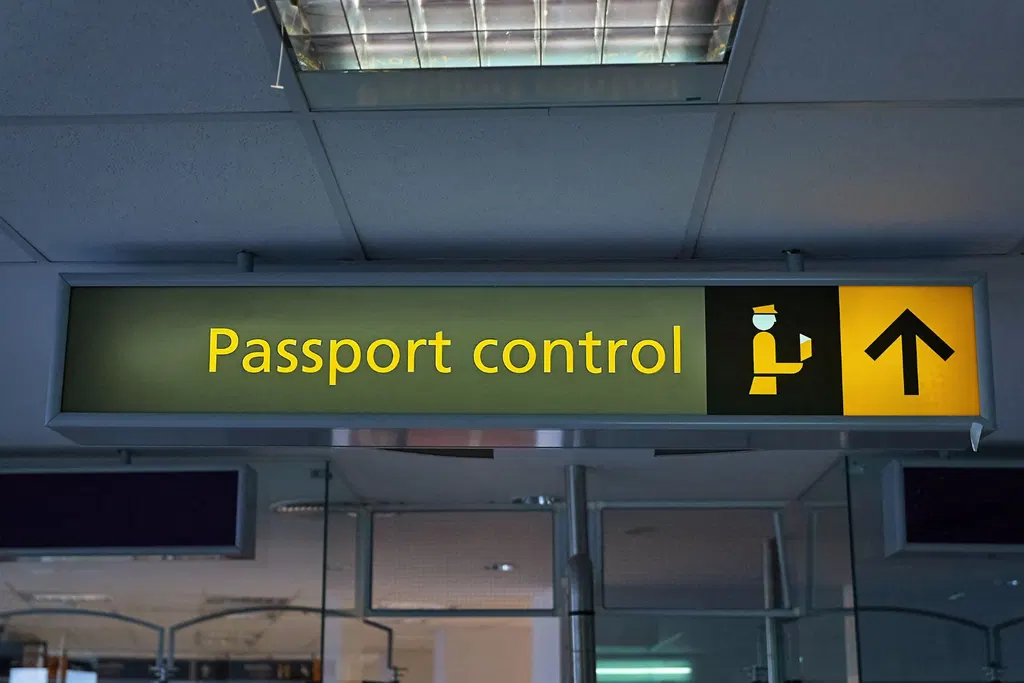
How AI is impacting who gets to cross borders
Book publication announcement 22nd September 2026 How AI is impacting who gets to cross borders Artificial intelligence is revolutionising global mobility, from screening passport photos to pre-sorting visa applications. Their careers included tens of thousands of visa and passport decisions, major overseas passport operations, fraud investigations, evacuations, citizen emergencies and the introduction of new technologies into diplomatic work. “The question is no longer whether governments can use AI in consular work – they increasingly can.
- ▪Book publication announcement 22nd September 2026 How AI is impacting who gets to cross borders Artificial intelligence is revolutionising global mobility, from screening passport photos to pre-sorting visa applications.
- ▪Their careers included tens of thousands of visa and passport decisions, major overseas passport operations, fraud investigations, evacuations, citizen emergencies and the introduction of new technologies into diplomatic work.
- ▪“The question is no longer whether governments can use AI in consular work – they increasingly can.
Hacker News (AI / LLM) files mainly under ai. We currently carry 5,944 of its stories.
Story provenance
Source · retrieval · rights · ranking — open for full record
inspect →
Story provenance
Attribution is not the same as permission. This drawer separates discovery metadata, excerpts, WeSearch-generated summaries, reuse status, and whether the publisher receives the visit. Nothing here claims a legal grant the publisher has not made.
Record
| Original publisher | Taylor & Francis Newsroom |
| Canonical URL | https://newsroom.taylorandfrancisgroup.com/how-ai-is-impacting-who-gets-to-cross-borders/ |
| Publication time | Tue, 22 Sep 2026 08:59:05 +0000 |
| Retrieval time | 2026-09-22T09:03:51.471Z |
| Last seen | 2026-09-22T09:03:51.471Z |
| Headline source | Publisher (no WeSearch rewrite) |
| Excerpt source | publisher body |
| Excerpt method | First ~120 words (~800 chars) of extracted publisher body, fair-use limited. |
| Summary | WeSearch · cerebras-chat (WeSearch summarizer) |
| Summary source text | contentText |
| Citation coverage | Summary is a WeSearch-generated derivative; primary citation is the original publisher URL. |
| Cluster | peYWXdvj-WIy · 1 stories |
| Cluster logic | Grouped by semantic title/content similarity across sources within a rolling window. Same-publisher template collisions are excluded from coverage comparison. |
| Ranking reason | Story pages are not engagement-ranked. Hub feeds use recency, with optional source-diversified chronological ordering (cap consecutive stories per source). No personalized ranking. |
| Publisher visit | Yes — open original |
| Substitutes article? | No — link-out required for full text |
Rights status (four layers)
WeSearch handling by dimension
| Indexing | May the item be indexed (stored, ranked, made findable)? | Allowed |
| Snippet | May a short excerpt of the publisher's text be shown? | Allowed |
| AI summary | May WeSearch generate its own short summary of the article? | Limited |
| Retrieval / RAG | May the content be exposed for third-party retrieval-augmented generation? | Not asserted |
| Model training | May the content be used to train AI models? | Not asserted |
| Commercial reuse | May the content be reused commercially? | Not permitted |
Basis: Derived from the published RSS/Atom feed. Contact: [email protected]. Reviewed: 2026-07-24.
Opening excerpt (first ~120 words) tap to expand
Book publication announcement 22nd September 2026 How AI is impacting who gets to cross borders Artificial intelligence is revolutionising global mobility, from screening passport photos to pre-sorting visa applications. Image by Desintegrator via Alamy Every year, tens of millions of people apply for passports and visas, hoping to cross borders for work, family, education or escape – but many people do not realise that before a human official reviews an application, automated and AI-enabled systems can already play a role in assessing their identity and their documents. As these systems proliferate across consular offices and ports of entry around the world, they are raising urgent questions about human oversight, which Dr Don Kilburg and Virginia Blaser, both retired U.S.
…
Excerpt limited to ~120 words for fair-use compliance. The full article is at Taylor & Francis Newsroom.
Discussion
0 commentsMore from Taylor & Francis Newsroom