How Saudi Arabia's spending spree reached the end of the line
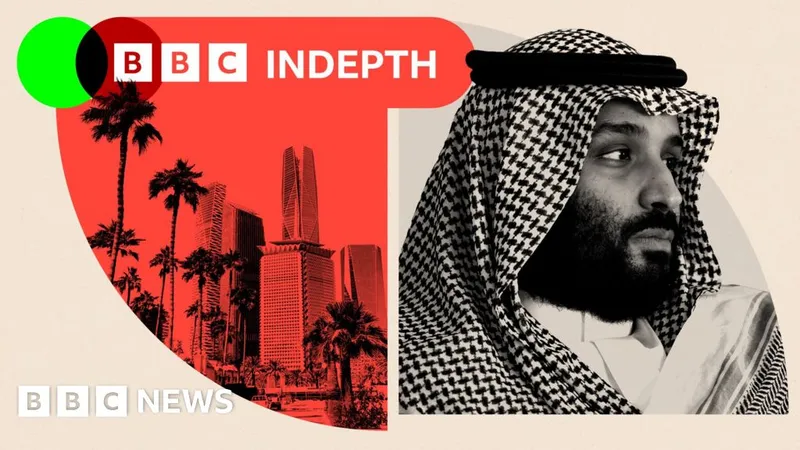
Saudi Arabia's ambitious Vision 2030 initiative is facing significant challenges as financial constraints and geopolitical uncertainties impact its mega-projects. Many of the grand concepts, including The Line and the Trojena winter resort, are being scaled back or abandoned altogether. The Kingdom's reliance on oil revenue and the lack of foreign investment have led to a reassessment of its extravagant plans for the future.
- ▪Crown Prince Mohammed bin Salman initiated Vision 2030 to transform Saudi Arabia with ambitious projects.
- ▪Financial difficulties due to falling oil prices and ongoing regional conflicts have hindered progress on these projects.
- ▪Several key initiatives, including The Line and the Trojena resort, are being significantly downsized or canceled.
BBC News — World publishes from United Kingdom and files mainly under world. We currently carry 596 of its stories.
Story provenance
Source · retrieval · rights · ranking — open for full record
inspect →
Story provenance
Attribution is not the same as permission. This drawer separates discovery metadata, excerpts, WeSearch-generated summaries, reuse status, and whether the publisher receives the visit. Nothing here claims a legal grant the publisher has not made.
Record
| Original publisher | BBC News |
| Canonical URL | https://www.bbc.com/news/articles/cx21g0828reo?at_medium=RSS&at_campaign=rss |
| Publication time | Mon, 25 May 2026 01:08:39 GMT |
| Retrieval time | 2026-05-25T01:22:35.160Z |
| Last seen | 2026-05-25T02:08:09.938Z |
| Headline source | Publisher (no WeSearch rewrite) |
| Excerpt source | publisher body |
| Excerpt method | First ~120 words (~800 chars) of extracted publisher body, fair-use limited. |
| Summary | WeSearch · cerebras-chat (WeSearch summarizer) |
| Summary source text | contentText |
| Citation coverage | Summary is a WeSearch-generated derivative; primary citation is the original publisher URL. |
| Cluster | 9CobkB-VYFK4 |
| Cluster logic | Grouped by semantic title/content similarity across sources within a rolling window. Same-publisher template collisions are excluded from coverage comparison. |
| Ranking reason | Story pages are not engagement-ranked. Hub feeds use recency, with optional source-diversified chronological ordering (cap consecutive stories per source). No personalized ranking. |
| Publisher visit | Yes — open original |
| Substitutes article? | No — link-out required for full text |
Rights status (four layers)
WeSearch handling by dimension
| Indexing | May the item be indexed (stored, ranked, made findable)? | Allowed |
| Snippet | May a short excerpt of the publisher's text be shown? | Allowed |
| AI summary | May WeSearch generate its own short summary of the article? | Limited |
| Retrieval / RAG | May the content be exposed for third-party retrieval-augmented generation? | Not asserted |
| Model training | May the content be used to train AI models? | Not asserted |
| Commercial reuse | May the content be reused commercially? | Not permitted |
Basis: Derived from the published RSS/Atom feed. Contact: [email protected]. Reviewed: 2026-07-24.
Opening excerpt (first ~120 words) tap to expand
How Saudi Arabia's spending spree reached the end of the line13 minutes agoShareSaveAdd as preferred on GoogleSebastian UsherGlobal affairs correspondentBBCAutocratic monarchs once left an echo of their glory in the ruins of the megaprojects they commanded at the peak of their unchallenged power. Those monumental physical traces are to be found in the fertile plains, mountainsides and deserts of the Middle East. But one of their most prominent modern counterparts may only have a digital footprint to leave behind for some of his most ambitious concepts.A decade ago, the Crown Prince of Saudi Arabia Mohammed bin Salman – or MBS as he is widely known – decreed a revisioning of his country that leapt from the realm of science fiction. It was called Vision 2030.
…
Excerpt limited to ~120 words for fair-use compliance. The full article is at BBC News.
Discussion
0 commentsMore from BBC News