Huawei Ascend 960 SuperPoD uses NPO technology to power next-generation AI infra
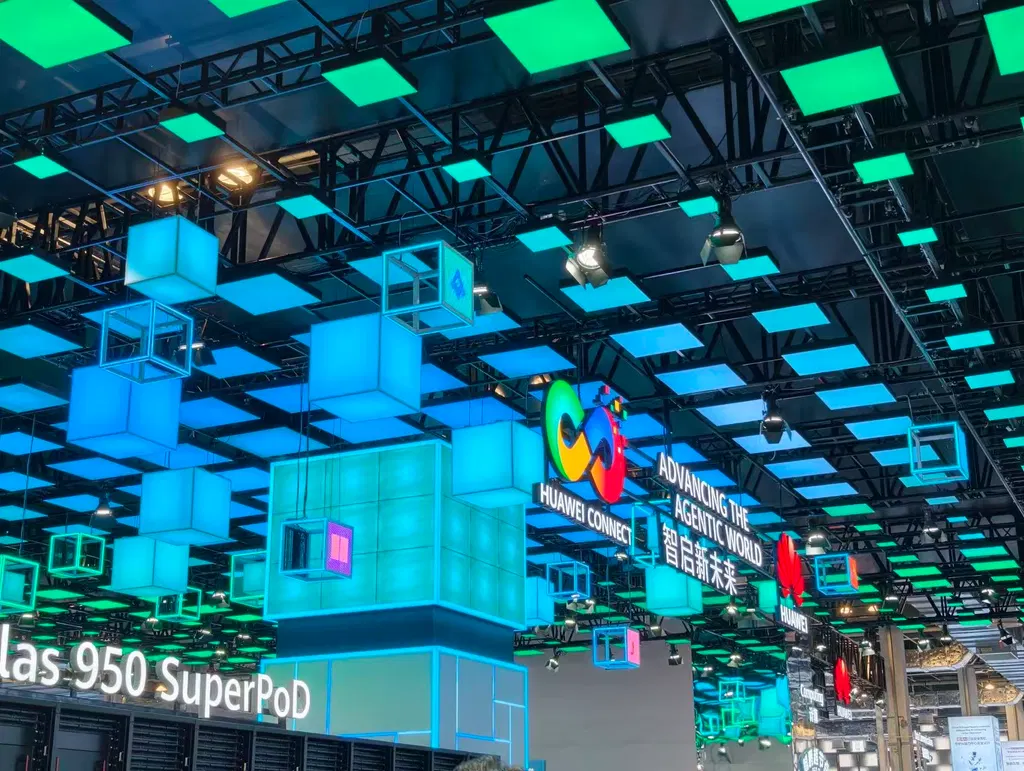
The answer increasingly comes down to computing power. At the event, Huawei Deputy Chairman and Rotating Chairman Wang Tao (David Wang) delivered a keynote titled Advancing the Agentic World, Building a Solid Silicon Foundation. He outlined Huawei’s latest plans for AI infrastructure, with a particular focus on the Ascend 960 SuperPoD, the industry’s first SuperPoD to use NPO technology.
- ▪The answer increasingly comes down to computing power.
- ▪At the event, Huawei Deputy Chairman and Rotating Chairman Wang Tao (David Wang) delivered a keynote titled Advancing the Agentic World, Building a Solid Silicon Foundation.
- ▪He outlined Huawei’s latest plans for AI infrastructure, with a particular focus on the Ascend 960 SuperPoD, the industry’s first SuperPoD to use NPO technology.
Hacker News (AI / LLM) files mainly under ai. We currently carry 5,416 of its stories.
Story provenance
Source · retrieval · rights · ranking — open for full record
inspect →
Story provenance
Attribution is not the same as permission. This drawer separates discovery metadata, excerpts, WeSearch-generated summaries, reuse status, and whether the publisher receives the visit. Nothing here claims a legal grant the publisher has not made.
Record
| Original publisher | TechNode |
| Canonical URL | https://technode.com/2026/09/17/huawei-unveils-ascend-960-superpod-with-npo-technology-to-power-next-generation-ai-infrastructure/ |
| Publication time | Thu, 17 Sep 2026 22:41:10 +0000 |
| Retrieval time | 2026-09-17T22:48:44.459Z |
| Last seen | 2026-09-17T22:48:44.459Z |
| Headline source | Publisher (no WeSearch rewrite) |
| Excerpt source | publisher body |
| Excerpt method | First ~120 words (~800 chars) of extracted publisher body, fair-use limited. |
| Summary | WeSearch · cerebras-chat (WeSearch summarizer) |
| Summary source text | contentText |
| Citation coverage | Summary is a WeSearch-generated derivative; primary citation is the original publisher URL. |
| Cluster | HCTdLmCaYNDR · 1 stories |
| Cluster logic | Grouped by semantic title/content similarity across sources within a rolling window. Same-publisher template collisions are excluded from coverage comparison. |
| Ranking reason | Story pages are not engagement-ranked. Hub feeds use recency, with optional source-diversified chronological ordering (cap consecutive stories per source). No personalized ranking. |
| Publisher visit | Yes — open original |
| Substitutes article? | No — link-out required for full text |
Rights status (four layers)
WeSearch handling by dimension
| Indexing | May the item be indexed (stored, ranked, made findable)? | Allowed |
| Snippet | May a short excerpt of the publisher's text be shown? | Allowed |
| AI summary | May WeSearch generate its own short summary of the article? | Limited |
| Retrieval / RAG | May the content be exposed for third-party retrieval-augmented generation? | Not asserted |
| Model training | May the content be used to train AI models? | Not asserted |
| Commercial reuse | May the content be reused commercially? | Not permitted |
Basis: Derived from the published RSS/Atom feed. Contact: [email protected]. Reviewed: 2026-07-24.
Opening excerpt (first ~120 words) tap to expand
Every Wednesday and Friday, TechNode’s Briefing newsletter delivers a roundup of the most important news in China tech, straight to your inbox. Sign up The TechNode team attended HUAWEI CONNECT 2026 this morning, where one thing stood out: as AI models continue to grow, the industry’s biggest question is no longer just what AI can do, but what it takes to run models at this scale. The answer increasingly comes down to computing power. At the event, Huawei Deputy Chairman and Rotating Chairman Wang Tao (David Wang) delivered a keynote titled Advancing the Agentic World, Building a Solid Silicon Foundation. He outlined Huawei’s latest plans for AI infrastructure, with a particular focus on the Ascend 960 SuperPoD, the industry’s first SuperPoD to use NPO technology.
…
Excerpt limited to ~120 words for fair-use compliance. The full article is at TechNode.
Discussion
0 commentsMore from TechNode