I asked Siri AI and Gemini a series of increasingly bizarre questions to see how they responded —here's what happened
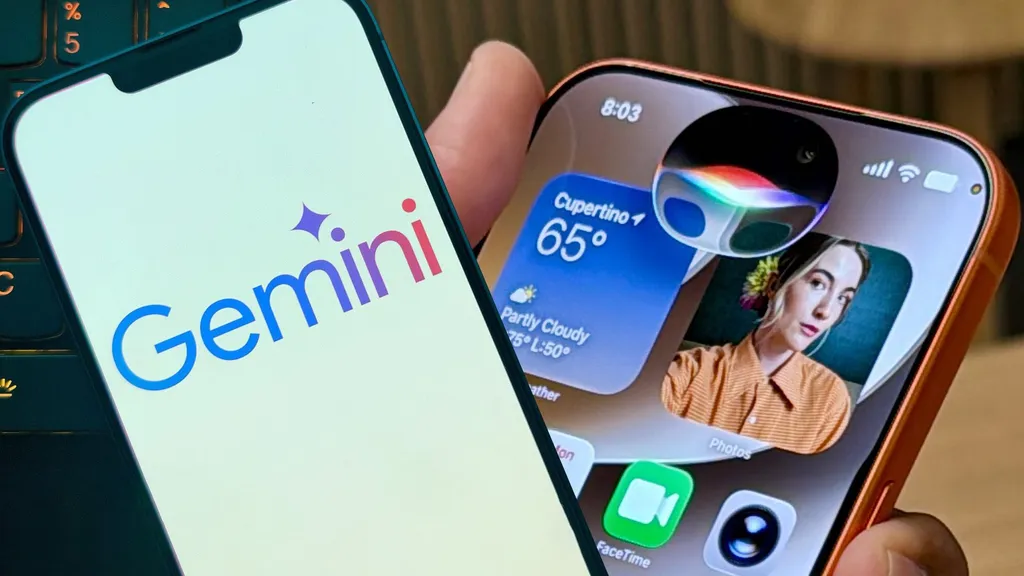
The article compares Siri AI, which runs on Google's Gemini models, with Google Gemini on Android devices through a series of increasingly odd questions. It highlights differences in response style, detail, and feature availability such as crowd level data and map clarifications. The author concludes that while both assistants can perform basic tasks, Gemini tends to provide more extensive information whereas Siri remains concise.
- ▪Siri AI, integrated into iOS 27, uses Gemini models but delivers shorter, to‑the‑point answers compared to Google Gemini.
- ▪Gemini was able to suggest multiple nearby coffee shops and provide crowd level information, though its availability was inconsistent.
- ▪When asked for the fastest route to a specific office, Gemini identified the location without clarification, whereas Siri required additional context.
Tom's Guide files mainly under tech. We currently carry 1,081 of its stories.
Story provenance
Source · retrieval · rights · ranking — open for full record
inspect →
Story provenance
Attribution is not the same as permission. This drawer separates discovery metadata, excerpts, WeSearch-generated summaries, reuse status, and whether the publisher receives the visit. Nothing here claims a legal grant the publisher has not made.
Record
| Original publisher | Tom's Guide |
| Canonical URL | https://www.tomsguide.com/phones/i-asked-siri-ai-and-gemini-a-series-of-increasingly-bizarre-questions-to-see-how-they-responded-heres-what-happened |
| Publication time | Sat, 01 Aug 2026 08:00:00 +0000 |
| Retrieval time | 2026-08-01T08:15:39.805Z |
| Last seen | 2026-08-01T08:15:39.805Z |
| Headline source | Publisher (no WeSearch rewrite) |
| Excerpt source | publisher body |
| Excerpt method | First ~120 words (~800 chars) of extracted publisher body, fair-use limited. |
| Summary | WeSearch · cerebras-chat (WeSearch summarizer) |
| Summary source text | contentText |
| Citation coverage | Summary is a WeSearch-generated derivative; primary citation is the original publisher URL. |
| Cluster | Hev8jP1y6DK9 · 1 stories |
| Cluster logic | Grouped by semantic title/content similarity across sources within a rolling window. Same-publisher template collisions are excluded from coverage comparison. |
| Ranking reason | Story pages are not engagement-ranked. Hub feeds use recency, with optional source-diversified chronological ordering (cap consecutive stories per source). No personalized ranking. |
| Publisher visit | Yes — open original |
| Substitutes article? | No — link-out required for full text |
Rights status (four layers)
WeSearch handling by dimension
| Indexing | May the item be indexed (stored, ranked, made findable)? | Allowed |
| Snippet | May a short excerpt of the publisher's text be shown? | Allowed |
| AI summary | May WeSearch generate its own short summary of the article? | Limited |
| Retrieval / RAG | May the content be exposed for third-party retrieval-augmented generation? | Not asserted |
| Model training | May the content be used to train AI models? | Not asserted |
| Commercial reuse | May the content be reused commercially? | Not permitted |
Basis: Derived from the published RSS/Atom feed. Contact: [email protected]. Reviewed: 2026-07-24.
Opening excerpt (first ~120 words) tap to expand
Phones I asked Siri AI and Gemini a series of increasingly bizarre questions to see how they responded —here's what happened Features By Tom Pritchard Published 1 August 2026 Just how much of a difference is there? When you purchase through links on our site, we may earn an affiliate commission. Here’s how it works. (Image credit: Shutterstock/Apple) Copy link Facebook X Reddit Email Share this article 0 Join the conversation Follow us Add us as a preferred source on Google Newsletter Subscribe to our newsletter The launch of Siri AI with the iOS 27 beta means that your new phone, no matter who makes it, has a built-in AI chatbot for you to interact with.
…
Excerpt limited to ~120 words for fair-use compliance. The full article is at Tom's Guide.
Discussion
0 commentsMore from Tom's Guide